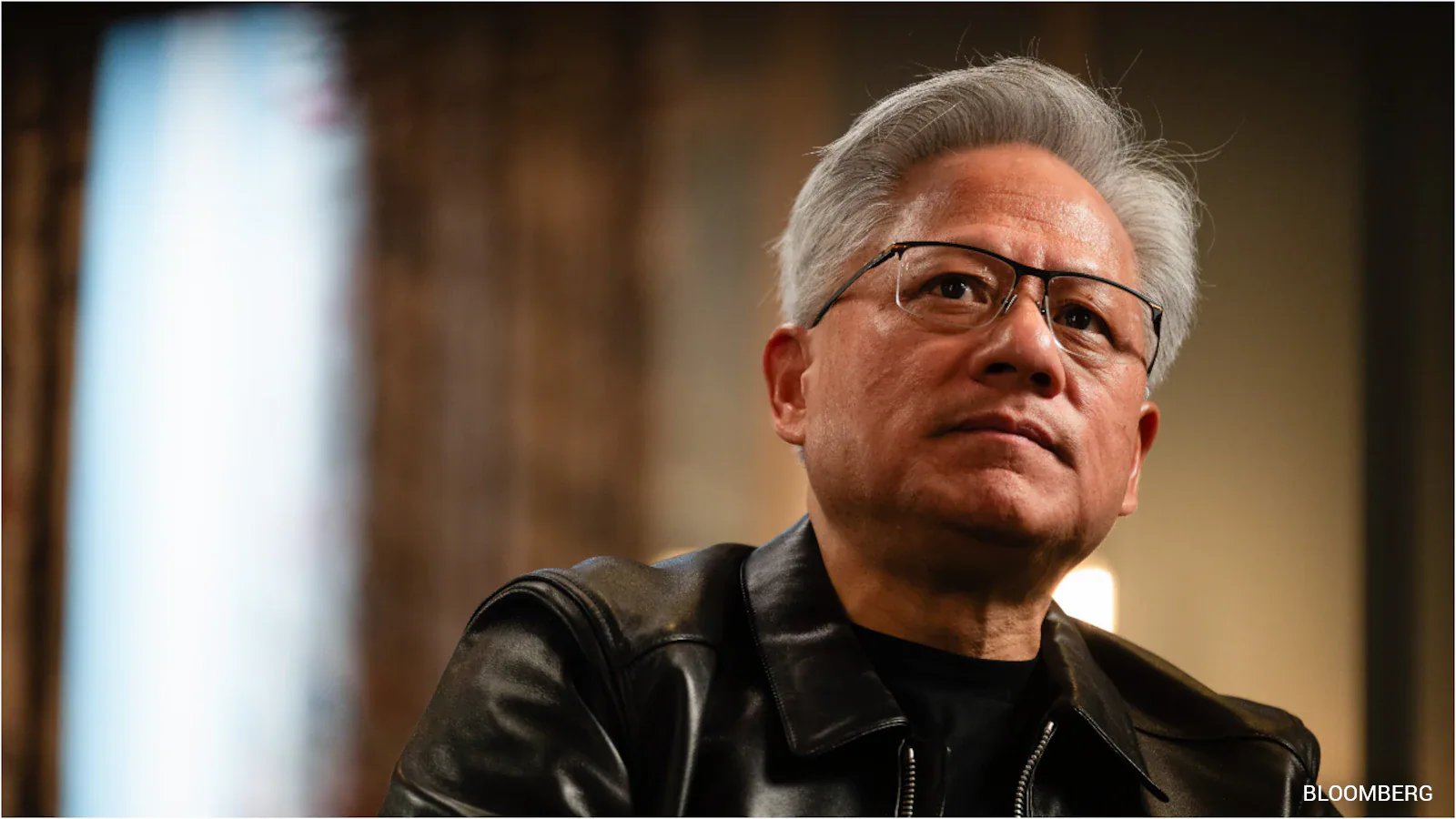
Jensen Huang surrendered approximately $108 million in unvested equity compensation after stepping down as Nvidia Corp. chief executive officer, closing a historic three-decade tenure at the helm of the world's dominant artificial intelligence chipmaker.
The penalty barely dents his balance sheet.
Huang, 63, walked away with a fortune calculated at $138.4 billion, meaning the forfeited restricted awards account for roughly 0.08% of his overall wealth. The co-founder resigned following internal disclosures regarding extramarital affairs, triggering immediate enforcement of the company's continuous service covenants. Under Nvidia's equity compensation framework, unvested restricted stock units (RSUs) lapse the moment an executive terminates active service.
Corporate filings outline a structured forfeiture that cancels hundreds of thousands of deferred shares.
Huang held roughly 346,000 unvested RSUs at the time of his departure. He stood to collect an additional 310,000 shares through the chipmaker's long-term performance equity incentive plan had Nvidia achieved specific operational and financial targets. Instead, those claims dissolved upon his exit. Over the past two fiscal years, Huang drew approximately $7.5 million in annual cash compensation—a fractional sum against the scale of his equity gains during the semiconductor rally.
| Executive Financial Metric | Parameter Details |
|---|---|
| Forfeited Equity Compensation | ~$108 million |
| Cancelled Restricted Stock Units (RSUs) | ~346,000 units |
| Performance-Linked Incentive Shares Lapsed | ~310,000 shares |
| Estimated Net Worth Post-Exit | $138.4 billion |
| Forfeiture Share of Total Wealth | ~0.08% |
| Common Share Voting Stake | ~3.5% (Santa Clara, California) |
| Annual Cash Compensation (Prior 2 Years) | ~$7.5 million annually |
| Closing Share Price | $166.19 (-4.3%) |
Unlike Silicon Valley peers whose fortunes hinge on complex option tranches or multi-class share schemes, Huang built his net worth directly in common equity.
He controls a 3.5% stake in the Santa Clara, California-based enterprise. That direct stake accounts for nearly 97% of his net assets. Because Nvidia operates under a standard single-class share structure, Huang commands no super-voting shares, special privileges, or defensive golden shares—leaving the company's governance exposed strictly to market forces.
Investors registered the shock immediately.
Trading in New York opened with severe volatility as Nvidia stock tumbled as much as 14% intraday before bargain buyers stepped in to pare the slide. Shares closed down 4.3% at $166.19. That single-session retreat erased between $6 billion and $6.8 billion from Huang's personal holdings, dwarfing the $108 million in cancelled paper awards.
Market Context: Silicon Valley executive departures typically unleash drawn-out compensation arbitrations, but strict RSU lapse provisions give corporate boards immediate contractual leverage. With Nvidia commanding critical infrastructure across global artificial intelligence clusters, institutional shareholders are scrutinizing the board's interim leadership plans and the transition timeline for commercial roadmap execution.
Nvidia's board of directors must now navigate successor appointments and client continuity as Wall Street monitors trading during the upcoming market sessions.