The Union Home Ministry has pushed back against the Supreme Court’s contempt proceedings, filing a counter-affidavit on Wednesday to justify the abrupt suspension of mobile internet services in central Delhi. The government argues that the blackout, which lasted from 10 p.m. on October 9 to 10 p.m. on October 10, was not an act of wilful disobedience but a necessary, proportionate response to an imminent threat to public order. The restriction was geographically precise, covering only a 4 km radius around Raisina Hill.
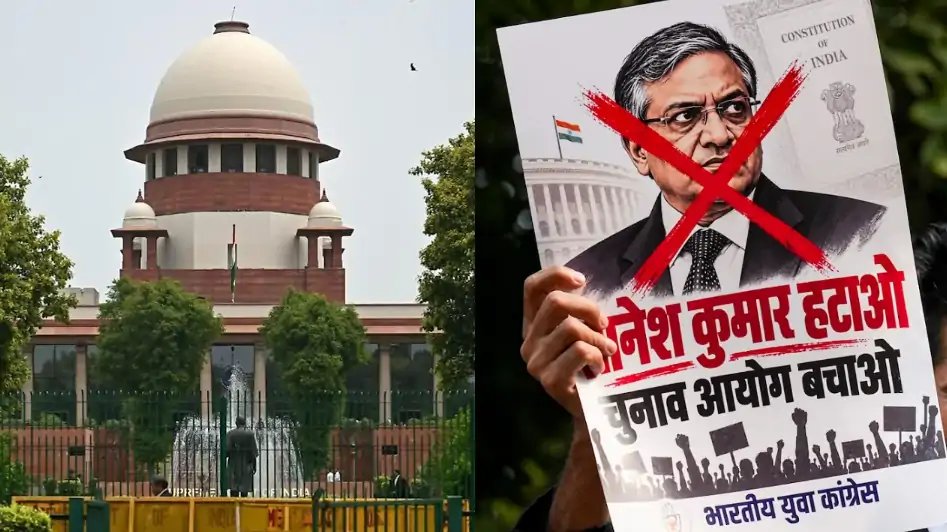
The legal battle stems from the Cockroach Janata Party’s (CJP) protest against Chief Election Commissioner Gyanesh Kumar and the Election Commission of India over alleged irregularities in the Special Intensive Revision of electoral rolls. Delhi Police Commissioner Anurag Kumar had denied permission for the gathering, citing short notice, but the organisers proceeded with their plans. This defiance, combined with the police’s apprehension of a law-and-order breakdown, prompted the Centre to pull the internet plug. The affidavit explicitly cites the police’s request for preventive measures as the primary driver for the decision.
The Supreme Court’s intervention began on October 9, when it directed authorities to ensure no complete prohibition on Metro or train services entering Delhi. The Court emphasized that security arrangements should not cause undue hardship to commuters and required wide communication of any service regulations. Despite these directions, a contempt petition was filed alleging non-compliance. On October 11, during a special hearing, the Court issued notices to the Centre, Delhi Police, and DMRC Chairperson D. Thara, specifically targeting Union Home Secretary Govind Mohan with a contempt notice.
In its defense, the Centre leaned on historical precedent, referencing a similar episode on July 20, 2026, to validate the police’s cautious approach. The government maintained that the internet shutdown was a temporary, targeted measure to mitigate the potential consequences of an unauthorized large-scale gathering. They are now urging the Supreme Court to modify its existing order, seeking clarity that allows for the suspension of internet services in future critical situations, provided such decisions strictly adhere to statutory safeguards and legal protocols.
The Supreme Court has not yet scheduled a date for the next hearing on these contempt notices. The Centre’s plea to discharge the notice against Govind Mohan and to amend the legal framework for internet shutdowns will be the focal point of the upcoming proceedings. For now, the government stands by its decision, framing it as a necessary shield against chaos rather than a violation of judicial authority.