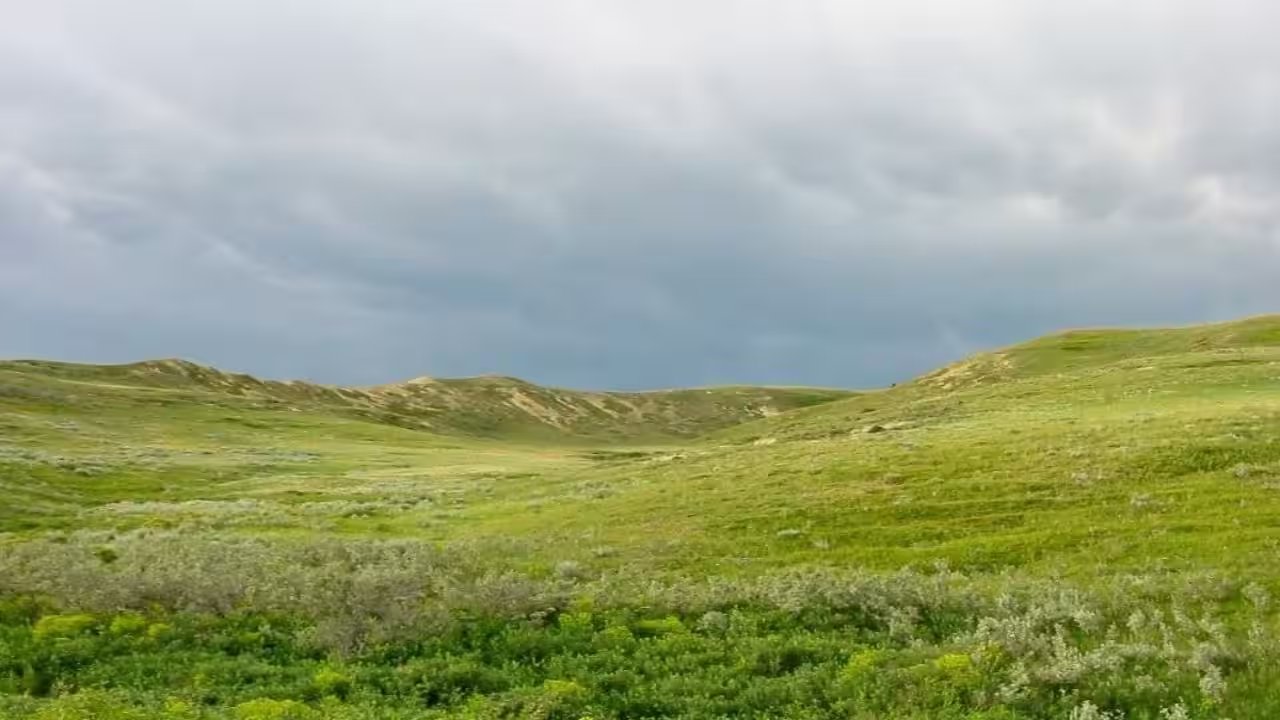
CARDSTON COUNTY, Alberta — More than 55,000 acres of intact native prairie in Cardston County, Alberta, secured official carbon credit verification on November 6, 2026, becoming the first property to cross the finish line under the Climate Action Reserve Canada Grassland Protocol.
Non-profit developer The Climate Trust and environmental auditor SCS Global Services confirmed the milestone for the McIntyre Ranch grassland project. The sprawling tract—owned by McIntyre Ranching Co. Ltd. and managed by the Thrall family—ranks among the largest surviving swathes of continuous native grassland in North America. To lock the stored carbon underground, the landowners slapped a permanent conservation easement over the entire perimeter. The legal pact outlaws plowing, soil fracturing, and conversion into commercial cropland.
The land stays green. Carbon stays buried.
Registration under the Canadian grassland framework capped more than two decades of grueling negotiations. To assemble the protections and clear rigid carbon-market hurdles, the Thrall family partnered with Nature Conservancy Canada and Ducks Unlimited Canada. That coalition hammered out the largest agricultural conservation agreement in Canadian history, guaranteeing future generations cannot turn the sod. In return, the ranch earns saleable carbon offsets pegged to the precise greenhouse gas emissions avoided by keeping heavy agricultural machinery out of the soil.
“The McIntyre Ranch is one of the most rare and significant grassland ecosystems in North America given its size and largely unchanged condition,” the Thrall family said in a joint statement. “Its diverse native plant communities, healthy wildlife populations, and natural processes still mirror historic grassland dynamics.”
To confirm the environmental integrity of the credits before they reach buyers, SCS Global Services deployed an audit team helmed by lead auditor Carolin Judd and technical reviewer Saroop Sandhu. The auditors dissected historical land records, scrutinized regional crop-conversion risk models, and verified soil management practices against baseline estimates of carbon loss.
“Grassland conservation is one of several underutilized approaches with high potential to deliver climate change mitigation benefits,” said Heather Rosa, Director of Carbon Offset Verification at SCS Global Services. Rosa noted that verifying the project under the protocol ensures the credits carry bulletproof integrity, opening pathways for broader capital deployment across North American rangelands.
With the McIntyre Ranch certification in hand, The Climate Trust expanded its permanent grazing conservation portfolio beyond 250,000 acres across 15 distinct projects. The 55,000-acre Alberta footprint now stands as the operational blueprint for monetizing prairie preservation across the Great Plains.