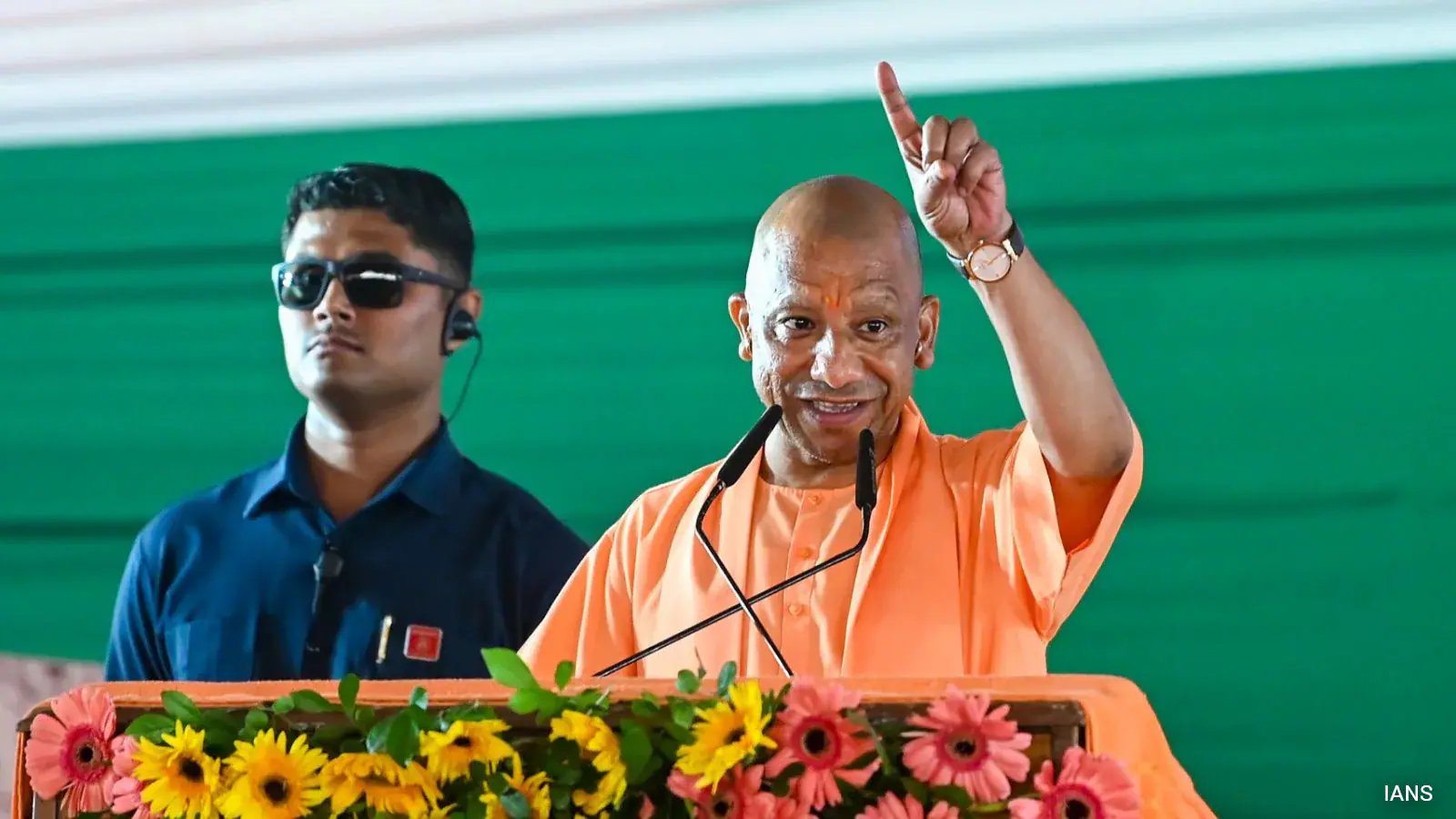
Uttar Pradesh Chief Minister Yogi Adityanath pushed back against environmental criticism over Diwali celebrations, asserting that air pollution generated by fireworks would quickly dissipate on its own.
Speaking at a state administrative event in Lucknow, Adityanath revealed that his administration deliberately imposed zero restrictions on holiday fireworks, encouraging residents to celebrate without state interference. During the proceedings, the chief minister distributed appointment letters to more than 1,000 newly recruited junior assistants and disbursed ₹215 crore to 4,300 beneficiaries under the Mukhyamantri Kisan Durghatna Kalyan Yojana—the state's dedicated financial protection and accident insurance umbrella for agrarian households.
"You must have noticed the hustle and bustle in the markets on Dhanteras," Adityanath told the gathering. "Many people claimed that Diwali caused pollution. Well, even if it did, it will eventually dissipate."
He did not stop there.
The chief minister turned his fire on critics, drawing an aggressive parallel between post-festival smog and systemic graft. "No one questions those who have polluted the entire system with their corrupt deeds, yet if the public sets off some firecrackers for a single day, people start crying 'pollution'," he said. "Even if there is some pollution, it will clear up; that is not the real issue."
Reflecting on festive turnouts in Ayodhya, Adityanath claimed that public celebrations historically faced regulatory suppression and law-and-order friction under past administrations before the Bharatiya Janata Party took office in 2017.
"Before 2017, whenever any festival arrived, whether it was Holi, Diwali, Vijayadashami, Janmashtami, Shivratri, Christmas, Eid, Guru Parv or Makar Sankranti, riots would break out right before them," Adityanath stated. He reiterated that his government gave citizens a clear mandate to celebrate unhindered: "Go ahead and enjoy the fireworks."
| Administrative & Environmental Indicator | Metric / Official Status | Details | :--- | :--- | :--- | Kisan Durghatna Kalyan Yojana Outlay | ₹215 Crore | Direct transfer to 4,300 beneficiary families |
|---|---|---|---|---|---|---|---|---|
| Junior Assistant Recruitment Drive | 1,000+ Letters | Distributed directly by Chief Minister | ||||||
| Delhi-NCR Official Air Quality Index (AQI) | 483 | Classified in the 'Severe' category | ||||||
| Peak Local Sensor Readings (IQAir) | 1,000+ AQI | Recorded in high-density National Capital pockets |
Across state lines in Delhi and the wider National Capital Region, the environmental fallout was immediate. Official monitoring equipment recorded ambient toxicity spiking to an Air Quality Index reading of 483 on Monday morning—firmly inside the dangerous 'severe' category. Independent monitoring stations operated by Swiss environmental technology firm IQAir registered localized readings breaching 1,000 AQI in dense suburban corridors.
The rapid degradation drew pushback from public health epidemiologists who caution against brushing off short-term exposure surges.
Just like we're saying, let's put health at the centre of climate change, it's very much true for air pollution. The Air Quality Health Index is one but if we start looking from a health outcomes perspective, not only will it drive action but you'll be able to measure outcomes. One thing is clear: the moment you start reducing air pollution levels, you start seeing improvements in health and those can easily be measured. You start saving lives.
Dr. Soumya Swaminathan, Former Deputy Director, World Health Organisation
Central and state pollution control boards will review weekly air monitoring bulletins across north Indian urban centers as winter meteorological inversions begin locking particulate matter near ground level through mid-November.