India's Ministry of Road Transport and Highways unveiled a new Delhi‑Mumbai Expressway that will cut the road journey from 33 hours to roughly 12 hours.
Bridges have delivered the biggest gains where rivers once added hours. The Bhupen Hazarika Setu, or Dhola‑Sadiya Bridge, cut travel between Rupai in Assam and Meka/Roing in Arunachal Pradesh from six hours to one. The Bogibeel Bridge slashed the journey between Dhemaji and Dibrugarh from almost a full day to one or two hours, while Atal Setu trimmed Mumbai‑Navi Mumbai from two hours to about 20 minutes.
Tunnels cut hard‑climate routes. The 9.02‑km Atal Tunnel bypasses Rohtang Pass, shaving 46 km and four to five hours off the Manali‑Sarchu link. Dr Syama Prasad Mookerjee Tunnel cuts Jammu‑Srinagar by roughly 30 km, saving nearly two hours. The Banihal‑Qazigund twin‑tube saves about an hour and a half, and the Sela Tunnel in Arunachal Pradesh cuts the Tezpur‑Tawang route by more than an hour, providing all‑weather connectivity.
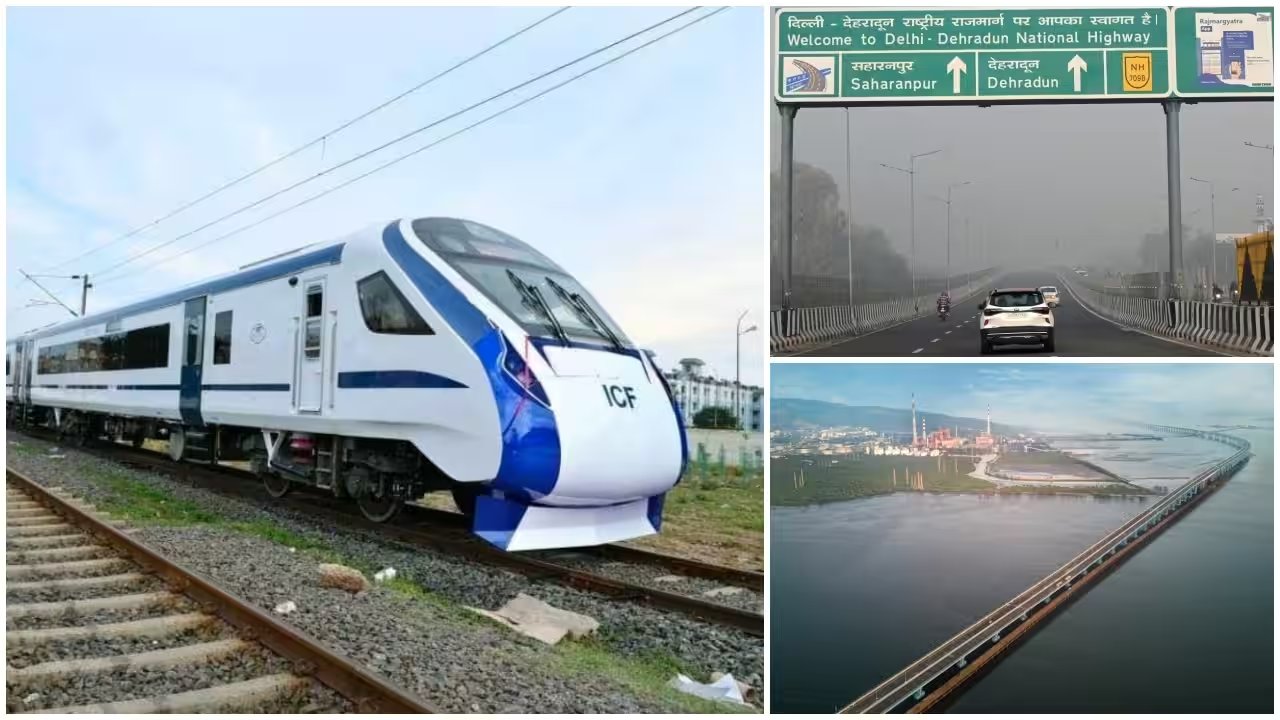
Expressways compress long road trips. The Delhi‑Meerut Expressway brings the journey from 2½ hours to 50 minutes, while Bengaluru‑Mysuru drops from almost three hours to 75 minutes. The Delhi‑Dehradun Economic Corridor shrinks travel from more than six hours to 2½ hours. The Delhi‑Amritsar‑Katra Expressway will cut Delhi‑Amritsar from eight to four hours and Delhi‑Katra from 14 to six. The new Delhi‑Mumbai Expressway is engineered to reduce the 33‑hour drive to just about 12 hours.
Rail has seen a fleet‑wide speed boost. In the 2026 timetable, 549 trains gain time: 20 trains gain at least an hour, 48 gain 31‑59 minutes, 105 gain 16‑30 minutes, and 376 gain five‑15 minutes. Vande Bharat services slash journeys further—New Delhi‑Varanasi is 40‑50% faster, Katra‑Srinagar saves two to three hours, Banaras‑Khajuraho cuts two hours 40 minutes, and Ernakulam‑Bengaluru saves more than two hours. The Howrah‑Guwahati Vande Bharat Sleeper trimmed a 17‑hour journey to about 14 hours.
High‑speed rail promises the next leap. The 508‑km Mumbai‑Ahmedabad corridor, designed for 320 km/h, will bring travel down to roughly 1 hour 58 minutes and will feature the country's first undersea rail tunnel beneath Thane Creek. The government has earmarked ₹16 lakh crore for seven new corridors totalling nearly 4,000 km, with routes spanning Delhi‑Varanasi, Varanasi‑Patna‑Siliguri, Chennai‑Bengaluru, Bengaluru‑Hyderabad, Chennai‑Hyderabad, Mumbai‑Pune and Pune‑Hyderabad.
Officials say the corridors will transform freight and passenger movement, accelerating economic activity along key trade routes and easing pressure on existing infrastructure. The expressway and rail upgrades are part of a ₹200‑cr nationwide push to modernise connectivity, a move that promises to reshape how millions move across the country.