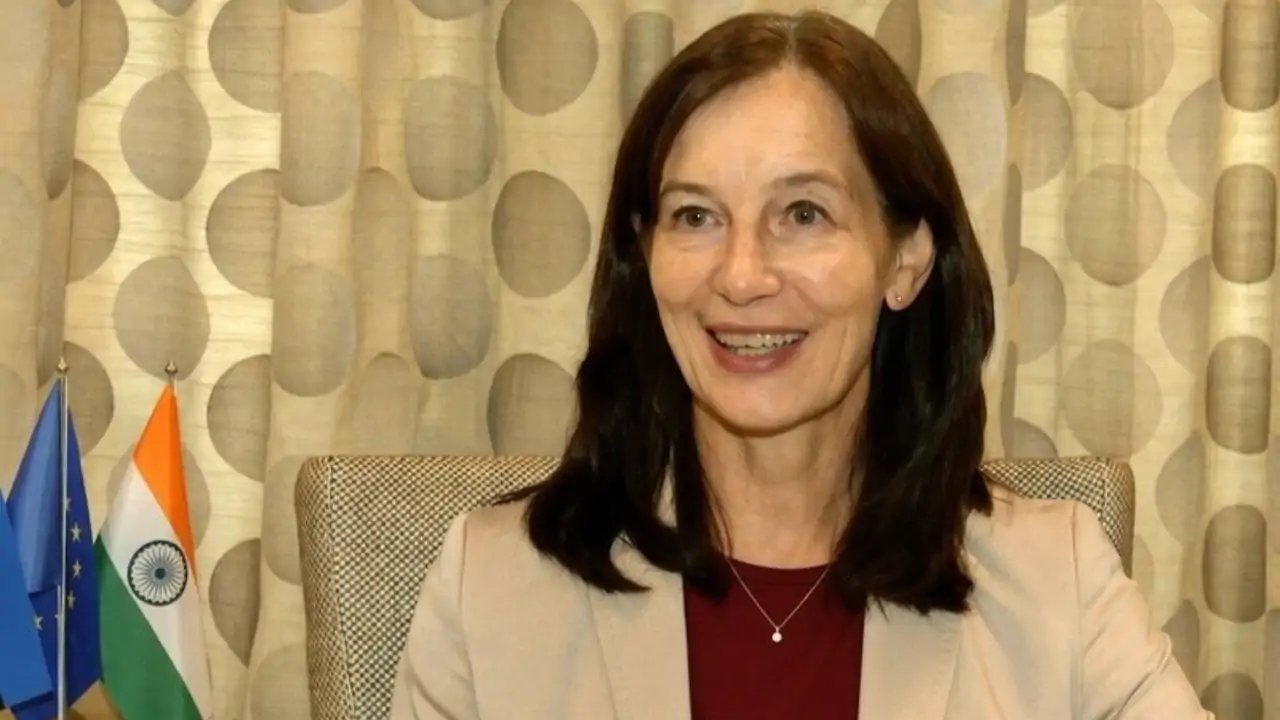
Kristi Karelsohn, the Estonian Ambassador to India, welcomed New Delhi’s shift toward proactive diplomacy in the Russia-Ukraine conflict. Speaking in an exclusive interview with Times Now Digital, she highlighted India’s submission of specific, actionable proposals to de-escalate the war. “It is very welcome that India has taken a very proactive approach,” Karelsohn said, expressing hope that one of these frameworks could break the current diplomatic deadlock. She emphasized that while peace is the goal, the interim period requires ensuring that aggression does not yield tangible benefits for Moscow.
The stakes, she argued, extend far beyond the borders of Ukraine. A Russian victory, Karelsohn warned, would validate Vladimir Putin’s strategic calculations and increase his appetite for further territorial expansion. “If Russia comes out as a winner in this war, then there is much more appetite for Putin to go further and try it again,” she stated. This perspective drives Estonia’s urgent push for stronger defense capabilities and credible deterrence mechanisms across the region.
Karelsohn also challenged the prevailing narrative in Moscow that NATO expansion threatens Russian security. She noted that no country on Russia’s border joined the alliance out of aggression, but rather seeking protection from a looming invasion. This context informs her sharp warning to Western counterparts: do not mistake diplomatic normalization for strength. “We’ve always cautioned our friends in the West that coming back to business as usual with Russia, trying to develop trade relations, that doesn't help because Russia doesn’t think like that. They take it as weakness.”
Her assessment strips away the nuance often found in diplomatic cables. For Karelsohn, the calculus is binary. “The only language Putin understands is keeping us strong, keeping us united,” she said. She acknowledged that few predicted the conflict would drag on for five years, yet she remains hopeful for a resolution. The next phase will see Estonia working to convince European nations farther from the Russian border to prioritize defense spending over trade normalization with Moscow.