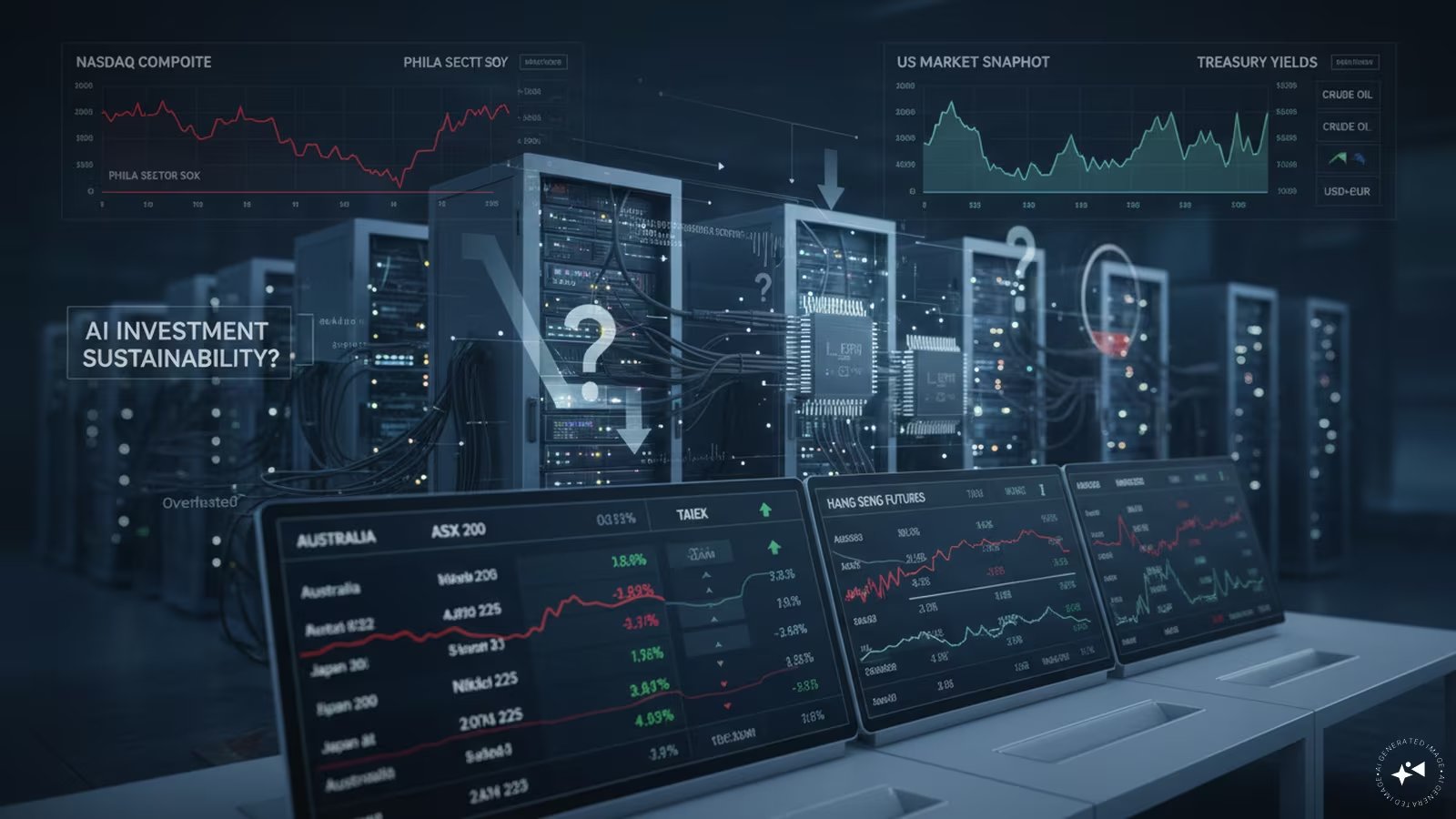
MSCI Asia Pacific slipped 0.1% in early trade, nudging below 4,100 points—just a fraction, yet enough to flag a cautionary tone across the region. The Nikkei opened more than 1% lower, before trimming losses to 0.58% by close; Topix lagged 0.15%.
Hang Seng futures edged up 0.1%, offering a brief respite in Hong Kong. Meanwhile, the yen weakened 0.1% to ₹158.06 per dollar, and the offshore yuan barely budged at 6.7034.
US tech stocks took the hit: Nasdaq 100 sank 1.4%, its steepest fall in seven weeks, while a chip‑makers gauge plunged 3.4%. The S&P 500 shed 0.5%, though two‑thirds of its constituents rose. Investors dumped some high‑growth names and piled into defensive sectors.
The slide was sparked by a Financial Times report that OpenAI’s annualised revenue sits $20 billion below prior signals, with a trajectory toward roughly $50 billion. That surprise has reverberated through the AI‑driven tech cycle, tempering enthusiasm for the sector.
In the US, the Labor Department suspended Microsoft and Adobe from its Permanent Labor Certification Program, citing active federal investigations; similar restrictions were imposed on other IT giants. NASSCOM noted a shift toward local hiring, but the move underscores tightening immigration rules for tech talent.
On the macro front, US Treasury yields rallied after a strong 30‑year auction, pulling long‑dated yields back from a 20‑year high. Fed Governor Christopher Waller hinted that further rate hikes may be needed to tame inflation. Oil prices eased as Trump’s pledge to avoid war with Iran calmed fears; Brent fell 0.5% to $103.80, while WTI slid 0.5% to $91.05.
The next week will test whether AI‑spending concerns hold or whether the market will pivot back to growth‑oriented tech names, while investors keep an eye on Fed policy and Treasury market sentiment for clues.