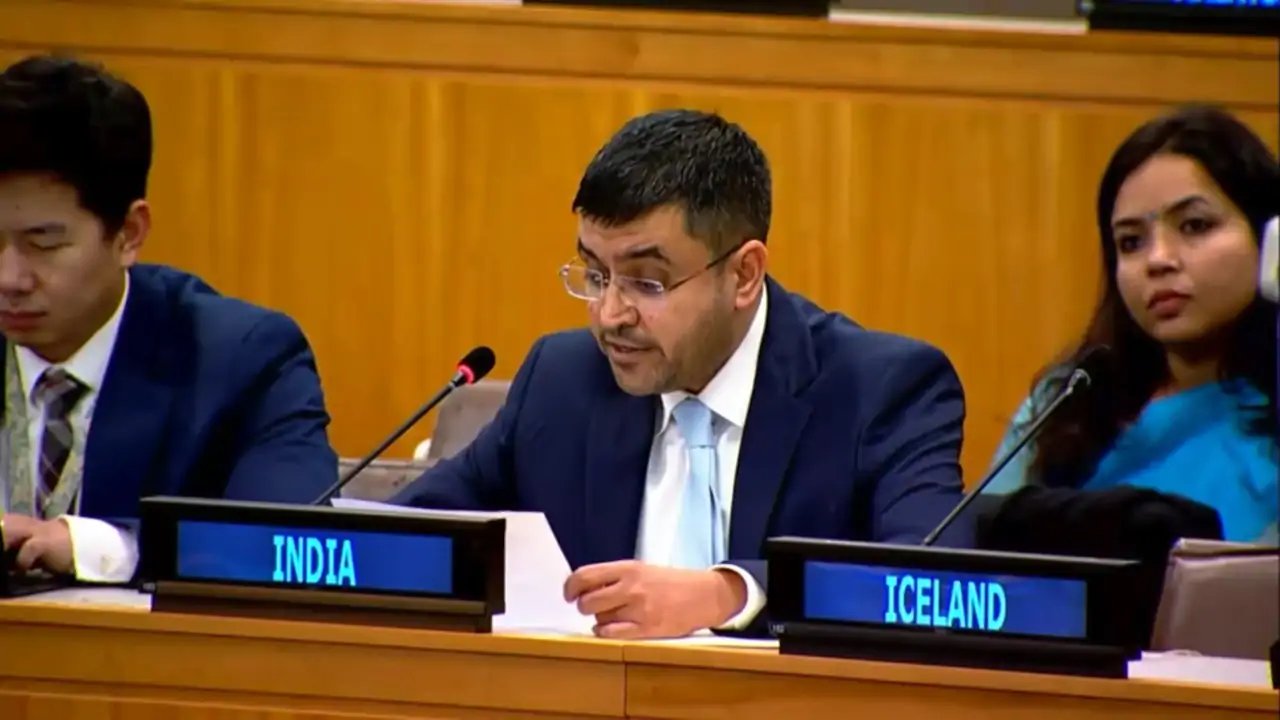
Raghoo Puri, First Secretary at India’s Permanent Mission to the UN, launched a blistering attack on a report by Ben Saul, the Special Rapporteur on human rights and counter-terrorism, during a session of the UN General Assembly’s Third Committee in New York on Wednesday. Puri dismissed the document’s core premise—that the UN Security Council listed Dawood Ibrahim’s D-Company as an “India-based” entity—as a dangerous misrepresentation of facts. “Read in isolation, this line paints a very different picture from the actual reality,” Puri stated, demanding a formal correction on the record.
The diplomatic friction stems from a 2003 listing under the UN’s 1267 Al-Qaeda sanctions regime. Saul’s report implies D-Company operates from within India, a claim Puri called “regrettable” and “incompetent.” India’s position is unequivocal: Dawood Ibrahim, the group’s leader, is a fugitive who fled the country long before the 2003 listing. The 1993 Mumbai terror attacks, for which Ibrahim remains wanted, predate his exile, but his UN designation for ties to Al-Qaeda and Osama bin Laden occurred while he was operating from outside Indian soil.
Puri cast the issue as a broader crisis of legitimacy for the UN. He argued that allowing special rapporteurs to publish reports with factual errors without facing accountability forces member states to accept a fait accompli. “This is an unfortunate situation for an organisation already facing challenges to its legitimacy,” he said, adding that New Delhi has raised these concerns in multiple forums. The Indian diplomat also flagged “clear bias” in other sections of Saul’s work and referenced media allegations regarding the integrity of the rapporteur’s office.
The debate over Dawood Ibrahim’s location remains a flashpoint in India-Pakistan relations. Puri explicitly noted that Ibrahim resides in the same country where bin Laden was killed by US Navy SEALs in Abbottabad in 2011. This points directly to Pakistan, a country that has long denied hosting the fugitive. India’s intervention at the Third Committee signals a shift from quiet diplomatic protests to public, on-the-record confrontations over the accuracy of UN human rights documentation.