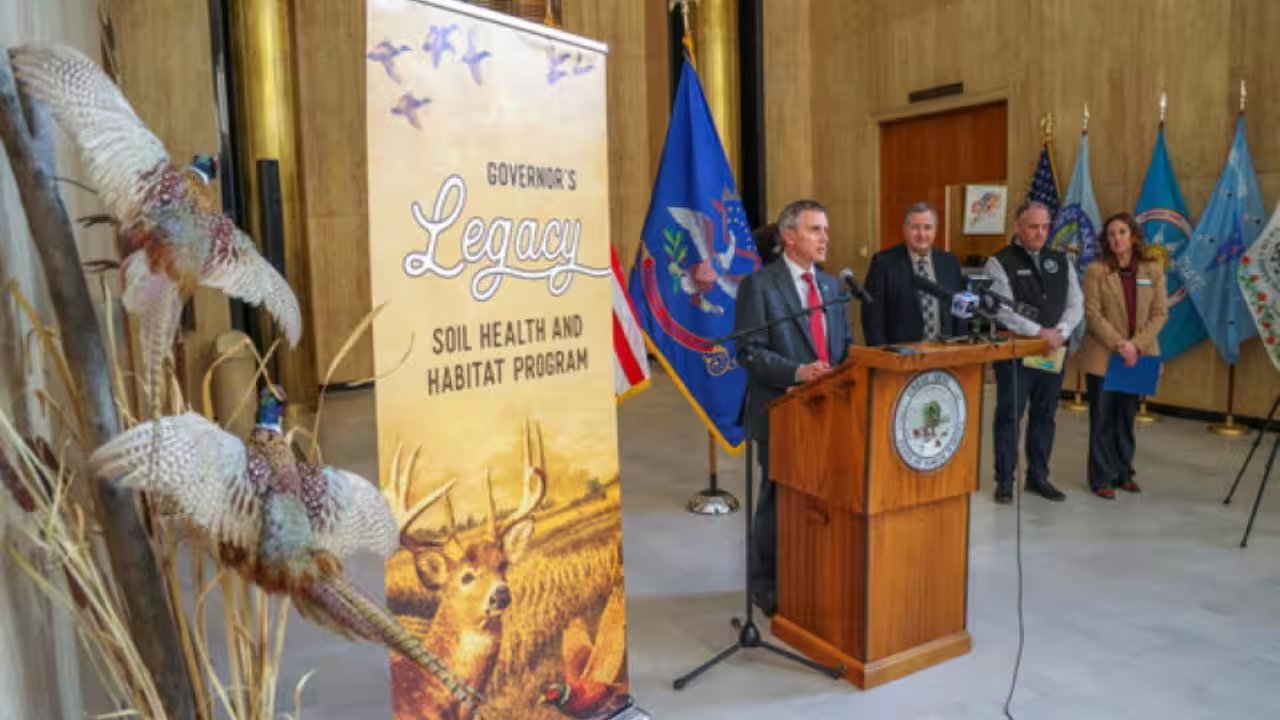
Brian Roach, who has spent three decades cultivating wheat and corn, decided to flip 35 acres of his marginal land into a permanent grassland as part of the Governor’s Legacy Soil Health and Habitat Program. The plot, situated along a fragile stream near Wheatland, has long suffered from severe erosion, making it an unattractive lease for crop farmers.
Under the scheme, the state will hand Roach $150 per acre each year, a figure based on the county’s average rental rate for comparable land. The payments accrue over five years, amounting to $26,250 in total, and are designed to offset the loss of potential crop revenue while encouraging soil recovery.
The program, launched in January 2026, was created to give farmers a financial safety net for less productive parcels and to bolster wildlife corridors across the state. It was funded with a $6.5 million package from the Outdoor Heritage Fund and matching contributions from partners, and it was intended to cover up to 10,000 acres.
Roach’s enrollment came amid a wave of interest: the Game and Fish Department logged 458 applications covering nearly 20,000 acres, but the grant was fully earmarked for 9,000 acres of habitat and access projects. Senator John Hoeven and USDA Under Secretary Richard Fordyce are now exploring ways to tap the federal Conservation Stewardship Program to match up to $100 million annually, potentially scaling the model beyond North Dakota.
If the state’s pilot proves successful, the next step could see a broadened eligibility window, additional seed subsidies, and stronger alignment with federal conservation incentives, turning erodible fields into thriving ecosystems and boosting local agricultural resilience.