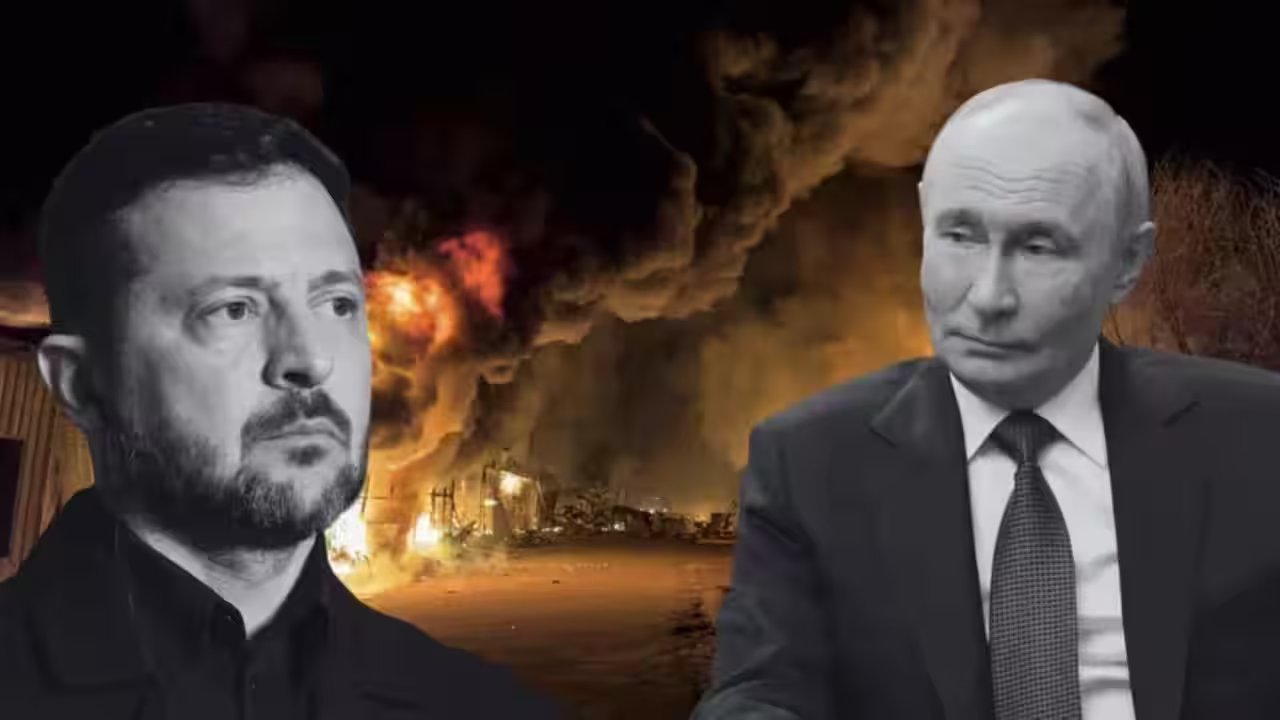
Negotiators from the United States, Ukraine, and Russia opened a critical two-day round of trilateral peace talks in Abu Dhabi on Tuesday, wrestling over frontline territory and post-war security pacts to halt nearly five years of grinding war.
The summit marks the first direct three-way diplomatic encounter since February. It arrives amid relentless fighting. Artillery trades and escalating drone barrages continue to batter the front line, leaving months of frozen backchannel diplomacy with zero visible breakthroughs. Moscow and Kyiv sit across the table with diametrically opposed red lines.
Russian President Vladimir Putin insists that Ukrainian forces withdraw entirely from four regions Moscow annexed during the war—territory Russian forces still do not fully control. Beyond land, Putin demands that Kyiv abandon its ambition to join NATO, slash the size of its armed forces, and roll back restrictions on the Russian language and the Moscow-affiliated Orthodox Church. And he flatly rejected an interim ceasefire. Pausing combat now, Putin argued, would merely hand Ukrainian units time to rest and restock exhausted arsenals.
Zelenskyy refused. The Ukrainian leader ruled out ceding any sovereign territory that Russian troops failed to capture on the battlefield. Instead, Kyiv demands an immediate, binding ceasefire as the first step toward a wider settlement, insisting that thorny border demarcations can only be settled in a direct, face-to-face meeting between Zelenskyy and Putin.
The core disagreement centers on deterrence. Kyiv is lobbying Western allies for mutual-defence commitments modeled on NATO’s Article 5—a clause treating an attack on one member as an attack on all. Zelenskyy framed the issue sharply during a November 5 broadcast: “If Russia starts again, what will happen? Who will do what, with what means, and when?”
Certain European capitals have weighed dispatching post-settlement peacekeeping troops to enforce any treaty. The Kremlin shut that down immediately, warning that foreign soldiers on Ukrainian soil will be treated as legitimate targets. Moscow instead seeks rolling rollbacks of NATO deployments in Central and Eastern Europe—reviving demands it tabled before launching its full-scale invasion in 2022.
European diplomats, meanwhile, were shut out of the Abu Dhabi negotiating suite entirely. “No one is going to invite them to the negotiating table,” said Kremlin foreign affairs adviser Yuri Ushakov, warning that even if European representatives flew to the Emirates, guards would bar them from the room. Yet Washington is eyeing a far broader canvas. Following a November 4 White House meeting with Russian envoy Kirill Dmitriev, US President Donald Trump signaled that any settlement must extend past Ukraine to encompass the entire European security architecture.
Negotiators face a grueling 48-hour window in the Emirates to map out common ground, even as Kremlin spokesman Dmitry Peskov conceded that broader continental arrangements will eventually require European buy-in once foundational terms are established.