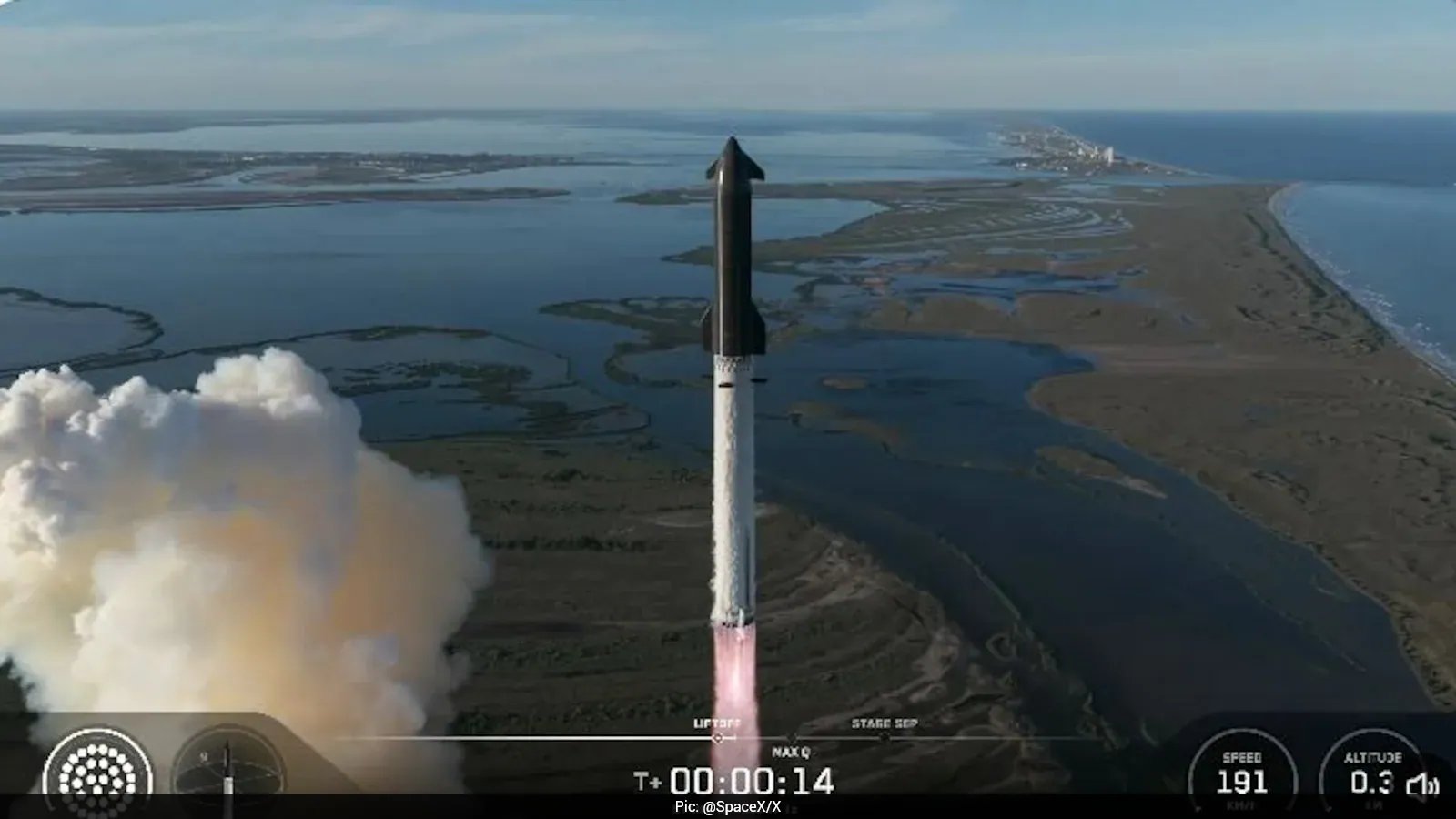
SpaceX aborted the recovery catch of its Starship Super Heavy booster on Friday, ditching the rocket directly into the waters of the Gulf of Mexico after an undisclosed technical fault compromised the descent.
Flight controllers pulled the plug seconds before the maneuver. The rocket hit water instead of steel arms.
The abort hit during the 15th Starship test flight, sidelining Elon Musk’s drive to pull off the first simultaneous capture of both the booster and the upper-stage spaceship. SpaceX flight rules mandate strict, non-negotiable criteria before clearing any vehicle to return to the pad: mechanical and weather metrics must remain spotless, or the booster redirects out to sea.
Early launch telemetry showed the two-stage, fully reusable super heavy rocket climbing smoothly off the pad. But the critical descent sequence tripped warning flags inside mission control. Rather than steering the booster back into the mechanical "chopstick" arms at the Texas launch tower, flight directors commanded an automated divert toward open water.
No catch occurred. The ocean took the impact.
SpaceX had warned before liftoff that recovery teams would only proceed with the high-stakes catch if every system reported optimal performance across both the rocket and ground installations.
| Mission Parameter | Flight 15 Operational Status |
|---|---|
| Vehicle System | SpaceX Starship (Two-stage, fully reusable super heavy) |
| Primary Booster | Super Heavy |
| Recovery Target | Tower catch attempt |
| Catch Status | Aborted in-flight due to technical issue |
| Final Splashdown | Gulf of Mexico |
| Core Milestone | First dual catch of booster and spaceship |
SpaceX propulsion teams are now analyzing descent sensor arrays and valve metrics to isolate the technical trigger that forced Friday's wave-off, with the company aiming for a first-ever upper-stage catch on its scheduled Nov. 13 flight.