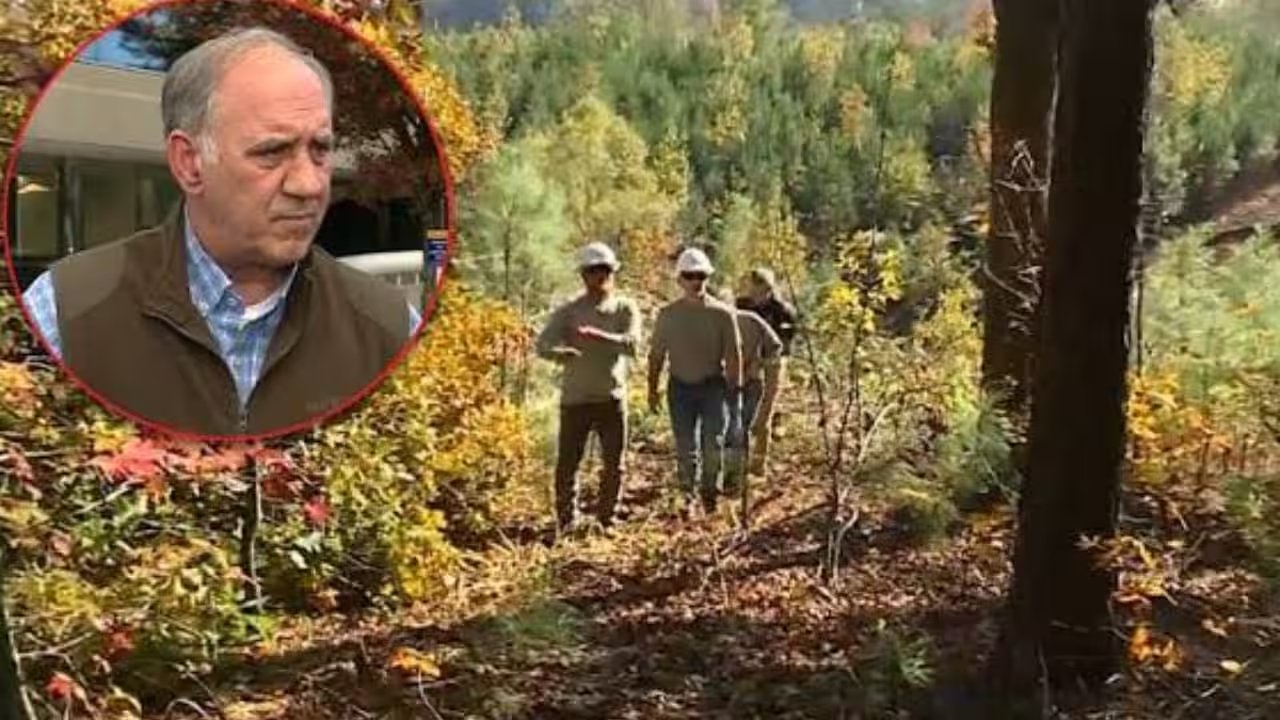
Alabama Power took its fight over a 416-acre Shelby County property to the state’s highest court.
On November 10, Circuit Judge Jonathan Spann dealt the utility a sharp setback, tossing out its emergency petition to bar private landowner Fenn Church and his visitors from coming within 300 feet of heavy tree-clearing crews on his land near Calera. The judge dismissed the case without prejudice—leaving the door open for future legal remedies. But Alabama Power refused to wait. The utility lodged an immediate notice of appeal with the Alabama Supreme Court, demanding transcripts and case records to overturn the ruling and keep Church away from its bulldozers.
The standoff is physical, bitter, and escalating.
At the center of the conflict lies an unyielding collision between corporate infrastructure deadlines and private property boundaries. Alabama Power is carving out a construction corridor across Church’s 416-acre tract to build a segment of a 74-mile transmission line.
Crews have already leveled hundreds of yards of timber, felling stands of mature oak trees across the parcel. Church pushed back. The landowner repeatedly confronted contractors on site, moving directly onto the path of the heavy machinery to halt the clearing.
Alabama Power argued in court filings that a mandatory 300-foot perimeter is critical to prevent catastrophic injuries to Church, invited guests, and machinery operators navigating hazardous terrain. Church countered that the utility has no business felling centuries-old timber while the legality of the underlying land seizure remains under active judicial challenge.
The dispute began nearly two years ago as a private land acquisition before devolving into a protracted courtroom brawl. Alabama Power initially attempted to purchase a permanent right-of-way through negotiated settlements, steadily raising its valuation across 16 months before turning to state condemnation powers.
| Stage & Date | Action / Legal Forum | Valuation / Compensation Offer |
|---|---|---|
| January 2025 | Initial Direct Purchase Offer | $80,000 |
| September 2025 | Revised Purchase Offer | $132,000 |
| May 2026 | Final Pre-Condemnation Offer | $194,000 |
| August 4, 2026 | Shelby County Probate Court Award | $425,435 (Easement & Access Rights) |
Church rejected every buyout offer, forcing Alabama Power to invoke eminent domain. On August 4, 2026, a probate court awarded Church $425,435 for permanent easement and access road rights. The decree granted the utility operational access to the designated strip without transferring full legal title of the 416 acres.
Church immediately appealed the condemnation ruling. That case is still pending.
The judicial maneuvering has turned frantic over the autumn term. In September, Judge Spann issued a preliminary injunction that halted Alabama Power’s work and barred crews from entering Church’s property during the condemnation proceedings.
That pause was short-lived.
On October 21, the Alabama Supreme Court intervened, staying Judge Spann's injunction and clearing the path for construction. Heavy equipment rolled back onto Church’s property the very next morning. The company maintains that the Autaugaville-East Pelham 230-kilovolt transmission line—a regional backbone linking the Montgomery and Birmingham power grids—must hit an unmovable target date of May 2027 to stabilize electrical delivery for approximately three million customers statewide.
Church proposed rerouting the 230-kV line through adjoining commercial parcels, arguing that the current trajectory irreversibly damages his land, destroys private timberland, and strips his privacy. Alabama Power formally rejected the proposal, stating engineering reviews found the alternate route unfeasible due to cost overruns, severe terrain obstacles, and cascading scheduling delays.
The Alabama Supreme Court must now decide whether to impose the 300-foot exclusion zone against Church while trial courts schedule hearings on the contested $425,435 land condemnation award.