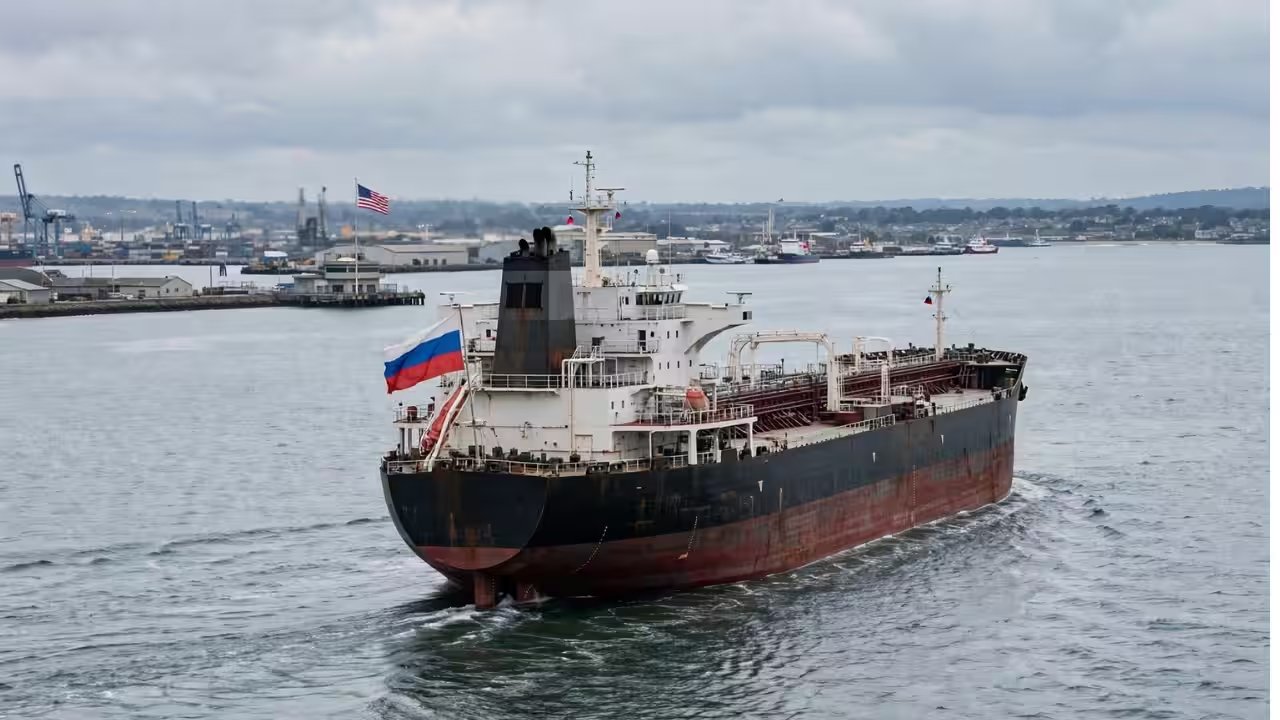
WASHINGTON — Russian diesel exports surged 100% in October after US President Donald Trump struck a fuel arrangement with Russian President Vladimir Putin, yet not a single barrel has landed on American shores.
Cargoes shifted course across the Atlantic. Instead of docking at US ports to alleviate domestic pump inflation, Russian fuel tankers diverted directly to Brazil and Turkey, according to vessel-tracking data compiled by Kpler. The sudden surge saw Moscow export approximately 271,000 barrels of diesel per day throughout October — double the 135,000 barrels per day shipped in September. But the White House's plan to funnel those shipments directly into American storage tanks has stalled on the water.
At least two US-bound tankers abruptly changed destination mid-voyage over the past fortnight. A third vessel laden with Russian fuel, the Agioi Fanendes, remains stranded off the US East Coast without clearance to discharge its cargo. The White House confirmed that federal officials remain in active negotiations with the vessel's owner to resolve the deadlock.
Trump unveiled the bilateral fuel initiative on October 9 following direct discussions with Putin, framing the agreement as an emergency intervention to break soaring domestic diesel prices ahead of the November 3 midterm elections. High fuel costs have battered freight haulers, commercial shippers, and agricultural operators across the American heartland. Under the outlined roadmap, Russia pledged an immediate injection of more than 300,000 tonnes of diesel, followed by 500,000 tonnes in November, one million tonnes in subsequent tranches, and a broader delivery envelope scaling to three million tonnes.
To operationalize the flows, the US Treasury Department's Office of Foreign Assets Control issued General License No. 135 on October 9. The waiver lifted core statutory restrictions, granting a six-month authorization through April 2027 for commercial entities to contract, transport, and import Russian diesel.
As the President has said, this is a deal for the world. This deal was made to add diesel supply to the global market — lowering prices for Americans and the world — which is exactly what will be done.
Senior White House Official
The administration maintains that pumping surplus Russian product into third-country markets achieves Washington's macro objectives regardless of physical arrival points. By backfilling demand in South America and the Mediterranean, the White House argues, global spot prices soften, pulling retail prices downward for US consumers.
| Fuel Arrangement Metric | Operational Status & Parameters | Data Source / Authority |
|---|---|---|
| October 2026 Export Volume | 271,000 barrels per day (up from 135,000 bpd in Sept) | Kpler Maritime Tracking |
| US Delivery Count | Zero barrels landed at domestic terminals | Port Logistics Logs |
| Offloaded Destination Ports | Diverted to commercial buyers in Brazil and Turkey | Kpler Vessel Flows |
| Stranded Offshore Vessel | Agioi Fanendes idling off US East Coast | US Maritime Records |
Yet the domestic political and legal blowback was immediate. The White House's supply architecture collided directly with congressional statutes engineered to strangle Moscow's wartime hydrocarbon revenues. On September 18, Trump had signed the Lindsey O. Graham Sanctioning Russia and Iran Act of 2026, which mandated punitive tariffs on Russian goods and authorized up to 100% duties against third-party countries facilitating Russian oil purchases. Less than a month later, on October 16, Trump signed an executive waiver neutralizing those very measures, citing vital national security interests and broader diplomatic initiatives to broker an armistice between Moscow and Kyiv.
Mutiny erupted at the state level. New Jersey Governor Mikie Sherrill moved to block the shipments on November 2, issuing a legal directive asserting that General License No. 135 directly breaches the Ending Importation of Russian Oil Act passed by Congress in April 2022.
"New Jersey will not stand by while Donald Trump supports Vladimir Putin at the expense of Americans," Sherrill said, cautioning marine terminal operators, tug crews, and port authorities across the state that offloading Russian diesel exposes commercial operators to severe federal civil and criminal penalties. The 2022 statute, Sherrill argued, explicitly strips the Executive Branch and the Treasury Department of blanket authority to issue administrative waivers for embargoed Russian hydrocarbons.
Market Context: The export windfall for Russian refineries emerged only after Washington pressured the Ukrainian government to freeze drone strikes against Russian energy infrastructure. That tactical pause held for two weeks, giving processing complexes across western Russia room to ramp up crude runs. Richard Bronze, head of geopolitics at energy consultancy Energy Aspects, confirmed that the jump in output reflected Russian refineries capitalizing immediately on the cessation of Ukrainian aerial bombardments.
Yet the operational window is shutting. Ukrainian forces resumed long-range strikes against Russian refineries on October 30, disrupting feedstocks once again. Compounding the supply squeeze, the Russian government has officially extended its domestic diesel export ban through the end of January, preserving only narrow, state-directed carve-outs. With tanker operators refusing US offloading berths and the legal authority of Treasury waivers heading toward federal court review, Moscow's sudden export boom faces an immediate administrative and military choke point.
| Sanctions Relief Mechanism | General License No. 135 (Valid through April 2027) | US Treasury (OFAC) |
| Congressional Baseline Law | Ending Importation of Russian Oil Act of April 2022 | US Congress Enactment |
| Secondary Sanctions Law | Lindsey O. Graham Act of 2026 (Waived Oct 16) | Executive Order Waiver |