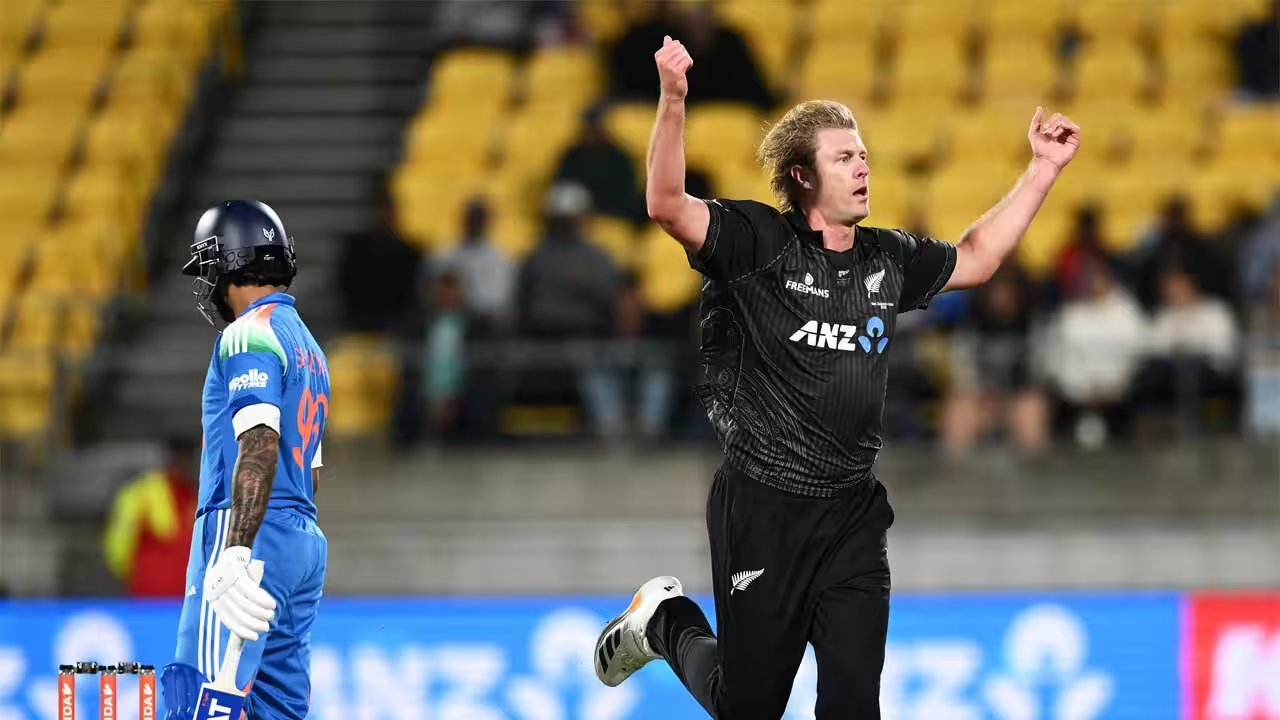
New Zealand’s bowling blueprints have unraveled. Decimated by a relentless string of injuries, the hosts are struggling to stay afloat against India in an unforgiving white-ball rubber. The Kiwis already dropped the five-match T20I contest 2-3 and now trail 0-2 in the five-match ODI series, their attack scrambled from match to match. Constant rotation has killed their rhythm.
Pacer Kyle Jamieson broke his silence on the dressing room frustration before the toss in the third ODI—a game later abandoned due to torrential rain. With spearheads Matt Henry and Lockie Ferguson ruled out, and Blair Tickner breaking down with an injury during the second ODI, New Zealand have lacked the firepower and continuity needed to halt a rampant Indian batting lineup.
"It's a wee bit of frustration, right?" Jamieson told the host broadcaster. "You're trying to always put a similar attack out and you sort of can build that camaraderie and build that cohesion. We haven't had the reps that we'd like. But hopefully over the next couple of weeks we'll sort of all come out here together and get a good run of cricket together."
Pace bowling operates on hunting in pairs. When combinations fracture every forty-eight hours, execution suffers. Jamieson, however, has provided the lone bright spark. In Wellington’s gloom, the towering seamer extracted steepling bounce and lateral movement off the pitch, tearing through India's order to pocket three wickets in a rain-curtailed fixture.
Yet individual brilliance cannot paper over collective structural cracks. After years of white-ball roads where bowling an economy under 10 feels like an achievement, Jamieson welcomed surfaces with live grass. "No, I love it. I'm so used to like these wickets that are, you know, if you go under tens, you're having a good day," Jamieson said. "So it's nice to have a little bit in your favour. You can kind of just try and land on a spot and hope you get a little bit of assistance."
Physical endurance remains the ultimate battleground for the tall quick, who spent months rehabbing his own body. Managing strain and trusting his action has become his daily currency. With an intense block of five-day Test cricket lurking just around the corner, preserving the pace reserves is no longer just a luxury—it is a necessity.
"I kind of always felt like my game was in an okay space. It was just trying to get the physical and the body side of it sort of a bit more under my control," Jamieson noted. "Thankfully I sort of feel like I'm coming out the other side of it now and obviously a big run of Test cricket coming up. So touch wood we survive that." New Zealand now head into the final two ODIs desperate to avoid a sweep before the red ball demands an even heavier physical price.