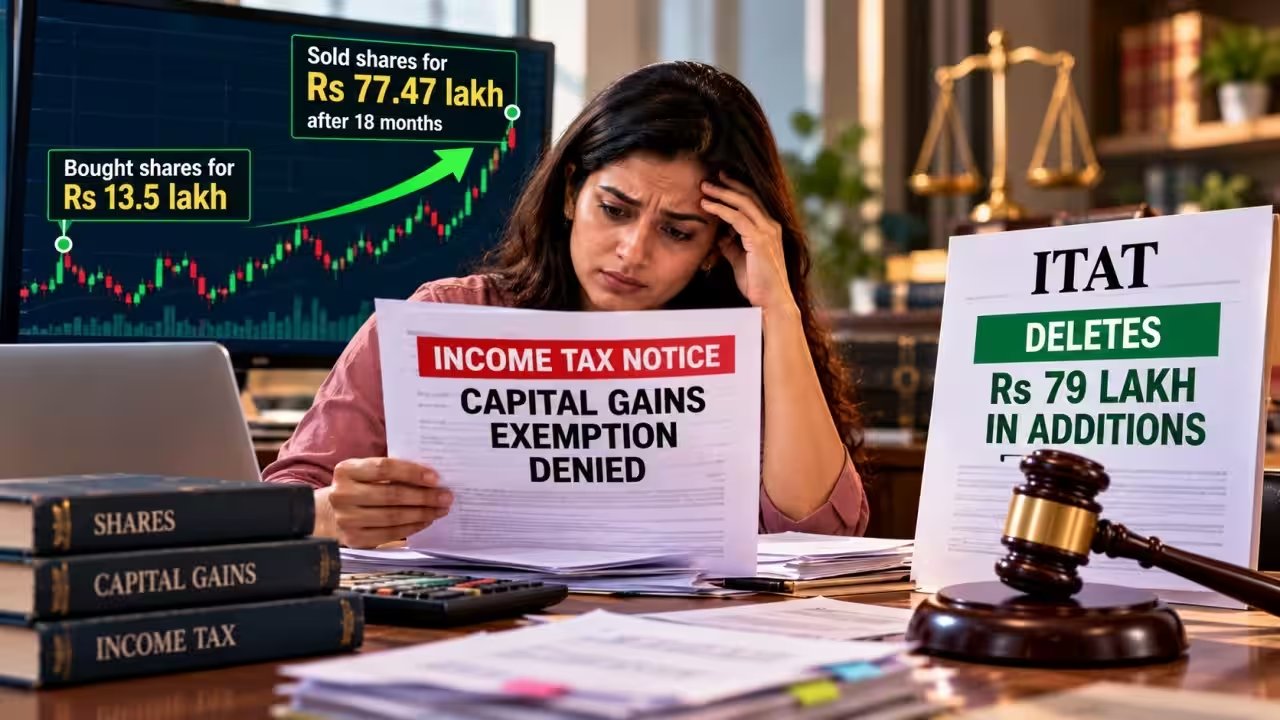
The Mumbai bench of the Income Tax Appellate Tribunal on 8 September 2026 struck down tax additions totalling about Rs 79 lakh that had been levied against a woman for the sale of 120,000 shares of XYZ Ltd. She had purchased 60,000 shares between 3 and 15 March 2011 for Rs 13.53 lakh and, after a 1:1 bonus, held 120,000 shares. The shares were sold between 31 August and 24 December 2012 for Rs 77.47 lakh, and she claimed long‑term capital gains of Rs 65.41 lakh under Section 10(38).
The assessing officer had rejected her exemption claim and treated the full sale proceeds as unexplained, adding Rs 1.54 lakh under Section 69C for alleged commission expenses. The case was later reviewed by the National Faceless Appeal Centre, which upheld the additions before the woman appealed to ITAT.
ITAT examined the purchase, holding and sale documents submitted by the taxpayer – contract notes, bank statements, demat records – and found no evidence of fabrication or manipulation. No material linked the woman to the alleged price‑rigging allegations that had plagued the company in earlier disputes. The tribunal noted that the transactions were conducted through recognised banking channels and on the Bombay Stock Exchange, and that the shares were held for more than 18 months, satisfying the long‑term criteria.
The bench relied on prior ITAT and Bombay High Court rulings that upheld similar orders when documentary proof was sound and no nexus with manipulation existed. "No material has been brought on record to establish any nexus of the assessee with the alleged manipulation or accommodation‑entry providers," the order read, underscoring the absence of collusion.
The woman, a daily wage earner from Pune, had planned to use the exempt gains to purchase a home in the city. The tribunal’s decision therefore preserves her intended investment and confirms the integrity of her trading record.
With the ITAT order now final, the taxpayer can file a review petition in the Supreme Court if she wishes to challenge the ruling further, but the tribunal’s judgment stands as the conclusive assessment for now.