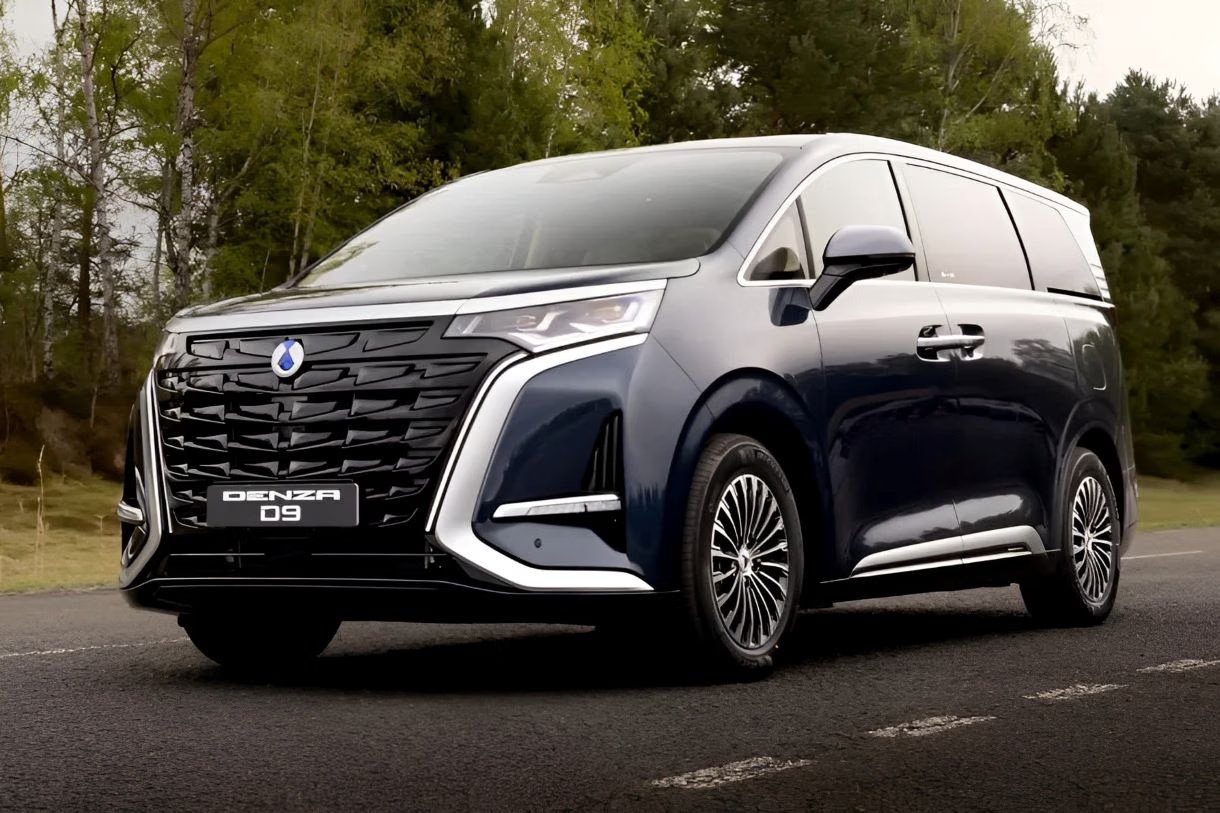
India's ultra-luxury garage is no longer the exclusive preserve of traditional German and Japanese badges. Wealthy buyers eyeing a cavernous, chauffeur-driven electric lounge or a high-voltage grand tourer now have an unconventional alternative on the table. Denza has arrived.
The Chinese automotive group officially rolled out its top-tier marque in India on Friday, pricing the seven-seater D9 electric MPV at ₹90 lakh and the high-performance Z9 GT shooting brake at approximately ₹1.57 crore (ex-showroom). Both models enter the country via the completely built unit (CBU) import route, carrying full customs duties. The company is wagering that bespoke cabin comfort and sheer road presence can pry open wallets in a segment historically tied to legacy heritage.
Early interest is already turning the wheels. BYD India expects to convert an initial pipeline of 80 to 100 vehicle reservations into completed deliveries over the next two months. Speaking at a media roundtable during the launch, executive leadership stressed that while footfalls and booking counters look encouraging, these figures reflect initial customer reservations rather than locked-in cash balances.
For the next couple of months, we should be doing 80
100 odd cars."
That estimate, explained Rajeev Chauhan, Senior Vice President of the Electric Passenger Vehicle Business at BYD India, relies on early dealership inquiries and order logs. Management acknowledged that final delivery conversions will pivot on test drives, spec customisation, and customer appetite once on-road price tags land.
| Model | Body Style / Seating | Ex-Showroom Price | Import Route | Direct Market Rivals |
|---|---|---|---|---|
| Denza D9 | 7-Seater Luxury MPV | ₹90 Lakh | Completely Built Unit (CBU) | MG M9, Toyota Vellfire, Lexus LM, Mercedes-Benz V-Class |
| Denza Z9 GT | Performance Luxury EV | ~₹1.57 Crore | Completely Built Unit (CBU) | BMW i5 M60 |
Buyers demanding tailored exterior paint schemes and specific interior cabin upholstery face a waiting period of roughly three to four months. To soften that lag, the company has pre-imported a cache of vehicles to kick-start initial handovers immediately. Chauhan noted that factory delivery schedules should compress once customer configuration trends stabilise across metro hubs.
Selling a ₹1.5 crore vehicle requires a radically different customer touchpoint than retailing mainstream passenger crossovers. Denza will not share floor space with BYD's standard mass-market lineup.
Instead, the brand is carving out a standalone retail and service network spanning six major wealth centres: Gurugram, Mumbai, Hyderabad, Bengaluru, Chennai, and Ahmedabad. These facilities will feature dedicated sales lounges, specialised service bays, and brand-exclusive staff. Existing BYD franchise partners will finance and run the outlets, with the full six-city network slated to go live over the next 30 to 45 days as initial showroom fit-outs wrap up.
The two cars shoulder fundamentally different commercial assignments. Management expects the seven-seater D9 to pull in the lion's share of sales volume. The electric people-mover enters a contested segment where wealthy business families and corporate fleets routinely drop eight-figure sums. It squares off directly against the upcoming electric MG M9, the ubiquitous Toyota Vellfire, the Mercedes-Benz V-Class, and the stratospherically priced Lexus LM.
And then there is the Z9 GT.
The low-slung, performance-oriented electric estate occupies an eccentric niche with no identical body-style competitor in India. It aims straight at enthusiast buyers who might otherwise browse high-output executive sedans such as the BMW i5 M60. Where the D9 chases fleet and family utility, the Z9 GT functions as a technological calling card—designed to shock badge snobs and stake out Denza's performance bona fides.
Market Context: BYD positions Denza alongside its other premium sub-brands, Fangchengbao and Yangwang, to capture affluent car buyers seeking high-spec alternatives to traditional European luxury marques.
Denza's arrival coincides with a period of steady upward momentum for its parent company. According to official VAHAN registration data compiled by Flash Finance, BYD registered 6,379 passenger vehicles in India between January and October 2026. That represents a jump of roughly 35% compared to the identical ten-month window in the preceding year.
The brand has now surpassed 20,000 cumulative passenger vehicle sales in the country, supported by an existing network of roughly 50 operational dealerships. Denza represents an aggressive move upmarket into six-figure margin territory.
Yet corporate leadership is treading deliberately. BYD management confirmed it will monitor customer reception to the D9 and Z9 GT over the coming quarters before allocating higher import quotas, introducing additional nameplates, or committing capital toward local assembly lines. For now, the rollout across Delhi-NCR and Mumbai over the next 30 days will serve as the real-world litmus test.