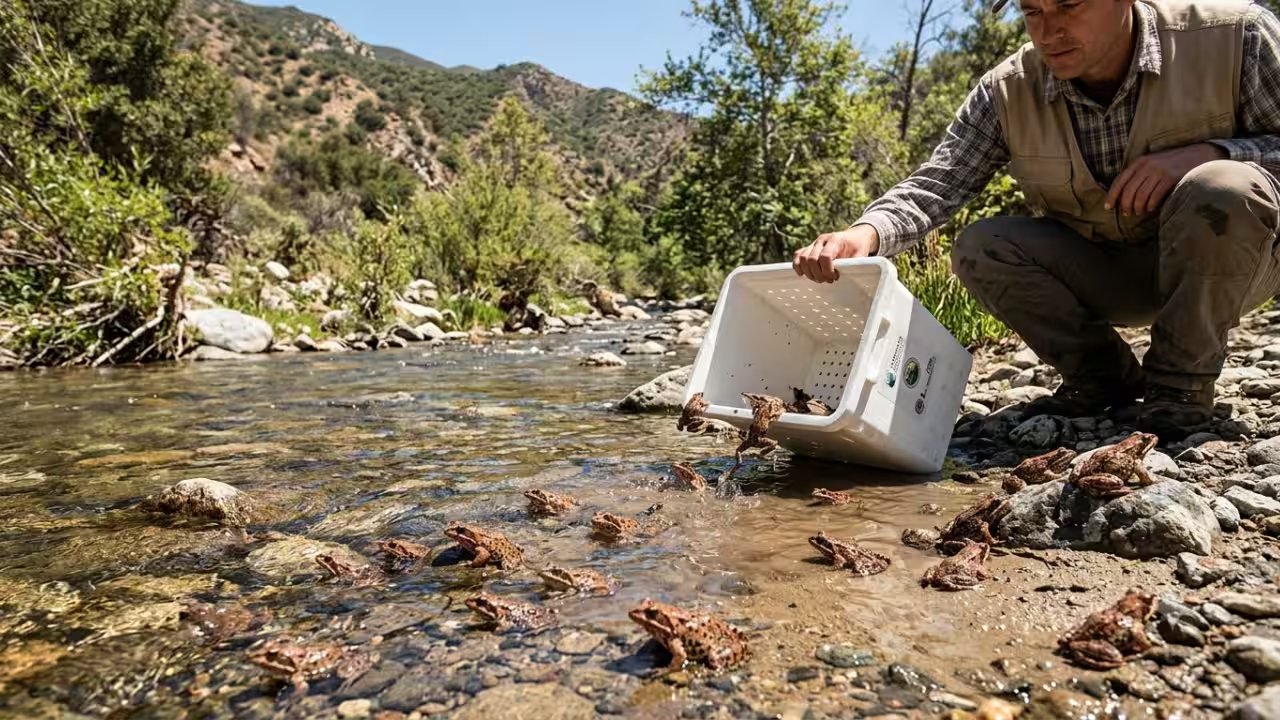
Los Angeles Zoo has just released the largest single batch of captive‑bred southern mountain yellow‑legged frogs to date, setting a new record for the program. The amphibians were dropped into streams in the San Gabriel Mountains on 19 and 27 August, after spending months in a new bio‑secure headstart facility that kept their water conditions stable.
The species once thrummed through the canyons of the San Gabriel, San Bernardino and San Jacinto ranges, so dense that hikers would step around them like stepping stones. Today it survives in isolated pockets, a shadow of its former abundance, and the International Union for Conservation of Nature has listed it as Endangered.
The headstart facility, housed in the renovated Children’s Discovery Center, houses specialised tanks that mimic the frogs’ natural stream chemistry. 227 frogs were raised there before release, a step that boosts their survival odds by maturing them before they face predators and variable water temperatures.
Byron Wusstig, curator of ectotherms at the Los Angeles Zoo, said, "Seeing our new headstarting facility transition from concept to operational reality is a monumental milestone for the recovery of the southern mountain yellow‑legged frog." The program is a joint effort with the US Geological Survey, San Diego Zoo Wildlife Alliance, Omaha’s Henry Doorly Zoo, the US Forest Service, the US Fish and Wildlife Service and the California Department of Fish and Wildlife.
The release was carried out by a small crew of volunteers, including a local hiking guide who had spent winters tracking the frogs’ elusive movements. She recalled, "Seeing the frogs leap off the rocks into the stream felt like a quiet miracle, a small victory against the tide of loss."
The next phase will see 112 tadpoles transferred to Santa Ana Zoo for continued care in September, and additional releases are planned for the following months as the network expands. The program’s monitor teams will track the frogs’ survival and reproduction in the streams, hoping to establish self‑sustaining populations in the wild.