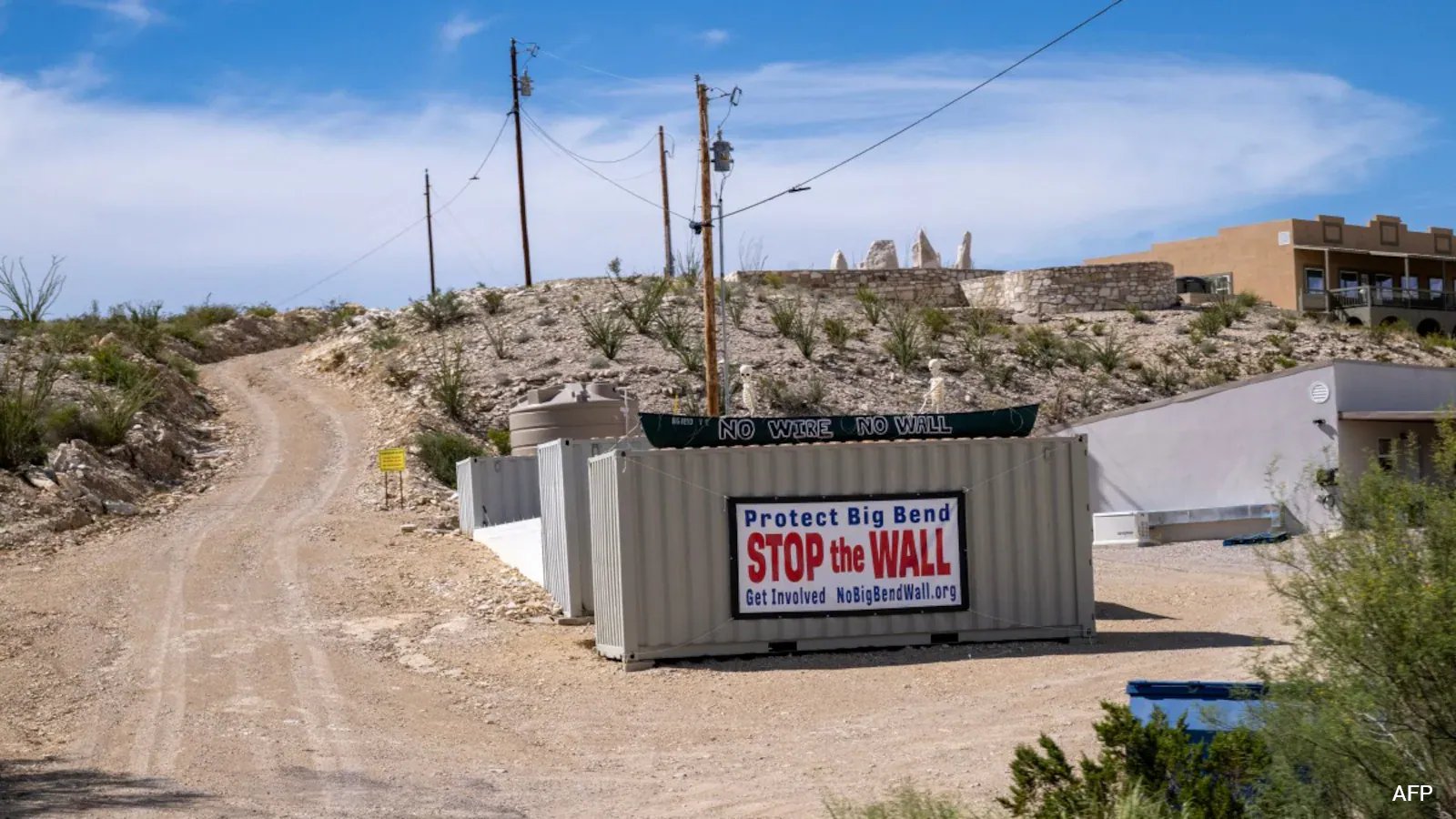
The US Supreme Court cleared the path for President Donald Trump on Monday to resume building border barriers through West Texas, green-lighting federal construction inside Big Bend National Park.
The ruling granted an emergency application from the Justice Department, wiping out a temporary injunction that had shuttered work sites since October.
The decision was immediate. Bulldozers can roll again. The Center for Biological Diversity, joined by a regional river outfitter and advocates protecting a fragile adobe church in Ruidosa, had sued to stall the project, arguing that heavy earth-moving equipment will permanently disfigure one of North America's most remote desert ecosystems roughly 250 miles southeast of El Paso.
At the core of the fight sits a battery of sweeping waivers issued by Homeland Security Secretary Markwayne Mullin and his predecessor Kristi Noem. Drawing on a 1996 federal immigration statute, the agency bypassed the Endangered Species Act, the National Environmental Policy Act, and the National Historic Preservation Act after designating the rugged wilderness an "area of high illegal entry."
The White House plans to install a 17-mile noncontiguous vehicle barrier system within the national park itself, alongside wider road and barrier infrastructure across the broader 300-mile sector, primarily over private land. Work was briefly paused in August following bipartisan backlash over industrial scarring in the park. Yet federal lawyers pressed the high court to intervene, arguing that border officials confront armed cartels and extensive narcotics trafficking across the Rio Grande.
The order upends an October ruling by US District Judge Kathleen Cardone in El Paso, who had blocked the construction on grounds that the administration overreached. Cardone invoked the "major questions" doctrine — the same conservative legal standard the Supreme Court previously used to curb executive power and strike down Trump's global tariffs. The judge pointed out that Big Bend registers the lowest migrant crossing numbers on the entire southern border, determining that declaring it an emergency corridor would hand Homeland Security unchecked waiver authority from the Pacific Ocean to the Gulf of Mexico.
The Justice Department countered that the statute provides an express, unambiguous delegation of power that presidents have relied on for nearly three decades. Monday's unsigned Supreme Court order contained no recorded dissents, clearing contractors to mobilize along the border while the Fifth Circuit Court of Appeals hears formal arguments on the merits of the lawsuit later this year.