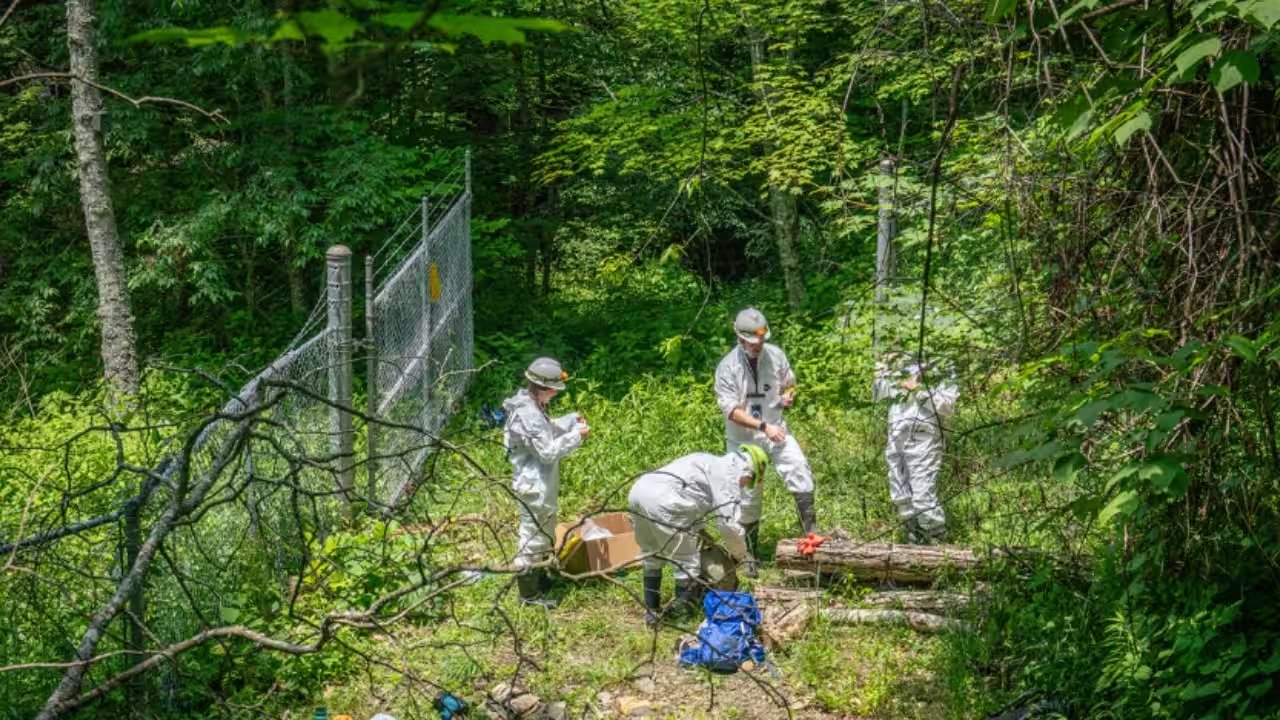
ELK PARK, N.C. — A North Carolina land trust has purchased 320 acres surrounding the historic Cranberry Iron Mine, permanently closing off surface tracts to commercial timber operations to shield five bat species wintering underground.
The Southern Appalachian Highlands Conservancy completed the 2026 acquisition south of Elk Park in Avery County, encompassing high-elevation ridgelines rising to 3,900 feet and wild trout waters along Cranberry Creek. The purchase establishes a protective buffer above sprawling subterranean tunnels that once supplied iron ore across the eastern seaboard. Now, the shafts serve a strictly ecological purpose. They house hibernating populations of Virginia big-eared bats, northern long-eared bats, tri-coloured bats, little brown bats, and big brown bats.
The mine operated continuously from 1826 until the 1930s. Surface digging gave way to deep underground shaft extraction after the Eastern Tennessee and Western North Carolina railroad arrived in 1882, opening direct transport corridors through Johnson City. When industrial excavation ceased, native fauna reclaimed the dark, stable caverns.
The purchase plugs longstanding gaps in earlier state preservation deals.
The North Carolina Wildlife Resources Commission acquired mineral rights and a donated conservation easement across the mine in 2002 to protect hibernating colonies. But that pact left surface parcels exposed. It permitted commercial timber felling and communications tower installations. Between 2008 and 2010, a commercial hardwood manufacturer logged the mountainside heavily, stripping canopy directly above the subterranean chambers.
SAHC's acquisition consolidates surface ownership with existing subterranean protections. The conservancy plans to guide the recovering forest toward full ecological maturity alongside state biologists.
“The evolution of the former mine to become a safe haven for endangered bats demonstrates nature’s ability to recover and adapt,” said SAHC Land Protection Director Michelle Pugliese. “I am excited to partner with the NC Wildlife Resources Commission to safeguard that habitat.”
North Carolina hosts 17 bat species, including three classified as federally endangered and one listed as federally threatened. A single nursing female bat can consume up to 4,500 mosquitoes nightly, acting as a natural check against pest surges.
Yet regional populations face severe pressure from white-nose syndrome, a lethal fungal pathogen that attacks bats during winter dormancy. The fungus damages fragile wing tissue, disrupts metabolic hydration, and burns through stored winter fat, triggering mass starvation inside infected caves. Undisturbed, temperature-stable hibernacula provide the sole defense against such catastrophic colony losses.
SAHC field teams and NCWRC wildlife biologists will now initiate joint timber stand management across the 320-acre parcel to stabilize soil runoff and preserve subterranean airflow for upcoming winter hibernation cycles.