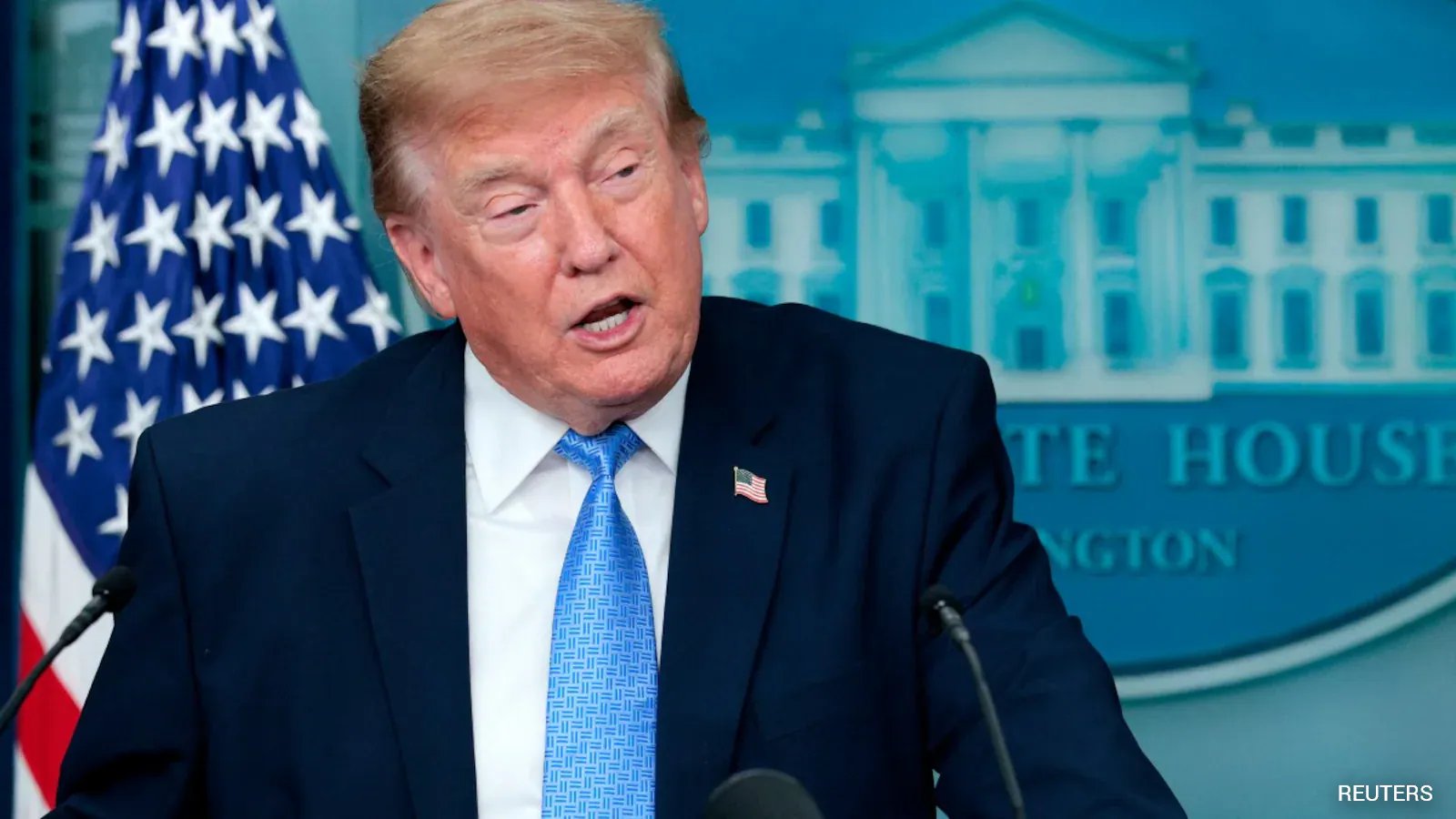
WASHINGTON — The military offensive against Iran is over, Donald Trump declared Monday. Stepping unannounced into the White House briefing room hours after closed-door talks with Qatar's prime minister, the US President announced a sharp drawdown in his administration's bellicose stance toward Tehran.
"Iran militarily is effectively over," Trump said. "We're just keeping it the status quo."
The sudden reversal follows a bruising domestic political defeat. Trump's Republican Party lost control of both chambers of Congress to Democrats in last week's midterm elections, an electoral rout fueled by public anger over the eight-month-old conflict. Soaring fuel prices sparked by the war had rattled energy markets and hit household budgets across the world. While Trump claimed Iran's military apparatus had been "decapitated," he maintained that Washington still demands a permanent mechanism to defang Tehran's nuclear program.
Political arithmetic forced the pivot. In an interview Sunday, Trump acknowledged that as long as Washington observes genuine progress at the bargaining table and secures a "strong agreement," a resumption of strikes remains "highly unlikely." Yet the threat of renewed violence has not vanished entirely. Trump confirmed the US military has mapped specific Iranian infrastructure targets — including 38 critical bridges — earmarked for destruction if negotiations unravel.
The truce on paper also belies simmering hostilities on the water and in the skies. Over the past week, US forces pounded Iranian air defense batteries at least twice. On Saturday, American naval forces fired on and disabled a commercial vessel attempting to punch through the US-enforced naval blockade choking Iranian ports.
Focus now shifts to indirect negotiations mediated through Doha, where diplomatic envoys face a narrowing window to codify terms before the newly elected US congressional majority convenes in Washington.