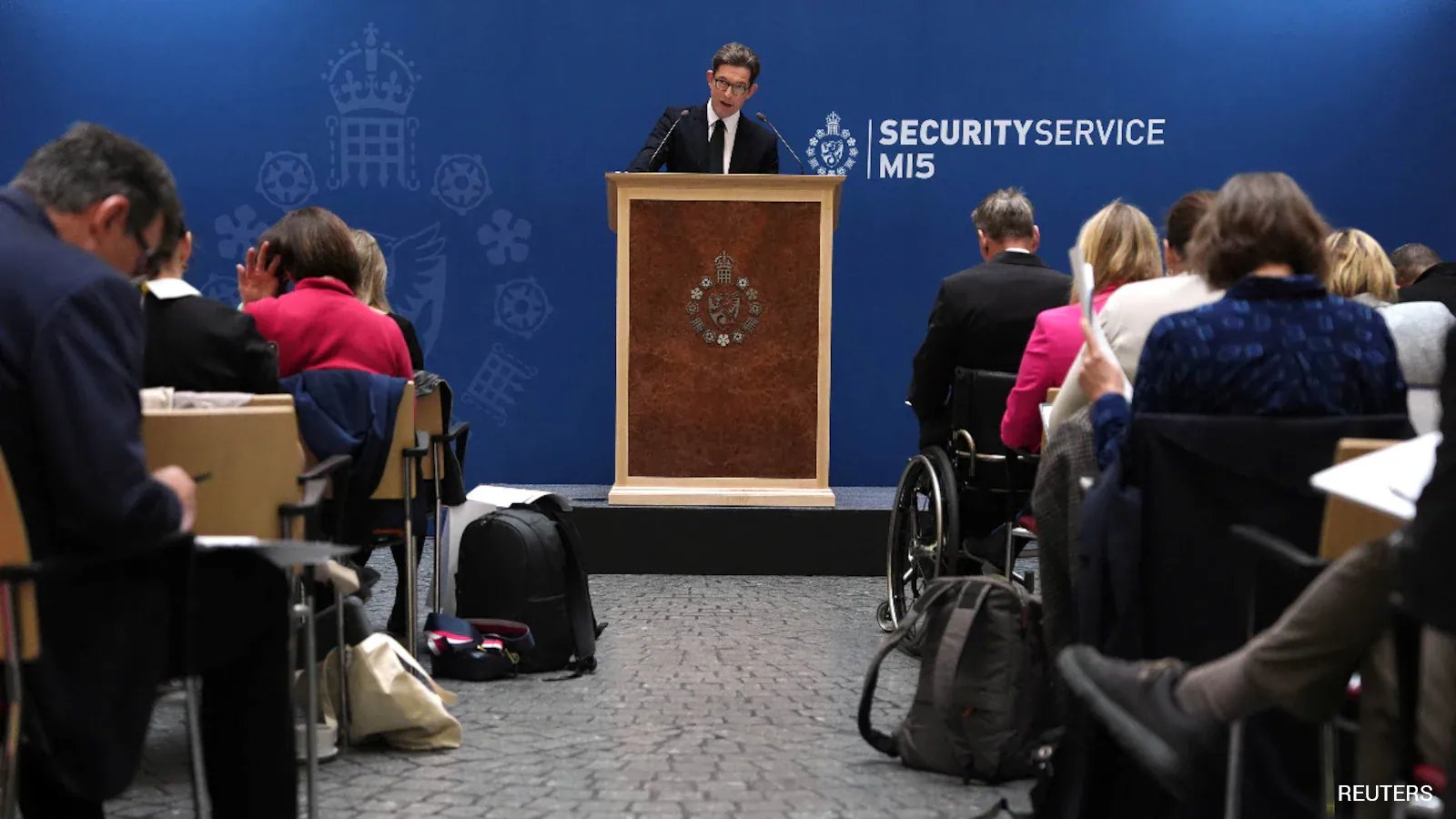
Ken McCallum, MI5’s chief, opened his annual threat assessment on Tuesday, warning that Iran, Russia, artificial intelligence and extremist groups now dominate the UK’s security landscape.
McCallum called Russia the “aggressor number one,” noting that the Kremlin’s hybrid attacks have slipped beneath NATO’s trigger threshold. Since the Ukraine invasion, the UK has expelled 1,000 Russian diplomats, forcing Moscow to lean on local volunteers and criminal proxies to stage cyber‑espionage and sabotage.
Iran, according to McCallum, has stepped up its hybrid campaign, using criminal proxies to target Israeli interests and Jewish communities. The MI5 data show over 50 Iran‑linked arrests this year, and Tehran is now aiming at military sites, a shift that has alarmed security officials.
The chief warned that artificial intelligence is accelerating the cyber‑warfare arms race. AI‑enabled drones and tailored propaganda now give attackers a new edge, while the possibility of terrorists developing bioweapons or new pathogens poses an unprecedented threat. He urged immediate upgrades to cyber‑defence protocols and AI monitoring, with a policy review slated for early November.
Britain’s national terrorism threat level was raised to “severe” in April, reflecting the likelihood of a mass‑casualty attack within six months. McCallum said Al Qā'idah and ISIS remain active, and that the rise in extremist‑right‑ideology radicalisation, exemplified by a 13‑year‑old who was stopped by an unnamed foreign partner, underscores the domestic risk.
McCallum also touched on Russian interference in the 2016 EU referendum, noting that Russia Today’s coverage and troll activity were “public knowledge.” He dismissed the claim that the interference was a decisive factor, adding that the UK's counter‑troll efforts have remained modest.