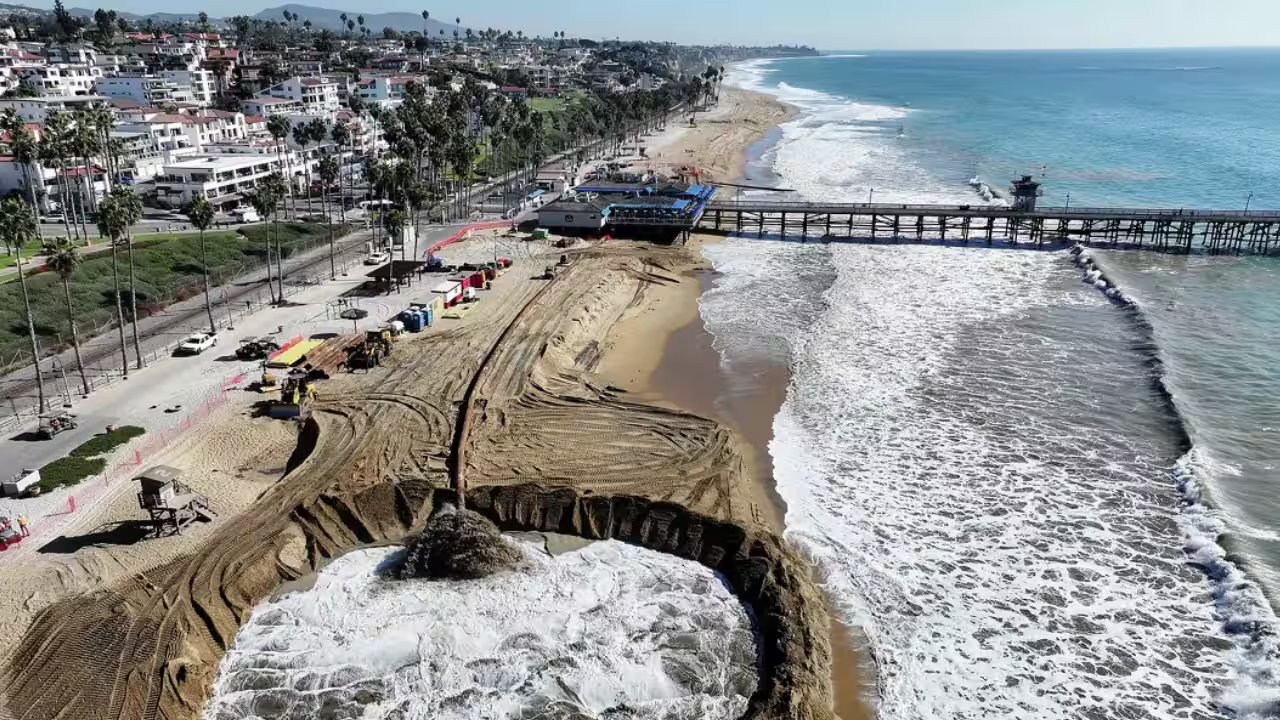
San Clemente voters delivered a decisive blow to municipal climate defenses at the ballot box, rejecting a sales tax increase that would have raised roughly $15 million a year to rescue vanishing beaches and fortify hillsides against fire.
Nearly two-thirds of ballots opposed Measure M in the November 3, 2026 election. The proposed measure sought to lift the city sales tax rate by one full percentage point, pushing it from 7.75% to 8.75%. Had it passed, the levy would have poured revenue into two ring-fenced accounts over a 10-year lifespan, splitting receipts down the middle: 50% for coastal sand restoration and 50% for wildfire preparedness. The electorate said no.
Waves keep coming. For years, relentless swell action and high tides have stripped sand from San Clemente's southern coast, chewing through bluffs and menacing the rail tracks running right at the water's edge. That ribbon of steel serves as the critical passenger and freight rail conduit tying San Diego to Northern California. Repeated bluff collapses have triggered track shutdowns, stranding commuters and blocking freight. Further north, shrinking shores now jeopardize public access corridors, walkways, and vital municipal infrastructure. In 2024, the city spent approximately $800,000 on an emergency sand replenishment drive simply to prevent surf from undermining the lifeguard headquarters near the municipal pier.
Hard engineering has already reached its limits. The city previously weighed armoring the coast with heavy rock revetments and concrete seawalls. Yet those barriers risk walling off public beaches and bouncing wave energy sideways, accelerating erosion on neighboring stretches of coastline. Sand replenishment offers a softer fix, but it requires continuous, multimillion-dollar infusions of cash that the city budget cannot shoulder alone.
Compounding the crisis is the threat from the ridges above. Just before the vote, the Norte Fire erupted in the city hills, forcing thousands to flee and incinerating seven homes. The disaster underscored the dual hazards battering the seaside community, yet voters refused to raise transaction taxes to combat them. The defeat marks the second time in three years that coastal tax measures have collapsed at the polls; an earlier beach funding initiative faltered in 2024 under a different legal threshold.
Emergency track work will proceed regardless of the vote. On November 5, the Orange County Transportation Authority secured formal clearance from the California Coastal Commission to deposit nearly 690,000 cubic yards of sand across local beaches to protect the vulnerable rail bed.
| :--- | :--- | :--- | :--- |
|---|---|---|---|
| Total Sand Volume Cleared | ~690,000 cubic yards | ||
| San Clemente State Beach Placement | 450,000 cubic yards | ||
| North Beach & Mariposa Point Allocation | 240,000 cubic yards | ||
| Regulatory Approval Agency | California Coastal Commission (Cleared Nov 5) | ||
| Lead Transit Agency | Orange County Transportation Authority (OCTA) | ||
| Measure M Proposed Tax Adjustment |
The transport authority's strategy targets critical choke points. Contractors will pump 450,000 cubic yards onto San Clemente State Beach, while directing another 240,000 cubic yards to North Beach and Mariposa Point. While this intervention shores up the rail embankment, it leaves municipal beaches elsewhere along the shore without a dedicated maintenance program.
City officials must now weigh shifting operational funds away from other civic services or launching talks with surrounding jurisdictions from Los Angeles down to San Diego to share dredging armadas and bulk material procurement. If winter swells peel away another layer of the bluffs before spring, municipal leaders may bring an altered funding proposal back to the ballot.
| 7.75% to 8.75% (Rejected) |
| Annual Expected Measure M Yield | ~$15 Million over 10 Years |