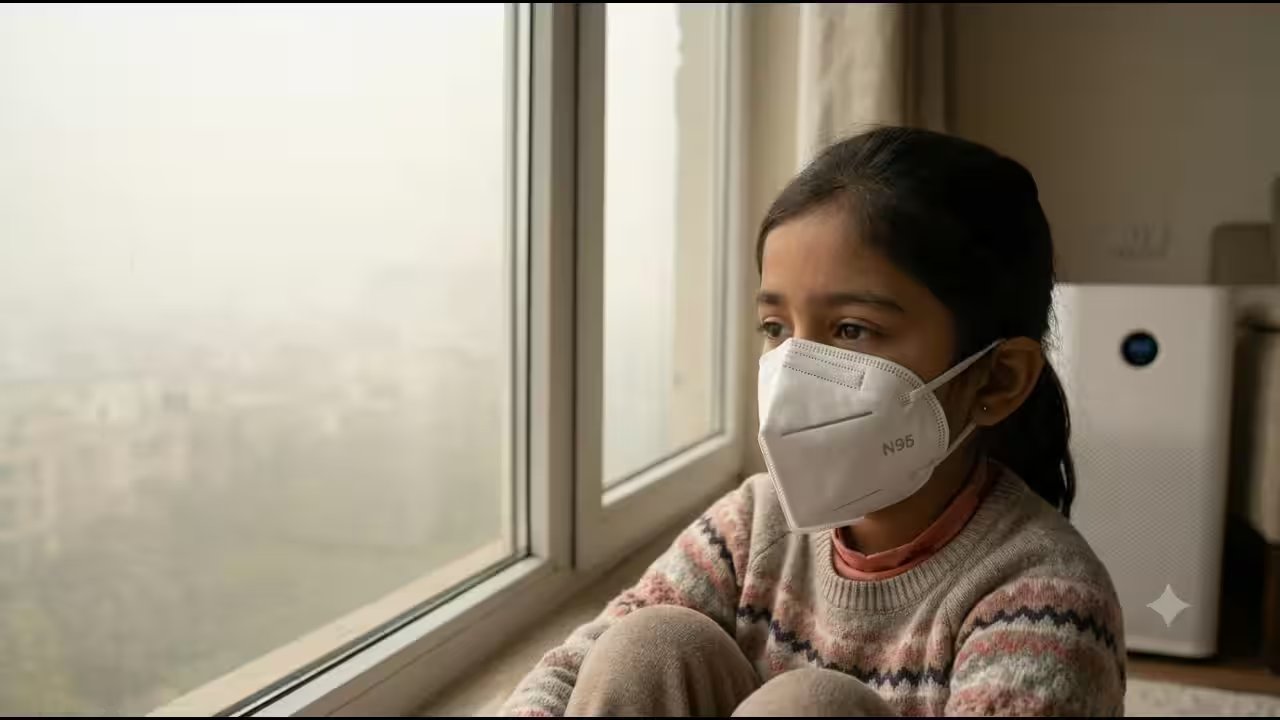
The toxic haze over Delhi-NCR has settled into living rooms and playgrounds alike. Air Quality Index readings now routinely hit the severe 500 ceiling across the capital region. For adults, the gray veil triggers burning eyes and scratchy throats. For children, the biological cost runs far deeper. Their airways are narrow, their respiratory defenses are still developing, and every deep breath pulls toxic particulates straight into vulnerable tissue.
Parents cannot wait out the season with passive concern. Routine school runs, neighborhood cycling, and evening football matches now carry immediate respiratory hazards. Dr Gargi Mathur, paediatrician at Shalby International Hospital in Gurugram, warns that routine childhood routines require immediate adjustment when air quality reaches hazardous thresholds.
Sporting activities must stop immediately during peak pollution episodes. Strenuous physical movement forces children to breathe rapidly through their mouths, bypassing natural nasal filtration and driving microscopic soot deep into their bronchioles. Running, cycling, and competitive drills turn open fields into health hazards.
Dr Mathur was emphatic about the physiological toll of heavy outdoor exertion:
When AQI levels rise very high, children should avoid doing any strenuous activities outdoors such as sports, cycling, running etc. These activities cause children breath heavily. During higher AQI, children can breathe small air pollution particles and these pollutants can affect their lungs badly.
Yet total isolation inside four walls is rarely possible when daily commitments intervene. If a child must step outside, casual cloth coverings and loose surgical masks will not suffice. Dr Mathur advises parents to fit children with certified N95 or N99 respirators. The mask must seal securely around the bridge of the nose and jawline—without gaps—to filter fine particulate matter before it reaches fragile lung tissue.
Barricading windows does not guarantee clean air. Microscopic pollutants penetrate door seals, window tracks, and ventilation gaps, turning bedrooms into stagnant reservoirs of fine dust. Installing an air purifier sized accurately to the square footage of the room creates an immediate safe sanctuary, particularly where children sleep and study.
But mechanical filtration fails if families generate pollution inside their own homes. Indoor cultural and domestic habits frequently spike indoor particulate counts to levels rivaling the street outside. Burning incense sticks (agarbatti) and camphor releases concentrated streams of soot and volatile compounds directly into confined spaces. Dr Mathur instructs households to halt these practices entirely alongside indoor cigarette smoking:
You should focus on the room where children spend most of their time. Avoid using any smoke indoors. Stop using incense sticks (Agarbatti), burning Camphor and smoking indoors. These small steps can toll big effects.
| Setting & Exposure Source | Clinical Hazard | Direct Action Protocol | Protective Equipment / Target |
|---|---|---|---|
| Outdoor Sports & Play | High-volume inhalation of PM2.5 and PM10 | Suspend cycling, athletics, and field games | Zero outdoor physical exertion |
| Transit & Commuting | Ambient toxic exposure during travel | Wear tight-fitting particulate respirators | Well-fitted N95 or N99 certified masks |
| Indoor Bedrooms & Living Spaces | Accumulation of trapped outdoor particulates | Run room-matched mechanical air filtration | Purifier capacity matched to room volume |
Families managing pre-existing respiratory conditions face elevated danger during severe air quality spikes. Children diagnosed with asthma, chronic allergic rhinitis, recurring sinus infections, or reactive airway disease experience heightened bronchial irritation as ambient air worsens. Spasms, throat tightness, and sudden airway constriction can escalate rapidly without proactive clinical management.
"Parents of children suffering from these conditions should be extra cautious during higher AQI levels," Dr Mathur noted. "Ensure they have their medication and inhalers available. If they begin to show symptoms then speaking to your doctor ahead of time to ensure you have a good plan in place will help. Taking a few extra precautions can easily prevent your child from having a major health issue."
Warning signs must not be dismissed as routine seasonal colds. Persistent nighttime coughing, audible wheezing, rapid chest movements, or labored breathing demand immediate medical evaluation. Paediatricians urge parents across Delhi-NCR to monitor local station monitors each morning, keep rescue inhalers within arm's reach, and maintain clean indoor zones until ambient indices subside.
| Household Practices | Combustion soot and volatile organic irritants | Eliminate agarbatti, camphor, and tobacco smoke | Complete prohibition of indoor burning |
| Chronic Respiratory Illness | Airway hyper-reactivity, wheezing, and spasm | Pre-position maintenance drugs and emergency plans | Inhalers, spacers, and clinical consultation |