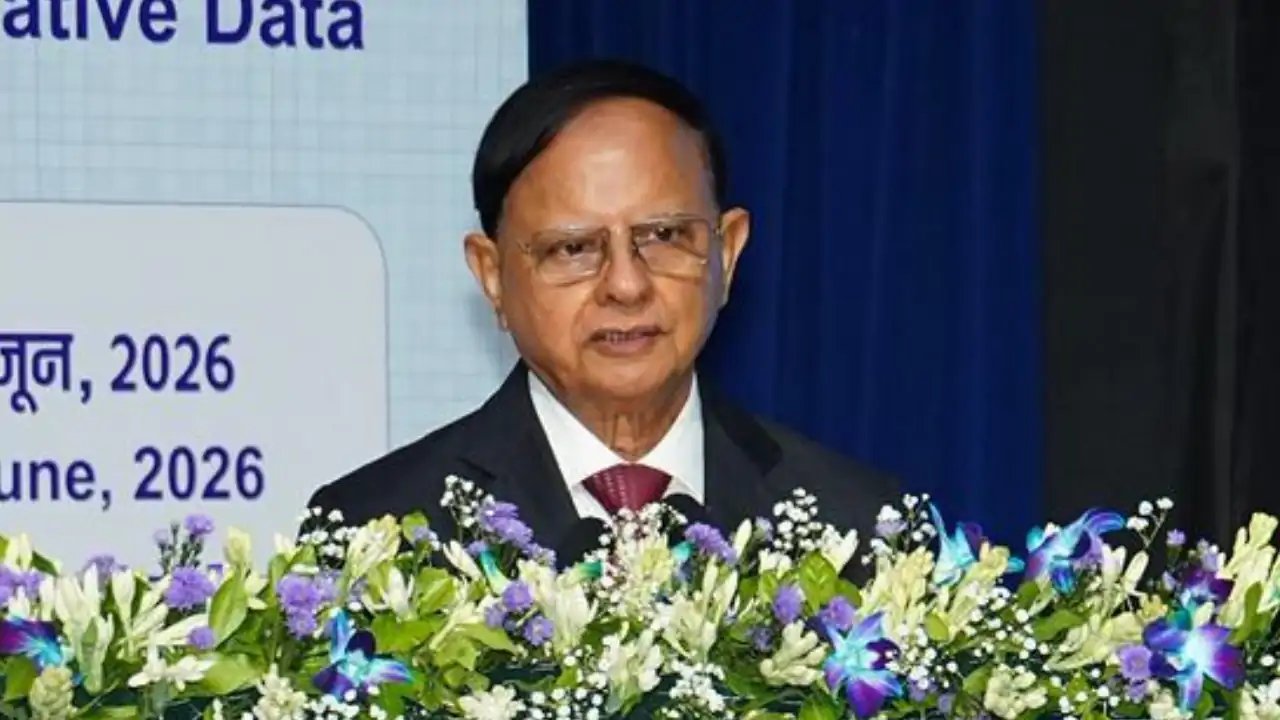
KOZHIKODE — Climate disruptions now directly threaten India's food baskets, household nutrition, and rural livelihoods, demanding an immediate shift toward disaggregated, district-level planning.
Principal Secretary to the Prime Minister Dr. P.K. Mishra delivered that warning on Wednesday, addressing the 20th Annual Meeting of the Environment for Development Network hosted at IIM Kozhikode. Mere grain self-sufficiency can no longer shield the country. Instead, volatile weather systems increasingly strike high-value dietary staples, hitting pulses, vegetables, fruits, and dairy supplies. The economic fallout lands hardest on household kitchen budgets.
Point-blank assessments under the Indian Council of Agricultural Research's National Innovations in Climate Resilient Agriculture programme put the crisis in stark numbers. Researchers classified 310 out of 651 surveyed agricultural districts as highly or very highly vulnerable to shifting climate patterns. The findings demolish the logic of uniform, one-size-fits-all farm policies.
Food security models have long obsessed over gross calorie production while ignoring diet quality. Dr. Mishra pushed back against that legacy framework, arguing that dietary diversity remains as vital as sheer grain tonnage. Extreme heatwaves and erratic monsoon downpours disrupt sensitive horticulture and livestock cycles, sending consumer food prices spiraling upward across regional markets.
Data must help us anticipate challenges, not merely measure outcomes.
Dr. P.K. Mishra, Principal Secretary to the Prime Minister
To outrun climate volatility, administrators must overhaul how they collect and deploy field data. Dr. Mishra urged government agencies to blend administrative records, household surveys, satellite imagery, and geospatial mapping into shared analytical platforms. Yet data collection alone solves nothing without frontline execution. State secretariats and district collectorates need domestic analytical muscle to turn raw figures into timely crop advisories, targeted water budgets, and adaptive irrigation schemes.
| Policy Parameter | Baseline & National Target | Official Assessment Status |
|---|---|---|
| ICAR-NICRA Vulnerable Districts | 310 out of 651 districts | Classified as highly or very highly vulnerable |
| Long-Term Decarbonisation | Net Zero emissions by 2070 | Reaffirmed alongside 2047 developed nation goal |
| Nationally Determined Contribution | Updated 2031–2035 commitment window | Formulated to lift domestic climate ambitions |
| Analytical Integration Scope | Satellite, geospatial, surveys, field data | Mandated for district-level resource allocation |
India continues to tie its ecological commitments directly to economic sovereignty. The Union government is balancing twin national targets: transforming into a developed economy by 2047 while hitting Net Zero carbon emissions by 2070. Meeting both benchmarks requires defending farm incomes, curbing rural poverty, and insulating food systems from heat stress. Dr. Mishra noted that India's updated Nationally Determined Contribution framework for 2031–2035 cements this ambition on the global stage.
Planners in New Delhi and state capitals will now test these data protocols against upcoming seasonal sowing cycles to shield farm yields and contain food inflation across the country's most vulnerable districts.