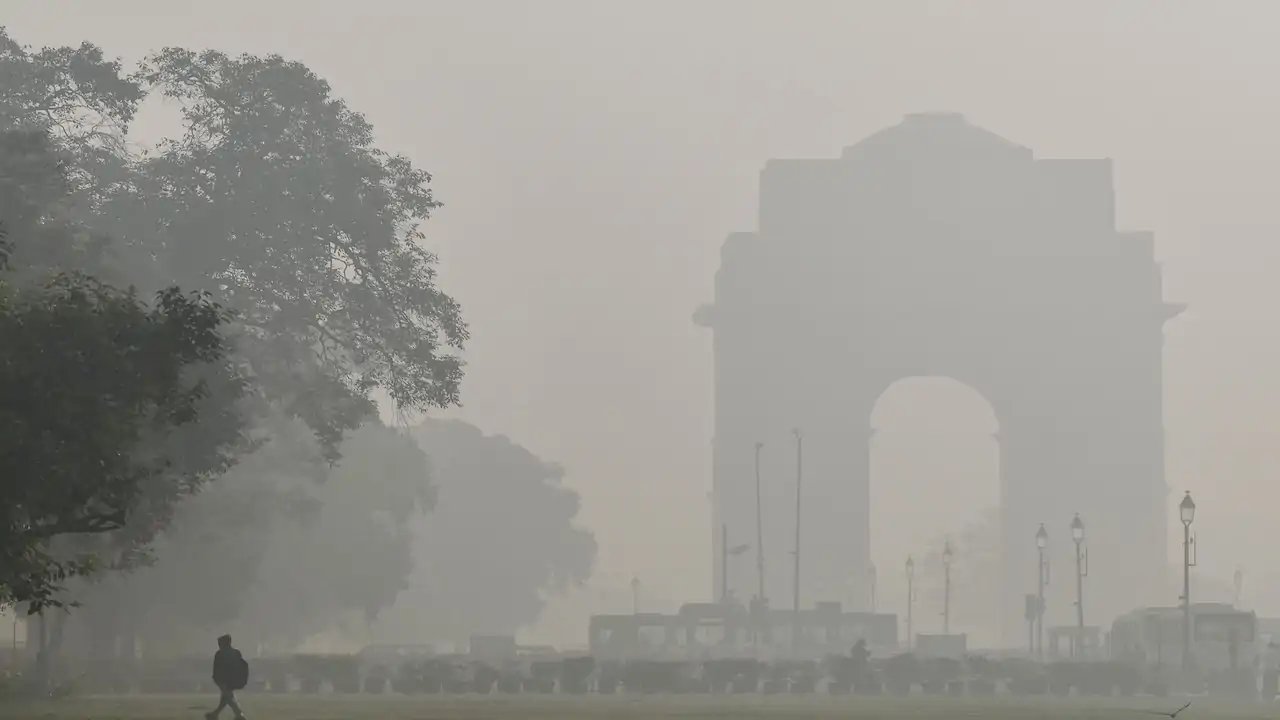
A suffocating blanket of grey smog locked Delhi into its most toxic Diwali in five years.
Central Pollution Control Board monitors registered the capital's 24-hour average Air Quality Index at 376 on festival day. By 10 a.m. on Monday, relief had failed to arrive. The index hovered at 371—the highest post-Diwali reading logged across the National Capital Region since 2021. The city choked. Out of 51 state monitoring stations online, 14 spiked straight into the 'severe' zone, while 33 turned up 'very poor.' Delhi Technological University captured the city's foulest air, touching a hazardous 439.
The numbers lay bare a steep five-year reversal across the capital.
| Year | Diwali Day AQI | Post-Diwali Day AQI |
|---|---|---|
| 2021 | 382 | 462 |
| 2022 | 312 | 302 |
| 2023 | 218 | 360 |
| 2024 | 328 | 338 |
| 2025 | 345 | 351 |
| Current Year | 376 | 371 |
Dead-calm surface winds turned the metropolis into a stagnant bowl. At Safdarjung, morning runway visibility crashed from 700 metres on Sunday down to 50 metres by 6:30 a.m. on Monday, locking the airfield down under dense fog for six and a half hours. Over at Palam, visibility collapsed to 400 metres before creeping upward toward midday as temperatures edged up. India Meteorological Department meteorologists warned that sluggish wind traps emissions directly against the cold ground layer.
Yet weather told only half the tale. Neighborhood after neighborhood defied municipal crackdowns. In Pitampura, Burari, and Mayur Vihar, explosive crackles shook residential blocks deep past midnight, brazenly blowing past the District Magistrate's two-hour evening window set for green firecrackers. Swiss air monitor IQAir clocked Delhi's fine particulate matter (PM2.5) at 170 micrograms per cubic metre—34 times the safe ceiling established by the World Health Organization.
Winter inversion is now settling across the Indo-Gangetic plains. With stubble smoke drifting down from agrarian belts and local meteorological forecasts projecting light winds through the week, environmental regulators face emergency curtailment protocols under Stage II of the Graded Response Action Plan.