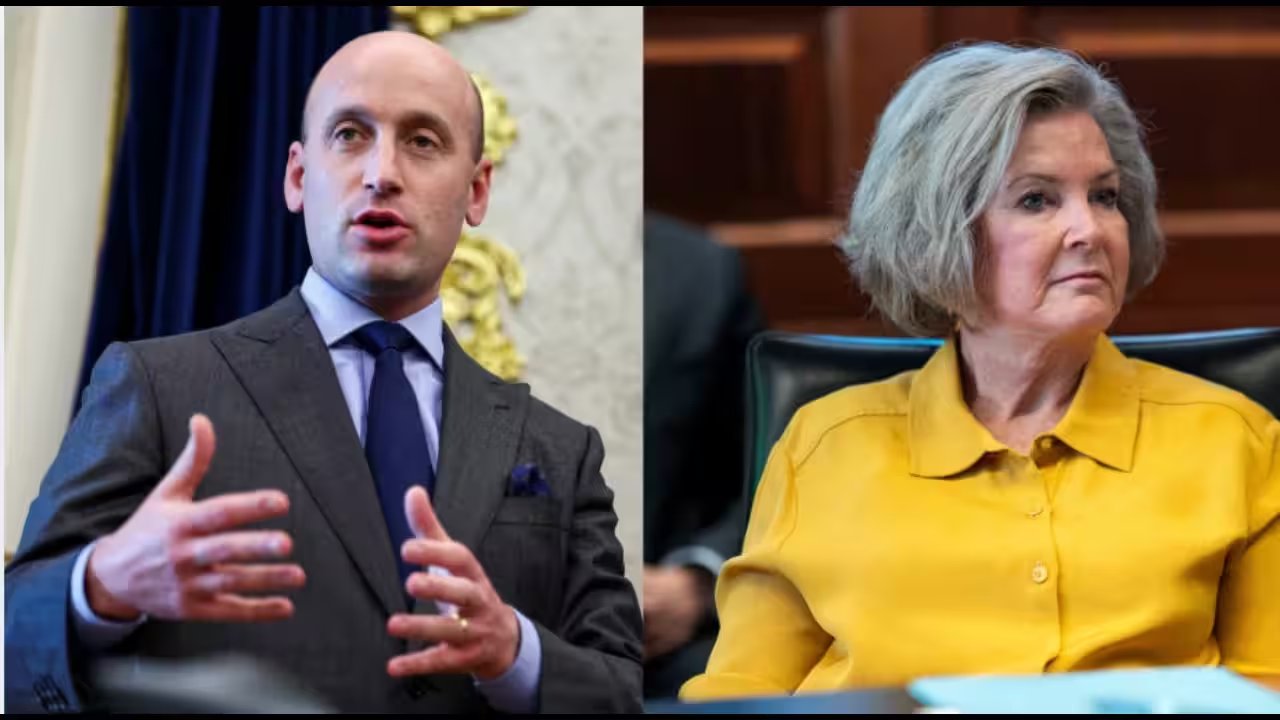
WASHINGTON — Stephen Miller has dismantled the West Wing's centralized communications regime. In his first sweeping administrative decree since taking over as White House chief of staff on Monday, November 9, Miller circulated an internal operational memo that cedes narrative authority directly back to departmental heads. The shift reverses the ironclad message discipline enforced by former chief of staff Susie Wiles throughout the opening two years of Donald Trump's second term. The era of micro-management is over.
Under the revised architecture, the White House position of Cabinet Secretary ceases to exist in its traditional form. The post will now operate as the Director of Cabinet Relations, pivoting from a supervisory media checkpoint into an administrative support mechanism. The memo stated that the role will focus on providing backing for departmental heads rather than scripting their daily public appearances.
Blocking agency chiefs from speaking independently had paralyzed West Wing agility. Miller framed the recalibration as an operational necessity to unburden the executive apparatus.
The White House position of Cabinet Secretary will be changed to the role of Director of Cabinet Relations, focused on providing support and reinforcement of President Trump's tremendous Cabinet Secretaries. Each cabinet leader serves as the best leader and communicator for their individual Departments, and this new position will ensure our Cabinet is resourced and bolstered by the White House to deliver swift, critical, and lasting wins for the American people.
Internal White House Memorandum
Administration officials confirmed that the directive seeks to turn agency heads into the primary drivers of policy rollout rather than subordinate conduits for West Wing press aides. The previous system, officials noted, had simply constrained the cabinet.
The operational pivot marks a repudiation of the management architecture run by Wiles, who exited following Republican midterm losses. For nearly two years, Wiles maintained an unyielding grip on executive agency communications. Her team dispatched relentless, granular instructions detailing how agency heads could address the press, choking off departmental autonomy.
She demanded complete authority. According to a former administration official, Wiles governed external messaging through intimidation, warning agency leaders that unauthorized public disclosures or unscripted appearances would invite targeted leaks to destroy them politically. Wiles routinely admonished Cabinet officials that uncoordinated comments to the media would make them directly culpable for party defeats at the ballot box.
Miller’s strategy cuts the opposite way. An official familiar with the transition described the move as unleashing cabinet heads to serve as captains of their own ship, acknowledging that no central office can micromanage an executive apparatus of millions. Authority now flows to those closest to the frontline issues.
Beyond media management, the memorandum enacts an immediate shakeup across the internal executive reporting hierarchy. The administrative changes install trusted loyalists into key chokepoints while enforcing stricter lane boundaries across domestic and national security matters.
Caleb Orr, who previously served as assistant secretary of state for economic and business affairs, will step into the pivotal post of chief of staff for policy. Meanwhile, the director of presidential scheduling and the broader Office of Presidential Scheduling will now report directly to Chamberlain Harris, the deputy director of Outer Oval operations.
Policy development will follow a codified, regularized process overseen jointly by the deputy chief of staff for policy and the national security adviser. Crucially, the memo orders an end to competing policy spheres, mandating clearly defined portfolios to prevent duplicate assignments across West Wing desks.
| Executive Office / Role | Previous Operational Framework | New Restructured Mandate | Designated Official |
|---|---|---|---|
| Cabinet Secretariat | Centralized messaging control and clearance | Supportive 'Director of Cabinet Relations' | Pending Reassignment |
| Outer Oval Operations | Autonomous presidential calendar clearance | Direct oversight of Presidential Scheduling Office | Chamberlain Harris |
| Policy Directorate | Dispersed, overlapping policy portfolios | Chief of Staff for Policy; joint oversight with NSA | Caleb Orr |
Federal agencies are now moving to establish independent departmental press shops in line with the new directive, with the restructured policy council scheduled to convene its first formal inter-agency coordination session in the coming days.