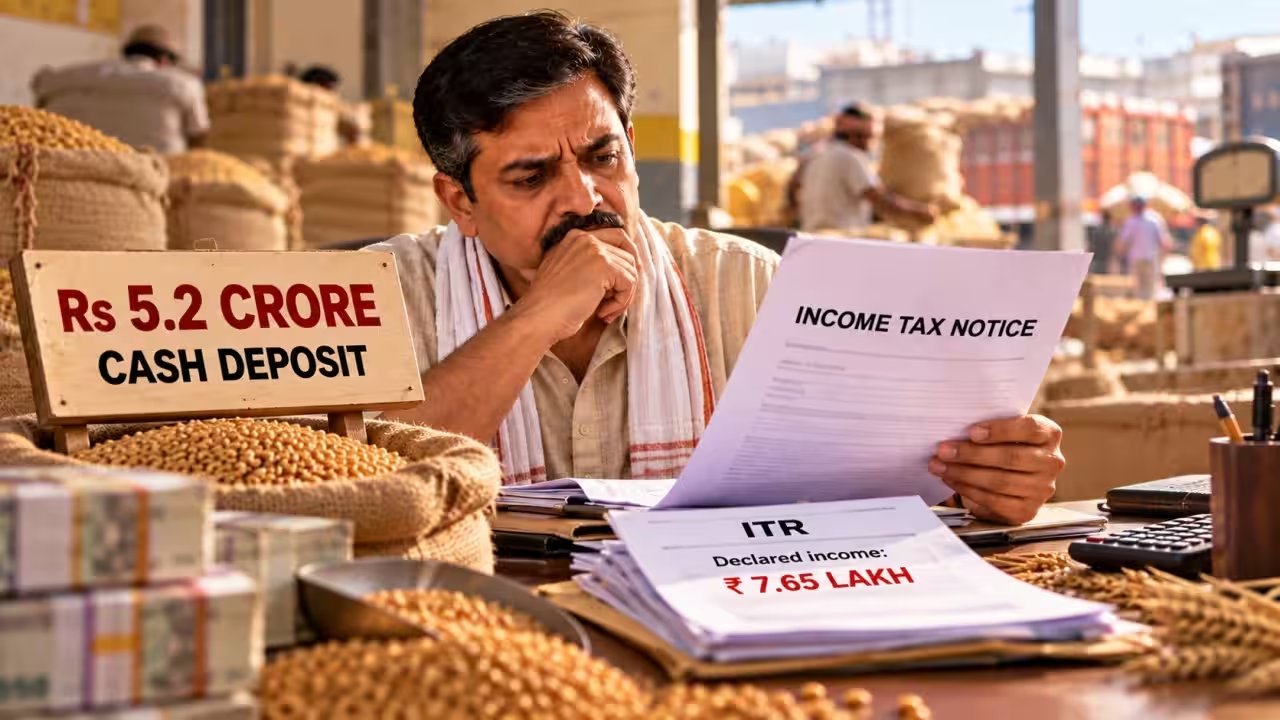
A 45‑year‑old grain trader from Uttar Pradesh deposited ₹5.2 crore in cash into his Allahabad Bank account on 15 September 2026, yet his 2014‑15 Income Tax Return listed only ₹7.65 lakh as taxable income.
The deposit triggered a Specified Financial Transaction (SFT) report to the Income Tax Department, flagging a discrepancy between the bank’s disclosure and the trader’s declared earnings.
The Assessing Officer, treating the absence of the account details in the ITR as a failure to disclose, issued notices and later passed an assessment order under Section 69, classifying the cash as unexplained wealth.
In its review, the ITAT Delhi found that the trader’s Form 3CD—attached to the ITR—had already listed the Allahabad Bank account, satisfying the disclosure requirement. The tribunal ruled that the AO’s basis for reopening the case rested on an incorrect fact, thereby vitiating the jurisdiction under Sections 147/148 and nullifying the notice and assessment.
Advocate Somesh Jain of Sachdev & Jain, who represented the trader, said the success hinged on a jurisdictional flaw rather than the merits of the cash deposit itself. "A reassessment can only be initiated when the underlying facts are accurate," Jain explained.
The decision underscores that agricultural income, while exempt, must still be reported when required, and that any misinterpretation of disclosure provisions can lead to unwarranted tax actions. The trader, who has operated a grain trading business for over two decades, now faces no further tax liability for the 2014‑15 assessment year, and the case serves as a cautionary tale for taxpayers navigating complex filing requirements.