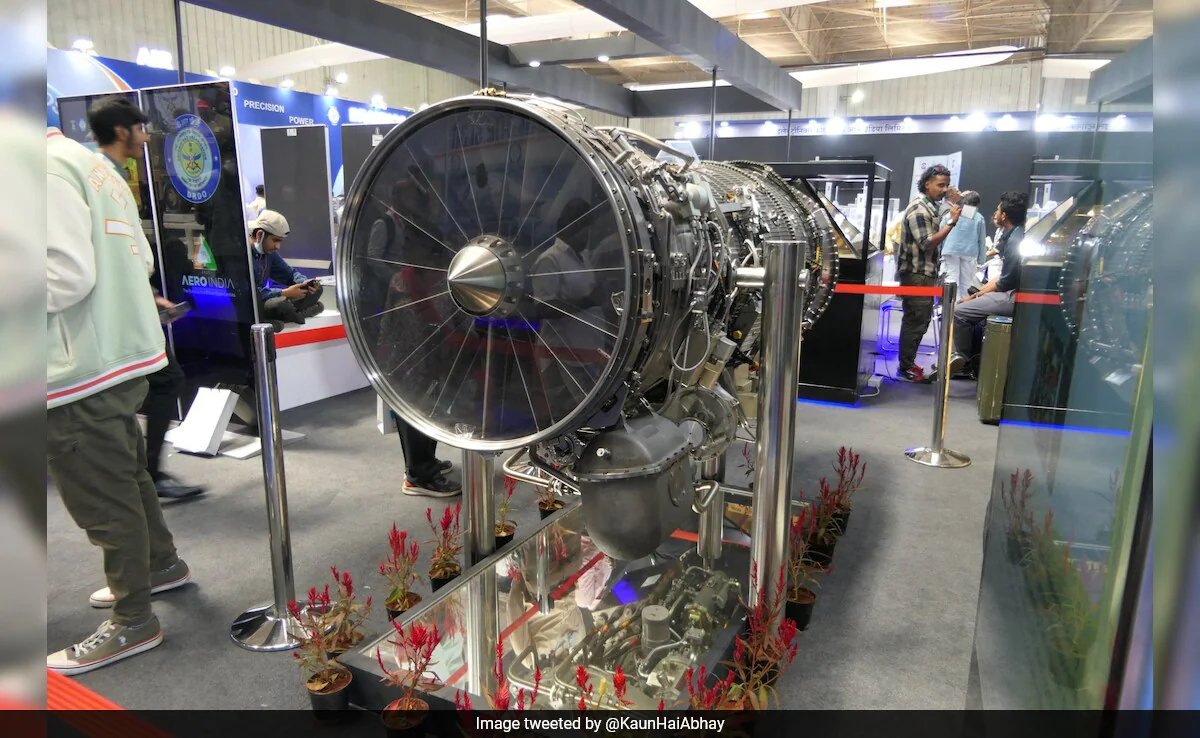
DRDO’s Gas Turbine Research Establishment (GTRE) has just clocked a peak dry thrust of 48.5 kN from its Kaveri derivative engine in Russia, beating the 46 kN design target. The tests ran at CIAM and the Gromov Flight Research Institute, with the engine mounted on a modified Ilyushin Il‑76 testbed to simulate high‑altitude conditions.
Ground runs mimicked the low‑pressure, low‑temperature environment of the stratosphere before the engine was taken airborne. Engineers swapped a standard Il‑76 engine for the Kaveri, letting the new powerplant fly unencumbered by a specific airframe. Across different Mach numbers and thrust demands, the engine consistently delivered more than expected.
The Kaveri dry variant is meant to power India’s planned Ghatak stealth unmanned combat aerial vehicle, a key component of the country’s future air‑combat strategy. By proving the engine can exceed its thrust specification, DRDO has taken another step toward a fully indigenous jet‑engine supply chain that had stalled with the original Kaveri’s failure to power the Tejas.
Next, CEMILAC will scrutinise the flight data and ground logs before granting airworthiness clearance. Only after certification and integration into the Ghatak platform can the engine move toward serial production and operational deployment.
Dr. S. Kumar, head of GTRE, told reporters that the performance “demonstrates the maturity of India’s gas‑turbine design and will accelerate the Ghatak project.” For the two engineers who spent nights at CIAM, the numbers mean the dream of a home‑grown stealth UCAV is getting closer to reality.