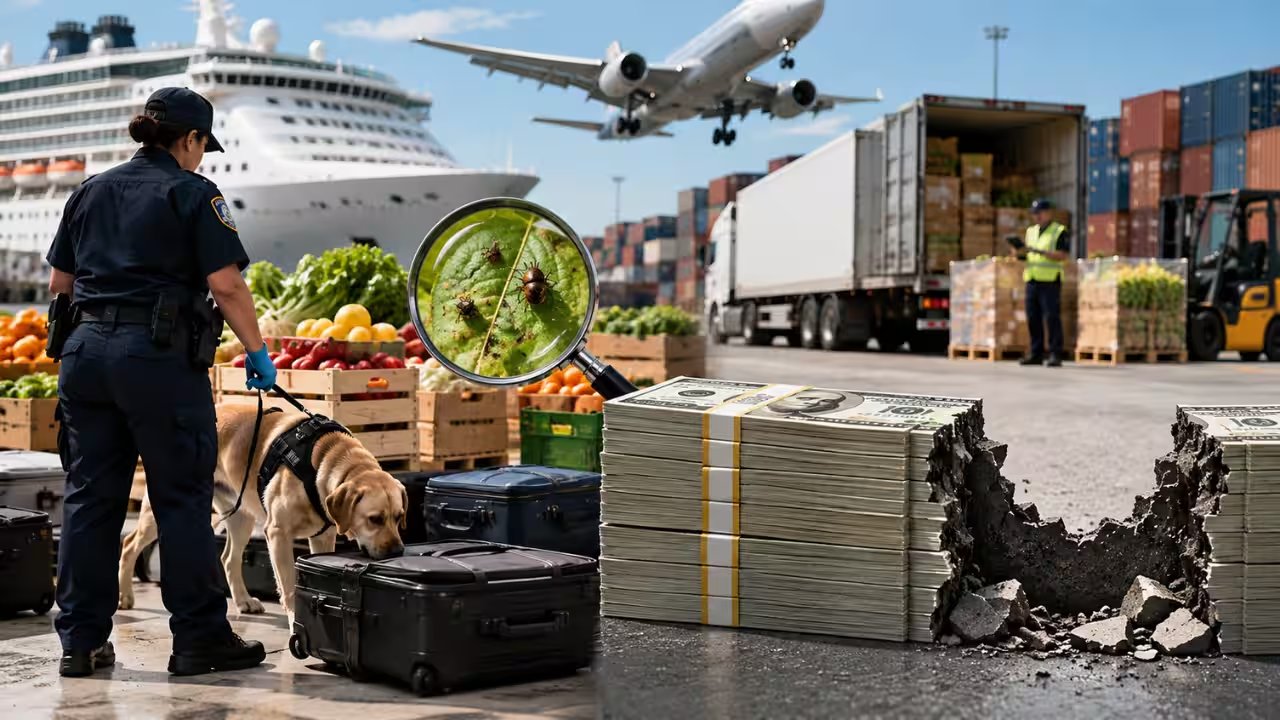
In 2011, the U.S. pest inspection program, jointly run by the Department of Agriculture’s Animal and Plant Health Inspection Service (APHIS) and Customs and Border Protection (CBP), spent $861 million to screen travelers and cargo, yet revenue fell short by more than $325 million.
The gap stemmed from legal limits on who could be charged—pedestrians, commercial buses, private vessels, and aircraft were excluded—forcing APHIS to rely on appropriations and leaving inspectors to shoulder costs that the public never paid.
CBP, which bore over 80% of the total inspection costs, received only 60% of the fee collections, while APHIS retained 36% of the revenue despite covering just 19% of costs. The agency also set aside a reserve equal to three to five months of expenses, a move that the GAO warned would deepen dependence on federal appropriations.
An $13.2 million shortfall in 2010 surfaced when APHIS failed to collect AQI fees from railcars, a lapse mirrored by CBP’s oversight of commercial trucks, private aircraft and vessels. The report noted that CBP had tools to remedy these gaps but did not mandate their use.
In 2015, APHIS introduced new fee categories—including a $1.75 charge for cruise‑ship tickets purchased after December 28, 2015—and lifted caps on cargo vessel and railcar fees, yet the agency still cannot set rates that fully cover all inspection costs because Congress has not granted the Secretary of Agriculture fee‑setting authority.
A small vegetable exporter from Cleveland, who ships produce to Mexico, says the uneven fee structure delays clearances and costs her business thousands of dollars each month, illustrating how the funding gap translates into real‑world headaches for ordinary trade.
The GAO’s February 2026 update calls for congressional action to empower the Secretary of Agriculture with fee‑setting authority, a change that could close the $325 million gap by the next fiscal year.