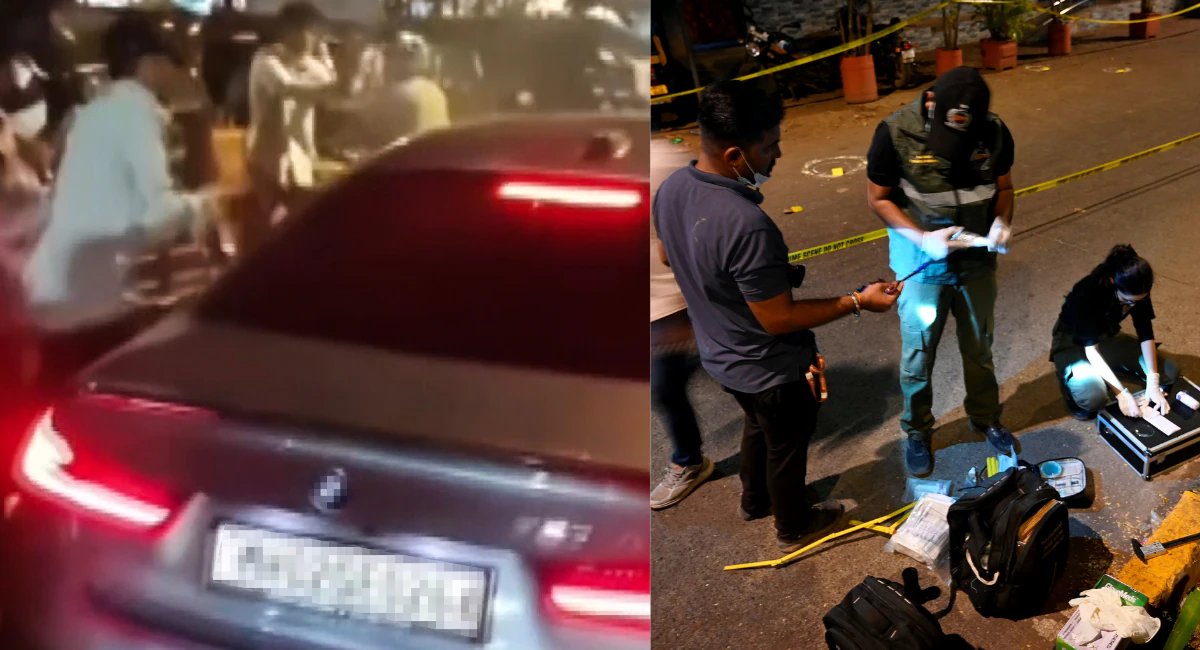
He pulled up to Pushpa Narsee Park around 7 pm, the city’s famous foodie hub, with his usual swagger but not behind the wheel—just a passenger, phone in hand, scrolling through his latest film teasers.
Three riders on matte‑black motorcycles—no hesitation, no courtesy—unleashed a volley of seven bullets that ricocheted off the sleek car’s glass. The driver, a lanky man in a black polo, was hit and staggered out, clutching his chest.
Inside the car, Tiger Shroff’s eyes flicked from the driver to the road, a silent calculation. He abandoned the passenger seat, slid into the driver’s seat, and slammed the accelerator—his body language screaming, “Let’s get out of here.”
The ride to the nearest hospital was a blur of neon lights and sirens. Shroff, with one hand gripping the steering wheel, kept a steady eye on his bruised driver, who was now begging for help. The scene plays out like a high‑stakes chase in a Bollywood thriller, only this time it was real.
The police were swift. Three men—one a minor—were arrested in Kota, Rajasthan, the same day, according to the state’s crime branch. Authorities say the suspects had a plan to cross into Nepal, a detail that adds a diplomatic wrinkle to the case.
For the industry, the incident is a stark reminder: stars are not immune to gunfire. It also forces production houses to rethink security protocols for on‑location shoots, especially in high‑traffic urban zones.
In the end, Tiger Shroff’s quick thinking saved more than just his own life; it gave the police a chance to nab the culprits before they could disappear.
The incident is still under investigation, but the swift arrests suggest law‑enforcement is taking the threat seriously. Bollywood fans can breathe easier knowing that the system is on guard, even if the streets remain unpredictable.