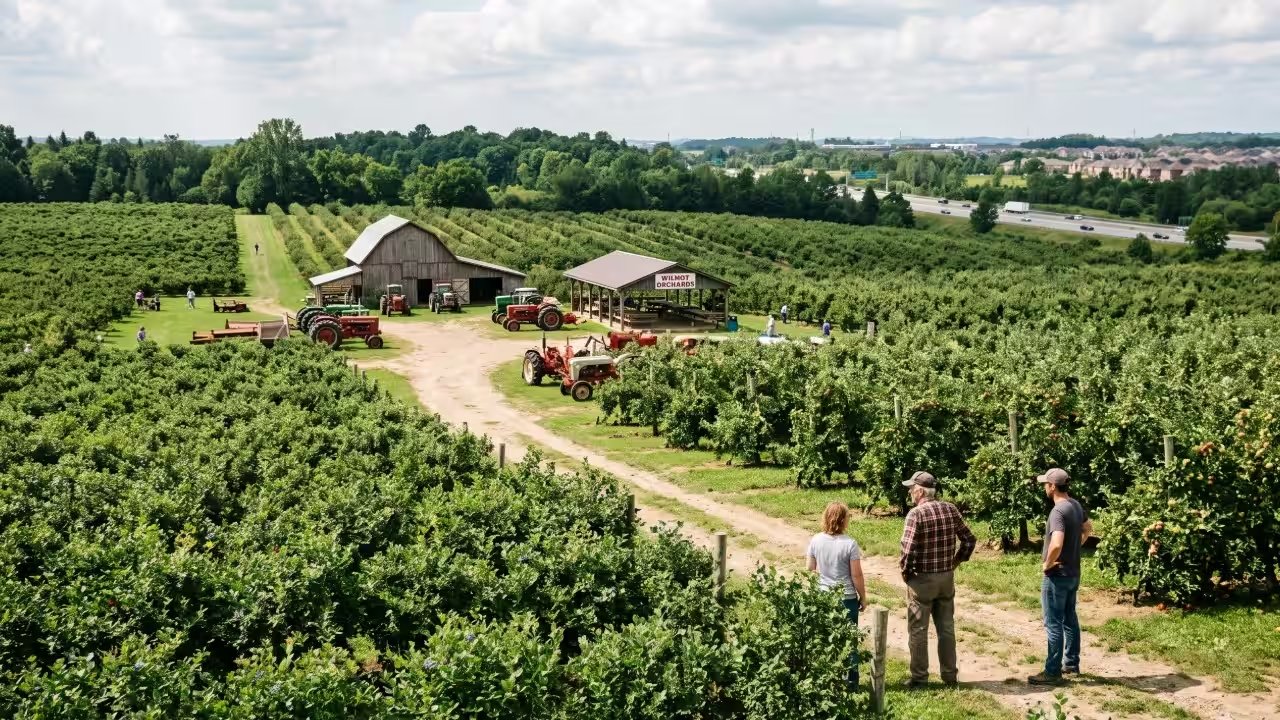
Charles Stevens didn’t hesitate. When a developer slid a C$16 million cheque across the table for his 164-acre Wilmot Orchards, near Newcastle, Ontario, the farmer who built the property from scratch in 1975 said no. He wasn’t selling. Not for that amount. Not for anything, it seems.
The farm, situated an hour from Toronto and bordering Highway 401 and Lake Ontario, sits on Class 1 soil. This is the stuff of agricultural legend: fertile, rare, and increasingly targeted by urban sprawl. Stevens and his family worked with the Ontario Farmland Trust to place a conservation easement on 29 acres of the land. This legal instrument binds the property to agricultural use for 999 years. It’s a permanent lock on the land’s development potential.
“I have never seen anyone take even one dollar to the grave and use it,” Stevens told CBC News. The sentiment cuts to the heart of the rural-urban conflict in the Greater Toronto Area. Farmland here isn’t just dirt; it’s the last line of defense for local food security. The Ontario Farmland Trust describes Wilmot as the first farm in Durham Region protected through its specific programme, a signal to other landholders that preservation is a viable alternative to selling out.
Martin Straathof, executive director of the Ontario Farmland Trust, called the move a “promise and a beacon of food security.” The easement strips the speculative value from the land, which is crucial for the next generation of farmers. In a market where development premiums drive prices through the roof, a protected easement keeps land affordable for those who actually want to grow apples and blueberries, not build condos.
Stevens has plans to protect the remaining 135 acres of the property in the coming years. The legal battle for the land’s future is effectively over, replaced by a quiet, long-term commitment. As the city encroaches, Wilmot Orchards stands as a 999-year-old argument for keeping the soil alive.