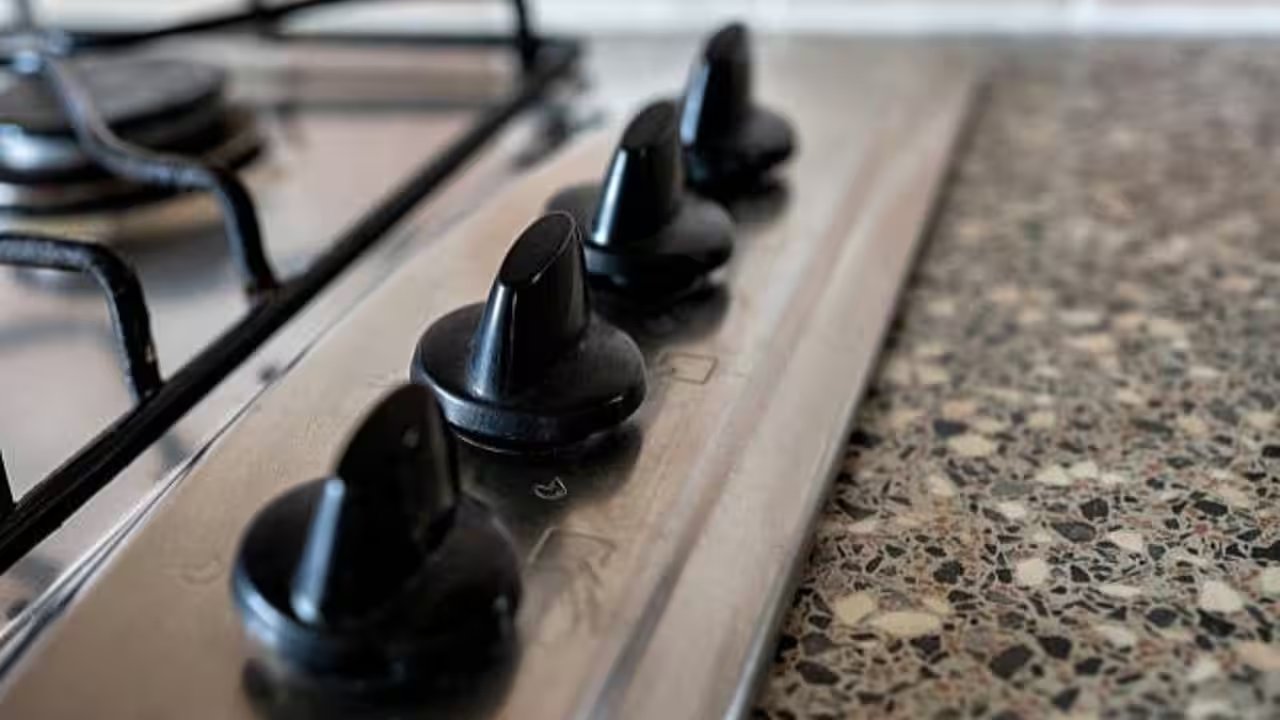
Your stove knobs take a beating every single evening. Sticky fingers grab them mid-fry, turmeric-laden curries splash across the console, and evaporated oil settles into every tiny groove. Over weeks of cooking, that sheen turns into a tacky, yellowed film that ordinary surface sprays smear rather than lift. But restoring them to pristine condition does not require industrial degreasers or abrasive chemical solvents.
You already own everything required to melt that grease down.
Safety comes first. Shut off the gas supply at the main cylinder regulator and ensure every burner is completely cold before touching the console. Pull each knob straight off with a firm, steady grip. If a dial resists, wiggle it gently from side to side rather than wrenching it outward—forcing a stuck knob can bend the brass control stem beneath. Toss the dials into a small bowl so they do not scatter across the counter.
Fill your basin with hot tap water and add a generous squeeze of liquid dish soap. Drop the knobs in. Let them soak for 15 to 20 minutes to soften hardened oils and emulsify dried food residue. If your dials feel heavily coated, stir in one tablespoon of white vinegar. The mild acetic acid cuts through oxidized vegetable oil without corroding standard molded plastics.
| Step | Primary Solution & Tools | Target Duration | Intended Result |
|---|---|---|---|
| Pre-Soak | Hot water + Dish soap + 1 tbsp White Vinegar | 15–20 minutes | Softens hardened grease film |
| Detail Scrub | Soft-bristled toothbrush | 2–3 minutes | Dislodges grime in numbered grooves |
| Spot Treatment | 2 tbsp Baking Soda paste | 5 minutes | Lifts stubborn, burnt-on grease |
| Precision Cleaning | Cotton bud or wooden toothpick | 1 minute | Clears tight rear recesses |
Take the softened knobs out of the bath one by one. Grab an old, soft-bristled toothbrush and work it briskly around the raised grip ridges, indicator markings, and rear mounting sockets where grease hides. Never touch your stove dials with steel wool, wire brushes, or abrasive scouring pads. Harsh abrasives permanently etch clear plastic dials and strip brushed metallic finishes.
For stubborn, heat-baked spots that refuse to budge, mix two tablespoons of baking soda with just enough water to create a thick paste. Smear the paste directly over the stains and let it sit undisturbed for five minutes. Scrub lightly with the toothbrush bristles. For microscopic crevices around the pointer line, run a wooden toothpick or a damp cotton bud along the seam.
Safety Note: While the dials soak, wipe the exposed stove fascia with a damp, soapy microfiber towel. Never pour water directly onto the metal console or allow moisture to trickle into the open valve ports. Furthermore, never combine vinegar with bleach-based disinfectants, as the mixture releases hazardous chlorine fumes.
Rinse the knobs thoroughly under running water until all baking soda grit and soapy lather disappear. Dry each piece immediately using a clean, lint-free microfiber cloth. Leave them face down on a dry towel for five minutes to allow trapped air to evaporate any moisture from inside the shaft cavity, preventing internal stem rust.
Push each dial firmly back onto its matching valve stem until seated flush. Rotate the controls through their full range of motion to confirm smooth, unobstructed movement. If you notice a persistent smell of unburned gas or spot cracked internal stems during reassembly, halt use immediately and call a licensed gas technician for repairs.