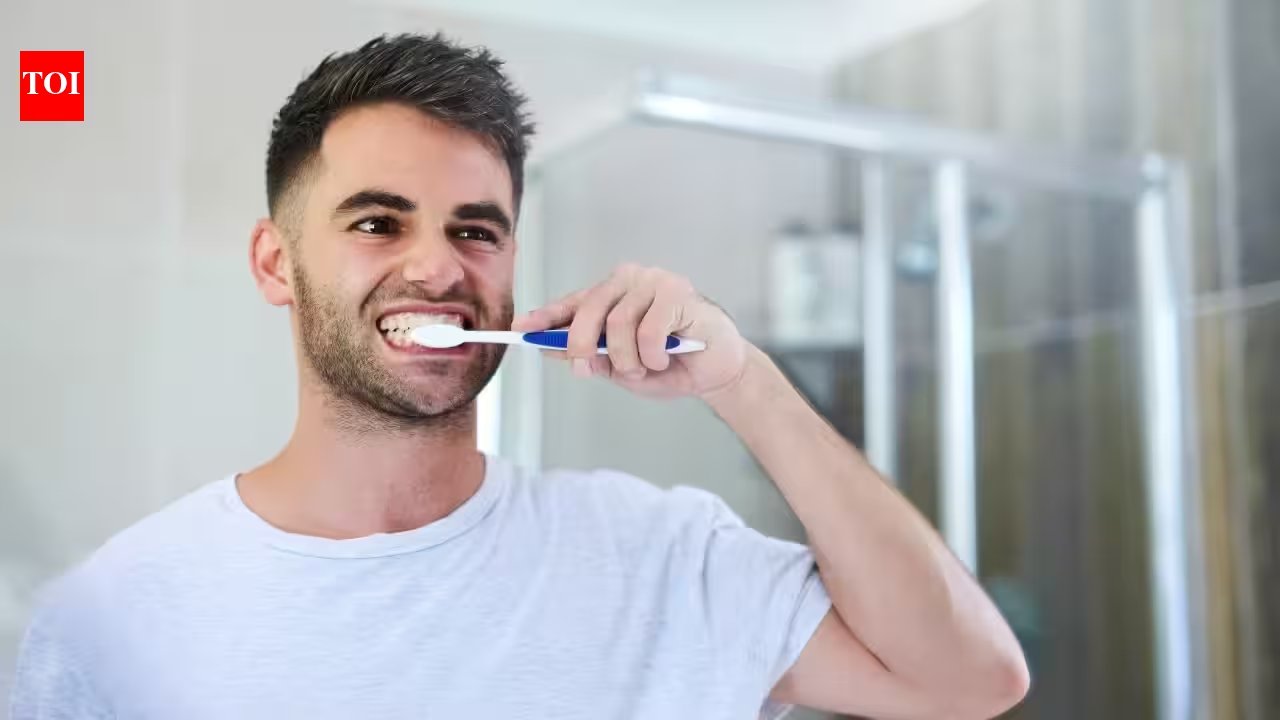
Stop scrubbing your teeth like a stained kitchen floor.
Most people attack their mouths with brute force every morning. They grab a stiff brush, scrape frantically for thirty seconds, rinse with cold water, and rush out the front door. It feels productive. Yet that daily aggression systematically wears down your protective enamel and inflames delicate gum tissue.
Good oral hygiene requires precision, not muscle.
Brushing harder will not erase deep coffee stains or polish enamel faster. Instead, heavy pressure grinds away the tooth's outer shield and causes gums to recede over time. Dentists urge people to switch immediately to a soft-bristled toothbrush. Move the bristles in small, gentle circular motions across each tooth surface without forcing them flat against the enamel.
Gentle friction lifts plaque. Harsh scraping destroys tissue.
Speed is the second major trap. A hasty 30-second dash leaves behind thick colonies of bacteria clinging to tooth surfaces. Dental professionals recommend brushing for a full two minutes, twice every single day.
Most people lavish all their attention on their front smile. But food debris and bacterial film collect aggressively around the back molars, along inner tooth walls, and right beside the sensitive gumline. Divide your mouth mentally into four quadrants—upper right, upper left, lower right, and lower left—and give each zone thirty deliberate seconds of focused cleaning.
| Brushing Habit | Physical Impact | Correct Clinical Fix |
|---|---|---|
| Heavy scrubbing | Wears down enamel and irritates gums | Switch to soft bristles; use gentle strokes |
| 30-second rush | Leaves bacterial plaque on surfaces | Brush for two full minutes twice daily |
| Front-only focus | Plaque builds up on molars and gumline | Clean inner surfaces and rear molars |
| Immediate water rinse | Flushes out protective fluoride | Spit excess foam; do not rinse |
| Frayed bristles |
That customary splash of tap water right after brushing cancels out half the work. Toothpaste deposits a protective layer of fluoride directly onto the enamel surface to rebuild microscopic mineral loss and stave off cavities. When you take a big mouthful of water and rinse immediately, you wash that active mineral shield straight down the sink.
Spit out the excess paste. Walk away. Let the residual film sit undisturbed on your teeth to do its job.
Finally, inspect your bristles this evening. If the heads look crushed, flared, or bent sideways, throw the brush into the bin. Dentists state that toothbrushes must be replaced every three to four months—or significantly sooner if the bristles fray. A splayed brush cannot reach between teeth and will only abrade your gums.
| Cuts cleaning efficiency and harms tissue |
| Replace brush every 3 to 4 months |