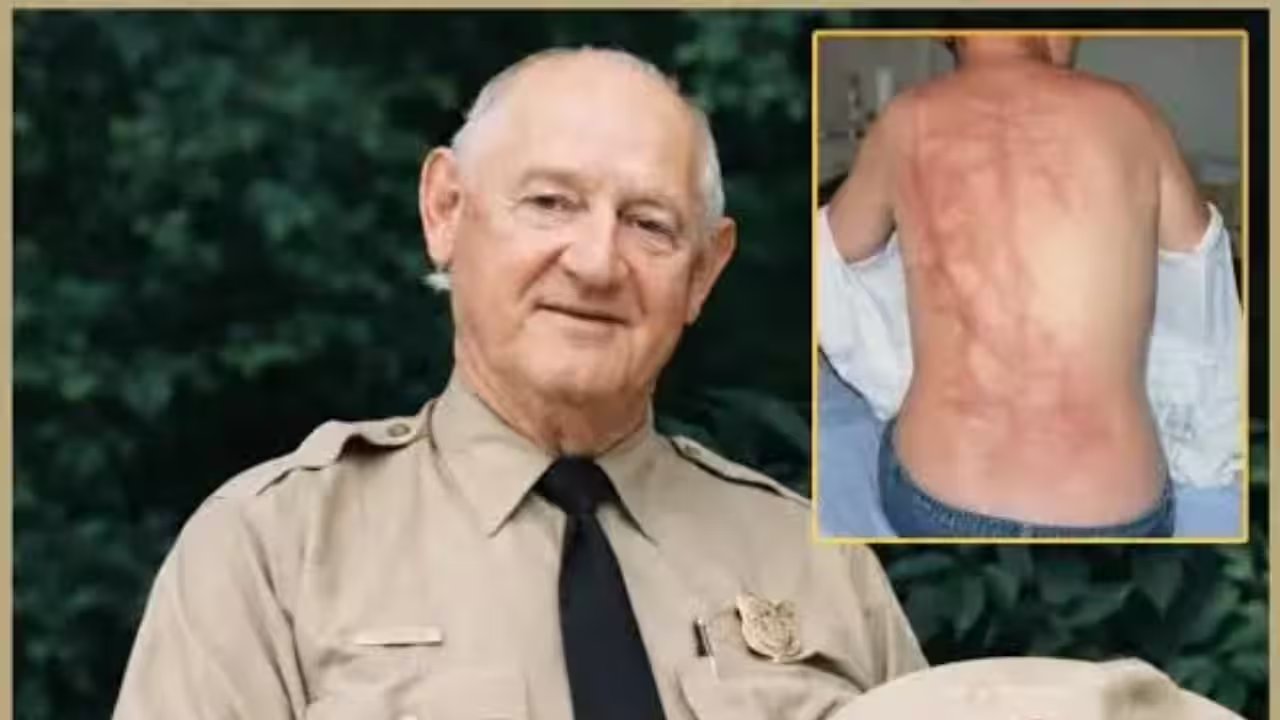
Shenandoah National Park ranger Roy Sullivan survived seven verified lightning strikes across Virginia between 1942 and 1977, walking away from every blast to secure an unbroken mark in Guinness World Records.
Nature targeted him repeatedly. The lightning singed his scalp, burned his torso, ripped through boots, and blasted him from vehicles over a span of 35 years. Park staff dubbed him the "Spark Ranger"—a moniker earned through sheer, brutal repetition. He carried water jugs in his truck just to extinguish his own smouldering hair.
Sullivan met his first strike in April 1942 atop a fire lookout tower in Virginia’s Blue Ridge Mountains. A sudden electrical storm set the wooden structure ablaze, forcing him into a desperate dash for safety. A bolt intercepted him outside. The discharge charred his right leg, ripped through heavy leather boots, and tore the nail clean off his big toe.
Twenty-seven quiet years followed. Sullivan worked his park beats without incident until July 1969, when a mountain squall caught his pickup truck on an open road. A bolt tore through roadside trees, leaped into the cab through open windows, and struck him unconscious. The current burned away his eyebrows and smashed his wristwatch.
One year later, in July 1970, lightning struck Sullivan again while he tended his home garden, blasting his left shoulder and tossing him violently to the dirt. In April 1972, another discharge caught him inside a national park guardhouse. His hair erupted into flames. He doused his head beneath a water faucet, shaken but alive.
The strikes shifted from terrible coincidences into an inescapable pursuit.
On August 7, 1973, Sullivan spotted a storm front building over the highway and stepped on the accelerator to flee. He stopped his truck when he thought he had escaped, only to watch a bolt strike directly toward him. The surge torched his hair, charred his legs, and threw him clear out of the cab.
Yet he returned to patrol. On June 5, 1976, lightning caught him walking along an open park trail, injuring his ankle and setting his hair on fire for the third time. Sullivan retired five months later, stepping away from the National Park Service in November 1976 to seek refuge on private land near Waynesboro, Virginia.
He fortified his new home like a bunker. Sullivan rigged heavy copper grounding rods across his house trailer, tied lines to the television antenna, and grounded surrounding trees.
It did not stop the skies.
On June 25, 1977, Sullivan stood on a freshwater bank with a fishing rod in hand. The air shifted. He smelled burning sulphur and felt the hair on his arms rise straight up seconds before a bolt blasted him directly. The impact charred his chest and stomach, burned his hair once more, and inflicted permanent hearing loss in one ear. Sullivan scrambled to his vehicle, drove home, and entered emergency care at a local hospital.
Guinness World Records officially catalogued that hospital visit as his seventh and final strike, closing a 35-year medical ledger of impossible survival.
| Strike Incident | Date | Location | Documented Injuries & Physical Damage |
|---|---|---|---|
| Strike 1 | April 1942 | Fire Lookout, Shenandoah | Burned right leg, torn boot, severed big toe nail |
| Strike 2 | July 1969 | Mountain Road, Shenandoah | Eyebrows burned off, knocked unconscious, watch destroyed |
| Strike 3 | July 1970 | Residential Garden | Left shoulder burned, thrown violently to ground |
| Strike 4 |
Archival reviews into Sullivan's record revealed that none of the seven strikes featured a direct, third-party eyewitness on scene. Neither his wife nor his fellow park rangers stood beside him during the direct discharges, and early field records lacked comprehensive forensic documentation.
But the physical damage remained indisputable. Sullivan’s attending family doctor and a former Shenandoah park superintendent confirmed the recurring burn patterns, physical trauma, and singed flesh across his career. Retired National Park Service historians reaffirmed their confidence in the official chronology, validating the physical artefacts—including Sullivan's melted hats and blistered watches—that entered national survival lore.
Sullivan died in September 1983 at the age of 71. His record remains formally unchallenged in the international annals of human survival.
| April 1972 |
| Shenandoah Guardhouse |
| Scalp and hair ignited, severe burns |
| Strike 5 | August 7, 1973 | Shenandoah Highway | Hair burned, legs scorched, blown clear out of truck |
| Strike 6 | June 5, 1976 | Shenandoah Trail | Ankle trauma, scalp and hair burned |
| Strike 7 | June 25, 1977 | Fishing Bank, Virginia | Chest and abdomen scorched, partial hearing loss |