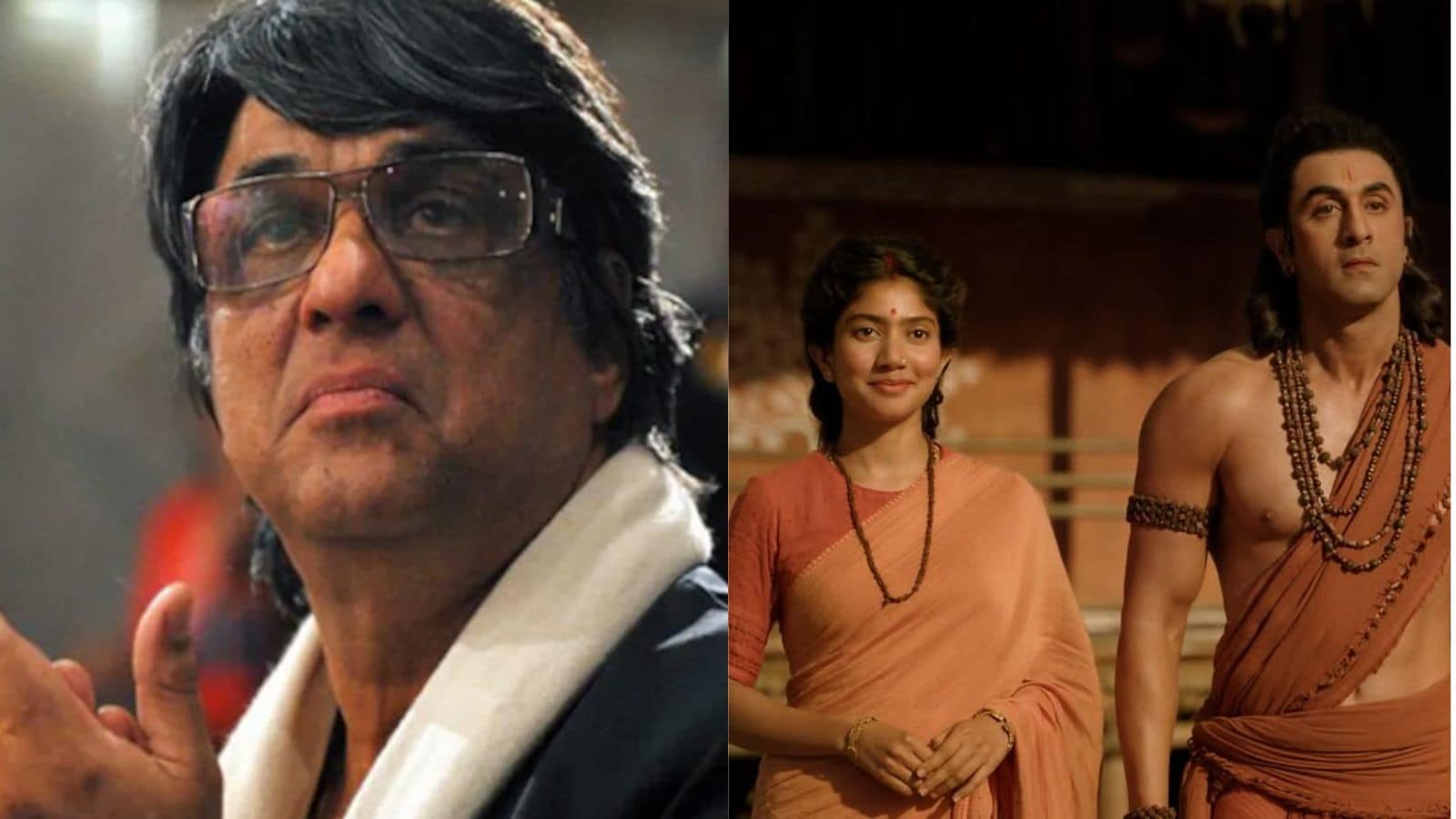
Mukesh Khanna refuses to mince words. The veteran actor, who etched himself into Indian television history as Bhishma Pitamah in B.R. Chopra’s Mahabharat, has fired a sharp warning shot at filmmakers attempting to modernize Hindu epics.
Speaking in a lengthy video blog, Khanna tackled the brewing discourse surrounding director Nitesh Tiwari’s high-profile cinematic adaptation of the Ramayana. Khanna made it clear from the outset that he has not yet watched Tiwari's production. Yet, the chatter filtering through his feed has put him on high alert.
"Many different versions and opinions are circulating among people," Khanna said. "Some have said things have been changed, some have said it is another betrayal, some have referred to Adipurush, and others have expressed different concerns."
For Khanna, audience fatigue over contemporary reinterpretations is boiling over. Viewers feel cheated. And he placed the blame squarely on directors who bend ancient texts to fit contemporary vanity.
I am gradually observing all these reactions, and many people are saying that they have once again been cheated. What does that mean? It means you want to insert your own narrative through the Ramayana or Mahabharat.
To drive his point home, Khanna dragged the 2023 debacle of Adipurush back into the crosshairs. He took aim at the project's writer, who had previously defended the creative liberties by claiming the production was tailored for today's children.
"The writer of Adipurush had said that he was writing the Ramayan for today's children and had created a modern Ramayan for modern kids," Khanna noted. "Frankly, one should feel ashamed for saying that, and later he did feel ashamed and even apologised."
Khanna tore through the specific aesthetic choices that alienated audiences during that release:
You suddenly change Hanuman's character in Adipurush, give Ram a moustache, and make Hanuman speak street-style dialogues. They said that children in today's villages speak like that. Fine, maybe they do, but why are you making a film based on that? Why are you showing it in the film? They may speak that way, and people may do whatever they do in their villages, but you have no right to alter these characters.
Khanna rejected the argument that entertaining a younger generation requires diluting sacred source material. He pointed to his own television phenomenon, Shaktimaan, as proof that youth entertainment can respect foundational values.
"We also made Shaktimaan for children, but we did not mock our faith or alter it," he asserted. "Through Shaktimaan, children were taught values within the same Sanatan Dharma and its traditions."
Khanna reminded creators that epic cinema operates under an entirely different tier of accountability.
"Because when you make a film, you carry a responsibility," Khanna emphasized. "You become a very, very responsible person. Whatever you show will be scrutinised closely by people who represent this faith, including saints, scholars, thinkers and religious storytellers."
Khanna acknowledged his combative reputation in an industry that routinely trades in diplomatic silence.
"You cannot make fun of these things the way they have been done. Forgive me, but I have a reputation for speaking openly and bluntly," Khanna said. "When such matters reach me, I cannot stay silent. Someone else in my place might not speak up. In fact, people often tell me that I say things that others do not."
As anticipation and scrutiny mount around Nitesh Tiwari's production, Khanna’s remarks reflect the exacting bar awaiting any director bold enough to stage India’s sacred narratives on the silver screen.