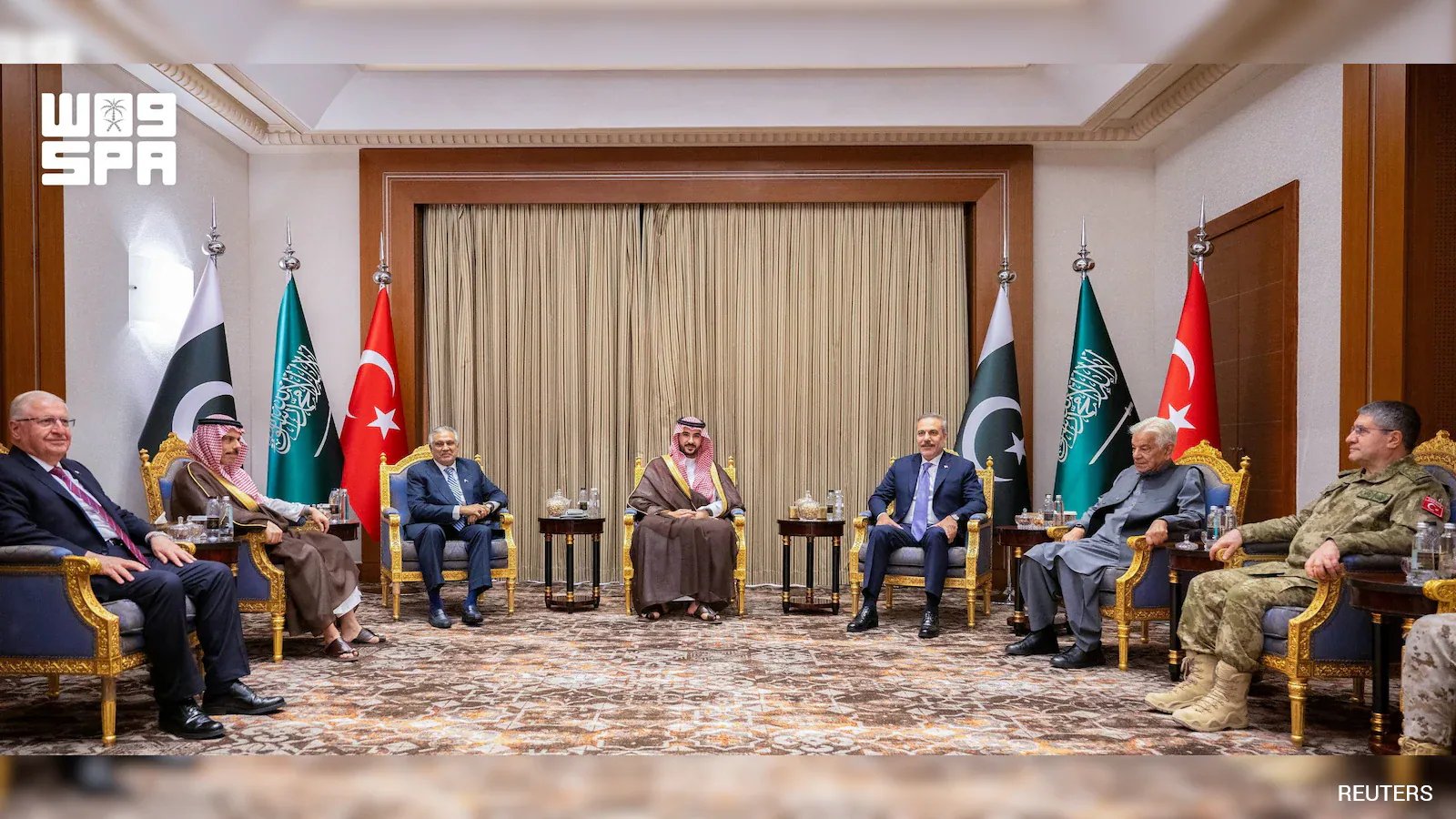
The agreement, mirroring NATO’s Article 5, commits the three powers to treat any armed attack against one as an attack on all, yet Turkish officials emphasise it is purely defensive and will not see Turkish troops dispatched to Yemen.
The 16‑article pact, released by TRT, details joint training, exercises, intelligence sharing, and a decade‑long clause that bars any party from withdrawing without a three‑month notice. It also opens doors for cross‑nation weapons production and technology transfers.
Turkish Foreign Minister Hakan Fidan said the pact covers air‑defence and electronic‑warfare support, but clarified that Turkey will not deploy forces to another country’s territory. Pakistani Foreign Minister Ishaq Dar echoed that the agreement complements existing ties and remains open to other nations that share its principles.
Saudi Defence Minister Khalid bin Salman, in a post on X after a visit by Pakistan’s army chief, reaffirmed the kingdom’s commitment to the pact’s joint counter‑attack measures against Houthi insurgents. The pact’s wording, however, stops short of naming Iran or any other state.
A parliamentary committee will review the treaty in the coming days before it reaches the Turkish parliament’s general assembly for ratification. Meanwhile, Pakistan’s government, which has not sought parliamentary endorsement, has pledged to provide whatever military assistance Saudi Arabia needs to defend its holy sites.
The pact arrives amid escalating Iran‑Houthi skirmishes and a noticeable retreat of U.S. forces from the region, positioning the three allies to bolster their own security architecture and signal a new deterrence posture in the Gulf.