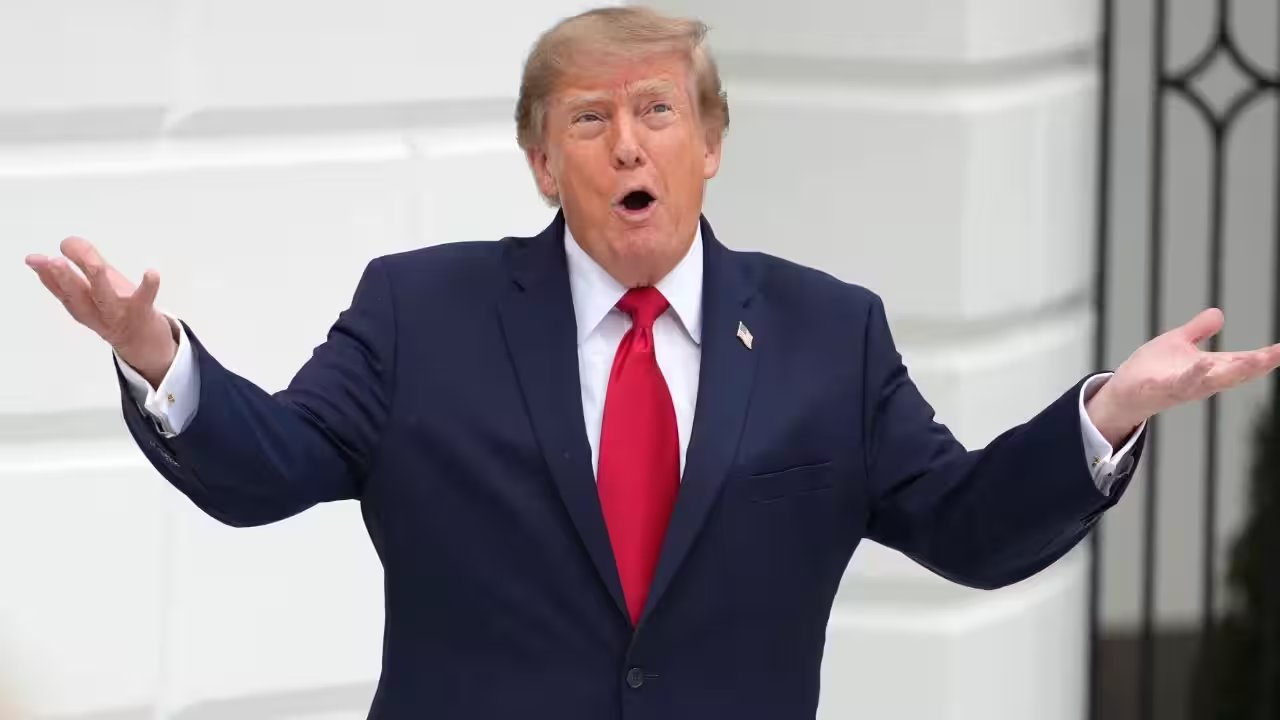
Donald Trump issued a sharp warning from Washington on Wednesday, declaring that Canada is "destroying itself" by allowing "millions and millions" of people into the country without adequate screening. The President, speaking via social media, attributed the surge to a "Liberal takeover" that he predicted would "end very badly," linking the issue to broader allegations that the United Nations is undermining Western cultural heritage.
The math, however, does not support the President's narrative. According to official data, Canada admitted approximately 483,640 permanent residents in 2024, a record high that Ottawa is now actively working to reduce with a 2026-28 plan aimed at sustainable levels. In stark contrast, the United States granted 1.4 million green cards in fiscal year 2024. That is three times the volume of legal immigration entering Canada.
Both nations, however, share a specific demographic focus: India. In 2024, about 127,000 Indians obtained permanent residence in Canada, making India the top source country for new residents. Across the border, the Indian contribution is equally significant, with 3.2 million Indian immigrants residing in the US. In fiscal 2024 alone, Indians received 71% of all H-1B visas for highly skilled workers, highlighting the economic reliance on this talent pool despite the political rhetoric.
Immigration scholars have labeled Trump's language as racialized, noting that the claim of "unchecked" entry ignores Canada's rigorous, points-based economic selection system. Data from Statistics Canada shows that recent immigrants are twice as likely as Canadian-born workers to be employed full-time as engineers, suggesting the system is designed to fill specific labor market gaps rather than open the borders indiscriminately.
The next major test for these claims will come as the US and Canadian governments finalize their respective 2026 immigration quotas, with Ottawa explicitly signaling a downward adjustment in intake numbers.