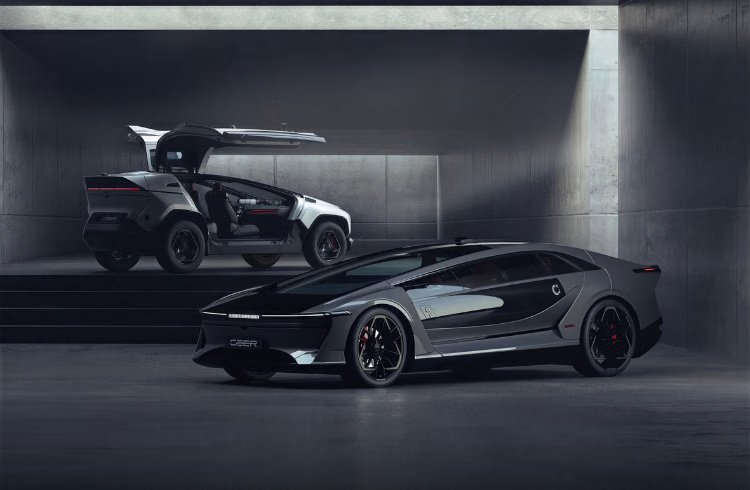
The EXOBOT sedan and SUV hit the press launch today, marking the first passenger electric vehicles to roll out from a Saudi‑based manufacturer. It’s a big deal for buyers who have had to rely on imported EVs—now a homegrown option is on the horizon.
The announcement came from Crown Prince Mohammed bin Salman, underscoring the project’s alignment with Vision 2030’s industrial diversification goals. The vehicles were designed and engineered locally, a fact that could translate into shorter supply chains and potentially lower costs for the end customer.
No power or range figures were shared, but the EXOBOT lineup is slated to fill the compact and midsize niches that currently dominate the Gulf’s car market. Buyers will likely see it positioned against models like the Hyundai Ioniq 5 and the Tesla Model 3, both of which have already found a foothold in Saudi roads.
Production will take place at the CEER Manufacturing Complex, a new plant that promises to support a growing domestic auto ecosystem. The company plans to launch the remaining four models over the next five years, building a seven‑model portfolio that could include everything from city‑ready compact cars to more premium sedans.
For the Saudi consumer, the rollout means potential tax incentives and a shift in the resale market. As the first local EVs, the EXOBOT vehicles may also drive demand for charging infrastructure, a key hurdle that has slowed EV adoption in the region.
The timeline is clear: launch over the next five years, with the EXOBOT sedan and SUV as the inaugural pair. While the exact launch month isn’t set, anticipation is already building around Riyadh’s upcoming auto week.
Keep an eye on the next round of specifications—once CEER discloses range, battery capacity, and price, buyers will have a concrete benchmark to compare against imported rivals. Until then, the promise of a domestic, Vision 2030‑aligned EV marks a turning point for Saudi motorists.