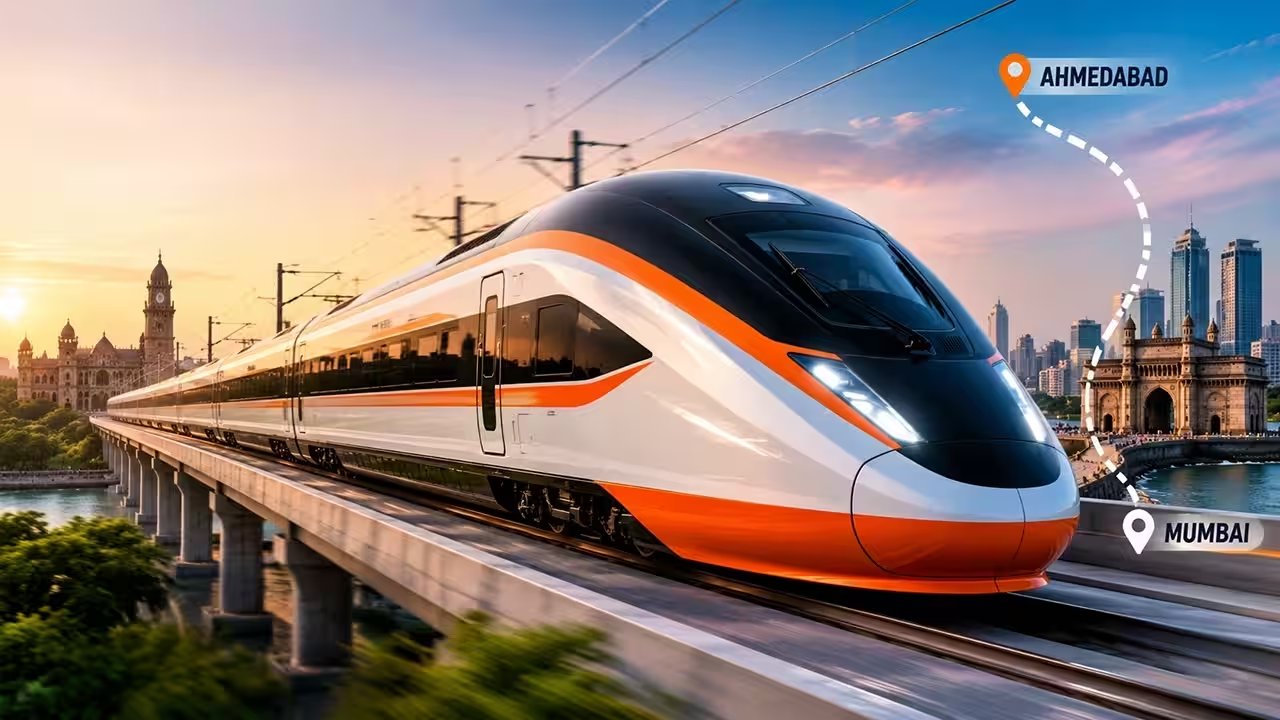
India’s Ministry of Railways unveiled a new high‑speed train programme on Thursday, announcing the design and production of B35 models that will cruise at 350 km/h along the Mumbai‑Ahmedabad corridor. The project, launched in a cabinet meeting, aligns with Japan’s upcoming E10 series and marks the country’s first indigenous bullet train.
BEML, the state‑owned engineering firm, has already secured contracts to build 32 B28 high‑speed units—each capable of 280 km/h—while a separate order worth Rs 5,400 crore will add 15 more. Two prototype B28s are slated for trial runs in the first quarter of 2027, signalling the first operational step in the corridor.
The cabinet approved a revised cost of over Rs 2 lakh crore, nearly doubling the 2015 estimate. Land acquisition alone now costs ₹19,700 crore, a three‑fold jump, while infrastructure spending has risen by 50% to more than ₹1 lakh crore.
Alongside rolling stock, the government will deploy a Bharat Train Control System (BTCS), mirroring China’s CTCS. The system will manage train speeds, spacing and safety across both conventional and high‑speed networks.
Technical details emphasise durability in India’s heat and dust; the B35 will feature lightweight yet robust chassis, advanced suspension, and onboard infotainment. India’s first high‑speed rail will also house fully air‑conditioned chair‑car coaches and dedicated facilities for differently‑abled passengers.
With the B28s set to operate by 2027 and the B35 programme slated for 2030, the ministry plans to scale the model across seven additional corridors announced in the recent budget. The Cabinet’s approval of the ₹2 lakh crore budget will enable the next phase of procurement and infrastructure development.