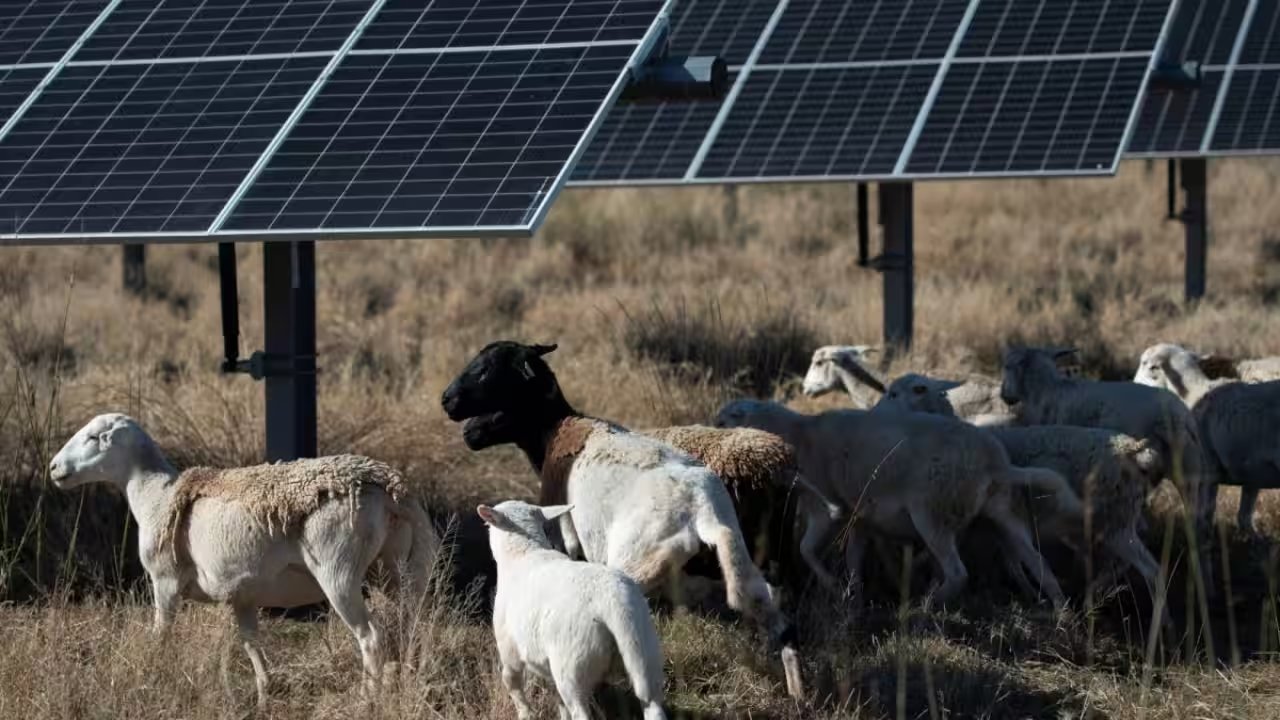
JR Howard nearly lost his farm. In the early days, he was drowning in debt from a cotton crop that failed, staring down a flock of just 27 sheep he was ready to sell. Then a solar developer built a project on his border. Instead of fighting the panels, he signed a contract to graze them. That single handshake turned a struggling operation into Texas Solar Sheep, one of the largest solar grazing businesses in North America.
The logic is brutal economics. Solar farms need short grass. Weeds shade panels; tall bushes create fire risks. Traditional mowing burns diesel, uses heavy machinery, and risks damaging equipment with thrown rocks. Sheep don't have those problems. They eat the grass around narrow support structures and beneath low panel edges that tractors can't reach. Howard told Sheep Industry News that while he was digging himself out of a hole with sheep, the solar contracts accelerated the rescue. "We were digging out of it with sheep, but at a much slower rate than we are now thanks to solar grazing," he said.
Enel North America is betting big on this model. They hired Howard to supply 6,000 sheep to graze across 10,000 acres of their solar fields. Jesse Puckett, Enel's director of sustainability projects, told Canary Media that this isn't just greenwashing—it's bottom-line improvement. "Ultimately, we're a business. This is one way that we can enhance the bottom line and build sustainability into our project," Puckett explained. The data backs him up. Enel's earlier projects showed soil organic matter increased by 200 percent due to natural fertilization from the animals, while simultaneously eliminating the carbon emissions from petrol-powered mowers.
This shift is reshaping who gets to farm in Texas. The average Texas farmer is approaching 60 years old, and land prices have skyrocketed. Buying pasture is out of reach for many. Solar grazing flips the script. Farmers don't pay rent; they get paid for vegetation control. The shade from the panels keeps the soil moist and the sheep cooler in summer, reducing water needs. The American Solar Grazing Association now records more than 68,000 acres of solar installations being grazed across the state.
The logistics are a nightmare, though. Managing thousands of animals across scattered industrial sites requires constant health checks, transport coordination, and water system maintenance. Howard has started sub-leasing deals with nearby ranchers to meet demand. "You have to realize this is a service industry," Howard warned. He calls the rapid growth of solar installations across the American West "the greatest opportunity for the sheep industry in my lifetime." As new projects come online, Howard continues to expand his flocks, turning the shadow of solar panels into a profitable shadow for Texas agriculture.