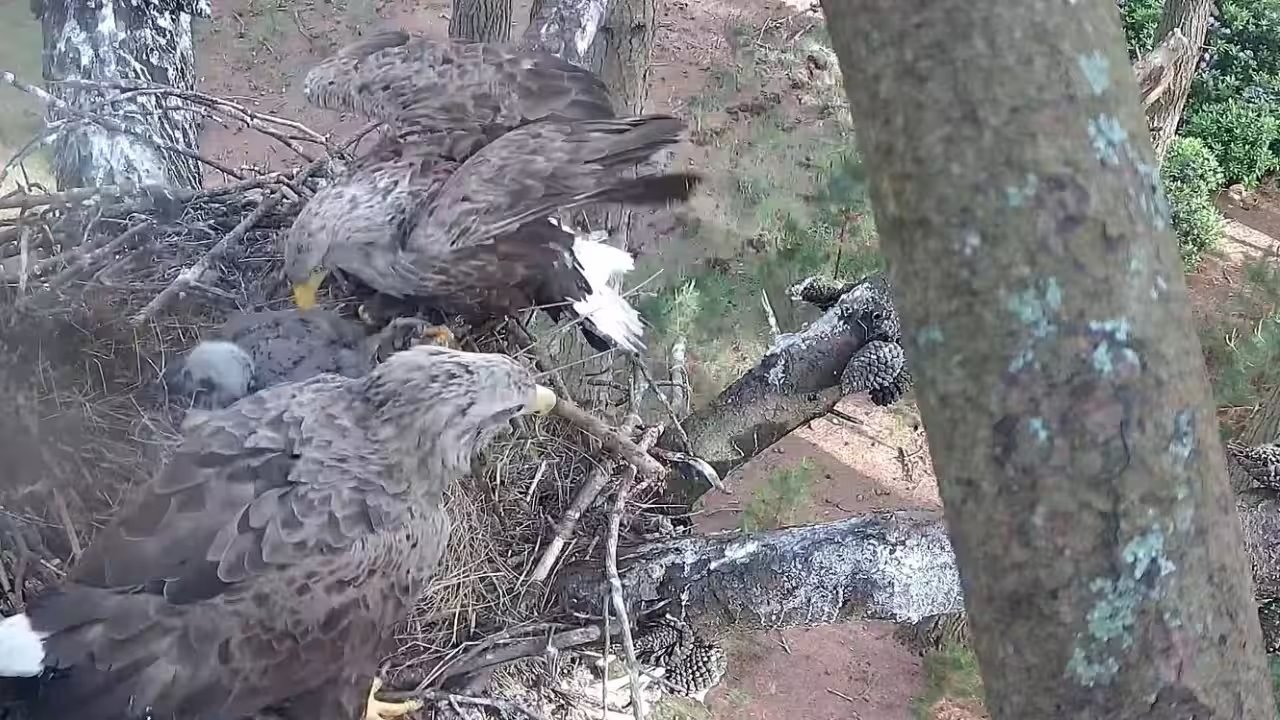
Three white-tailed eagle chicks fledged this summer, pushing the total count of wild-born young in England to nine. This milestone, confirmed by Forestry England, marks a critical turning point for a species that vanished from English skies after centuries of persecution. The latest hatchlings came from two established pairs descended from birds released in 2020, signaling that the population is no longer reliant on constant external intervention.
In Sussex, two male chicks hatched from a pair that has successfully bred every year since 2023. A third male fledged in Dorset from a nest where the adult male has survived on one leg for five years. These birds were fitted with satellite tags, allowing conservation teams to track their movements as they explore the wider British landscape. The data already shows young eagles travelling widely across the UK to establish their own territories.
Cameras positioned near the nests recorded more than 300 instances of feeding, with fish dominating the menu. This diet reflects the species' natural association with wetlands, rivers, and coastal environments. The last pair to breed in southern England was recorded in 1780, meaning these wild-born chicks are reviving a presence that had been gone for 240 years.
The programme continues to expand. Five young eagles were released this summer from the Isle of Wight base, while six additional birds were introduced at Exmoor National Park for the first time. These releases operate under licenses from Natural England and NatureScot, with birds collected from wild nests in Scotland. With five pairs now bonded and two producing chicks, the project is moving toward a self-sustaining population. The next phase involves monitoring whether these wild-born birds will successfully breed without further human support, a process expected to unfold over the coming seasons.