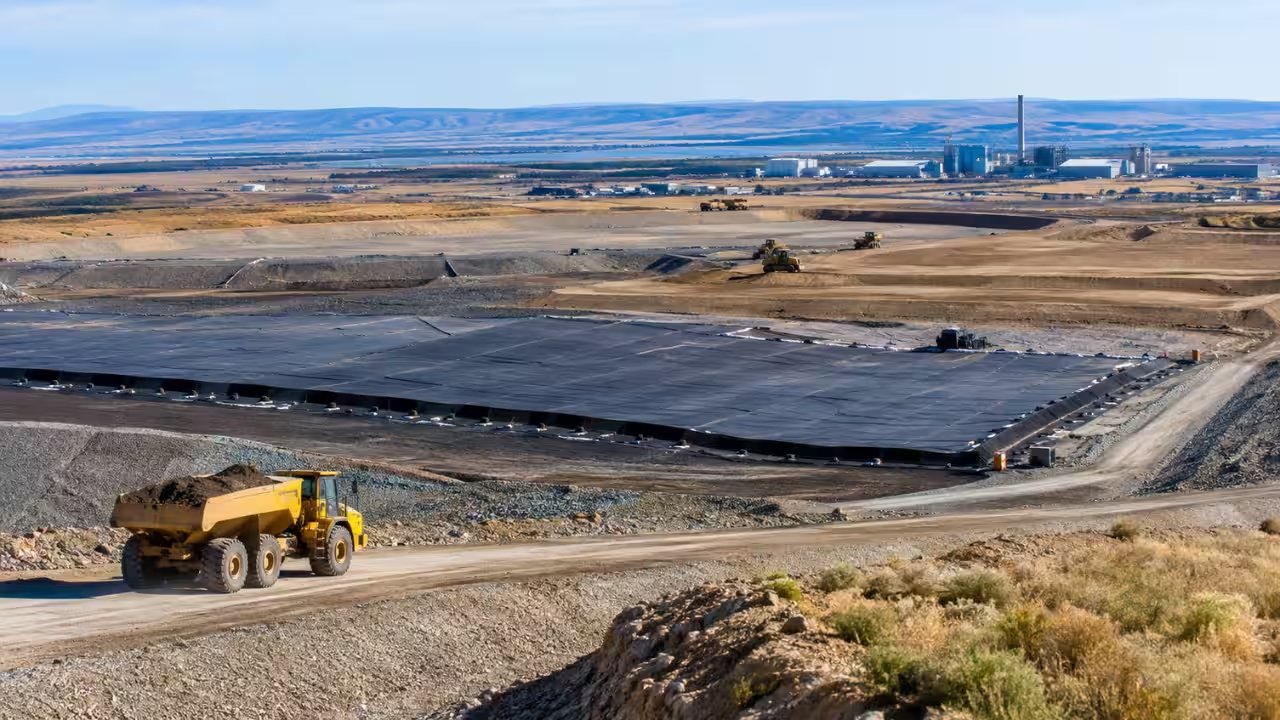
DOE’s Environmental Restoration Disposal Facility (ERDF) at Hanford, Washington, has just closed the excavation of Super Cell 11, the largest addition to the 580‑square‑mile complex since 1996. The 80‑foot‑deep cavity, spanning roughly 500 feet across and 1,000 feet long, will accommodate an extra 2.8 million cubic yards of low‑level radioactive, hazardous and mixed solid waste.
ERDF has been the central point for Hanford’s solid‑waste disposal for nearly three decades, receiving 20 million tons of material from more than 800 demolished facilities and 1,300 contaminated sites. Trucks hauling waste have logged over 30 million miles—an amount equal to 1,200 trips around the Earth—underscoring the scale of the cleanup effort.
Kelly Ebert, director of the Projects and Facilities Division for DOE’s Hanford Field Office, said the expansion is vital for “uninterrupted, efficient and safe disposal” as work on aging facilities continues. She added that the new cell’s engineered liner will keep contaminated water from reaching the underlying environment.
Central Plateau Cleanup Company (CPCCo) will install the liner over the next six weeks, after which the cell will be ready to receive waste. The addition is expected to keep the Hanford cleanup mission on track through 2040, ensuring a secure disposal path for the remaining legacy waste.
The Hanford Site, once a nuclear weapons production hub, now relies on ERDF to consolidate and safely store the physical remnants of its 20th‑century operations. The facility’s 107‑acre footprint has already handled millions of tons of waste, and the new Super Cell 11 will double the size of the original disposal cells.
The expansion follows earlier enlargements in 1999, 2003, 2007 and 2011, each driven by the need to accommodate growing volumes of contaminated material. DOE’s plan is to maintain the landfill’s capacity for the foreseeable future, reducing the risk of overfilled or exposed waste.
Local communities near the Hanford Site have watched the cleanup evolve from a distant industrial memory to a present‑day environmental priority. Workers at CPCCo now face a new chapter: installing a liner that will protect the region’s groundwater for decades.
Once the liner is in place, ERDF will resume its role as the central repository for Hanford’s solid waste, allowing contractors to move contaminated soil, demolition debris and other materials to a single, controlled location. The next milestone is the completion of the liner by September 30, 2024, after which waste acceptance will begin.
DOE’s ongoing commitment to expand and modernize ERDF reflects the broader federal strategy to finish Hanford’s cleanup by 2040, a goal that hinges on secure, long‑term disposal of the site’s hazardous legacy.
The expansion also signals a shift in the federal approach to nuclear waste management, with ERDF serving as a model for future large‑scale, engineered landfills in other legacy sites across the country.