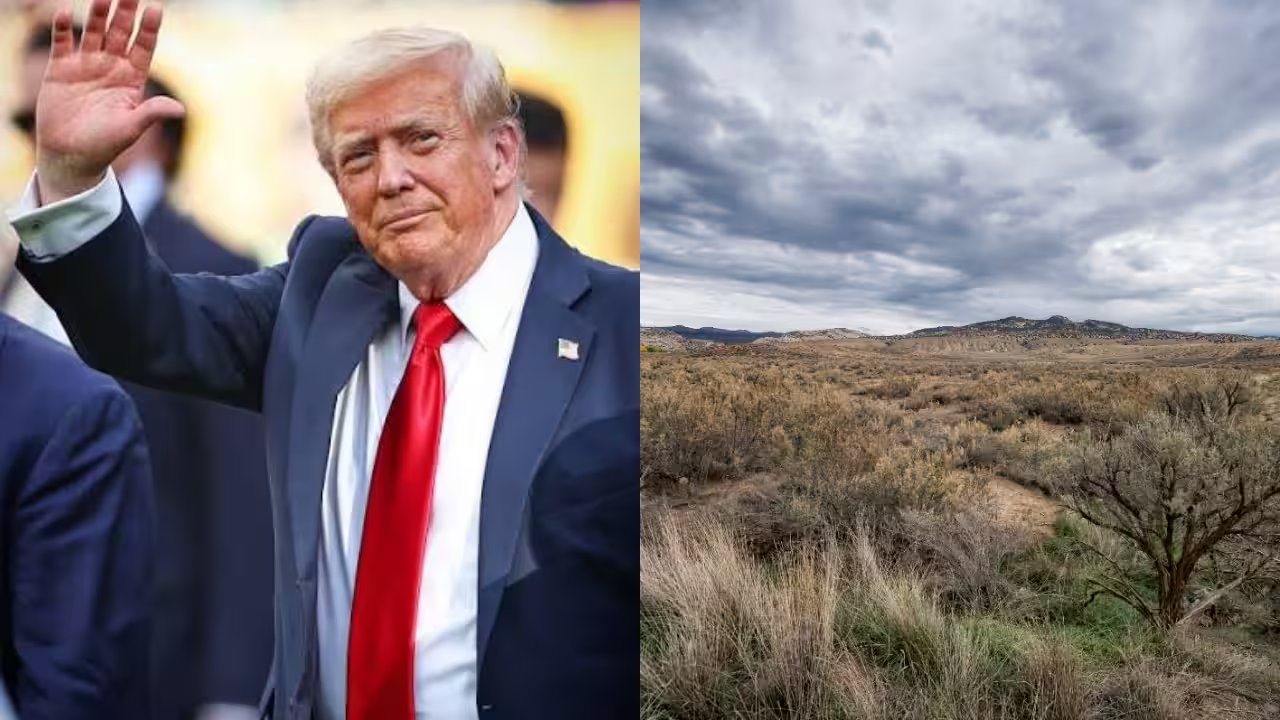
WASHINGTON — The Department of the Interior unveiled a five-year strategic blueprint to shrink the federal estate, laying the groundwork to offload public lands to states, local governments, and Native American tribes. The 28-page policy document, mapping out federal land priorities for fiscal years 2026 through 2030, marks a sharp philosophical pivot in public resource management. Yet officials declined to name a single acre slated for disposal.
No maps accompanied the plan. No acreage thresholds were released. The agency oversees more than 750,000 square miles of public territory—an expanse exceeding the combined footprints of Texas and California—along with vast subsurface mineral deposits across the American West. In states like Nevada, federal agencies control nearly 80 percent of the total land mass. Under the agency's framework, selling off holdings deemed "less nationally significant" will free up federal resources to maintain premier ecological assets, while returning select transaction proceeds to buyers for local conservation and recreational expansion.
Federal administrators identified four central priorities for the coming half-decade, placing the reduction of the federal footprint at the forefront of their operational goals. The administration argues that decentralizing land administration will trim long-term bureaucratic maintenance expenses.
But the criteria for defining national significance remain entirely unwritten. Without clear standards, conservation advocates and outdoor sporting groups warn that irreplaceable wildlife corridors, hunting grounds, and watersheds could slip into commercial pipelines.
| Policy Parameter | Department of the Interior Five-Year Strategic Plan (FY 2026–2030) | Status & Scope |
|---|---|---|
| Federal Estate Size | Oversees 750,000+ square miles | Target: Planned reduction via disposals |
| Eligible Buyers | States, municipal governments, tribal authorities | Target parcels left undisclosed |
| Proceeds Mechanism | Revenue recycled into local conservation and access | Structure pending administrative rule |
| Workforce Adjustments | Deep reductions at NPS, BLM, and USFWS | Staff expansions limited to law enforcement |
| Resource Policy Shift | Fast-track mining, domestic energy, and AI power | Eliminates 90-day BLM public comment window |
Transferring federal soil to state hands does not guarantee that the public will retain entry. State governments operate under distinct statutory charters, frequently barring dispersed camping, vehicle travel, and seasonal hunting to generate direct revenue or manage local liabilities. Bureau of Land Management tracts that currently accommodate millions of anglers and hunters could face padlocked gates under municipal jurisdiction.
Labor reductions will accelerate alongside the land transfers. The Interior Department confirmed plans to push through sweeping workforce consolidations across three primary land custodians: the National Park Service, the Bureau of Land Management, and the Fish and Wildlife Service. These divisions already battle systemic personnel deficits. Under the 2026–2030 mandate, only law enforcement and public safety units will see staffing expansions, leaving resource monitoring and wildlife preservation desks depleted.
Congressional resistance to privatizing or offloading public terrain runs deep, cutting cleanly across party lines. Former Interior Secretary Ryan Zinke announced he remains firmly opposed to selling public acreage, confirming he will vote against any statutory measures that seek to execute widespread land transfers. Democratic lawmakers pledged an aggressive counter-offensive, pointing to previous collapsed efforts—such as Utah Senator Mike Lee's stalled push to auction more than two million federal acres—as proof that voters reject public land liquidations.
Statutory barriers pose an immediate roadblock. Federal property statutes prohibit arbitrary sales of protected conservation territory, demanding that any surplus parcel satisfy narrow conditions before heading to the auction block.
Federal legislation places significant limits on property disposals. Protected lands cannot simply be sold, while other parcels must satisfy specific requirements, such as being uneconomical to manage or supporting important public objectives.
Mark Squillace, Natural Resources Law Professor
Beyond real estate transactions, the five-year plan aggressively recalibrates public land usage toward heavy industrialization. The document mandates expedited permitting for domestic fossil energy extraction, critical mineral mining, and grid infrastructure tailored for artificial intelligence data centres. It simultaneously restructures federal wildland disaster response by establishing a consolidated US Wildland Fire Service.
Citizen oversight will face immediate curtailment. Under companion procedural revisions proposed by the Bureau of Land Management, the agency will scrap its established 90-day public comment window for resource management planning, sharply limiting the timeframe for local communities and conservation organizations to challenge industrial leases.
The Department of the Interior faces mandatory regulatory reviews and congressional oversight hearings on its 2026–2030 strategic plan before implementing proposed disposal mechanisms or altering resource planning timelines.