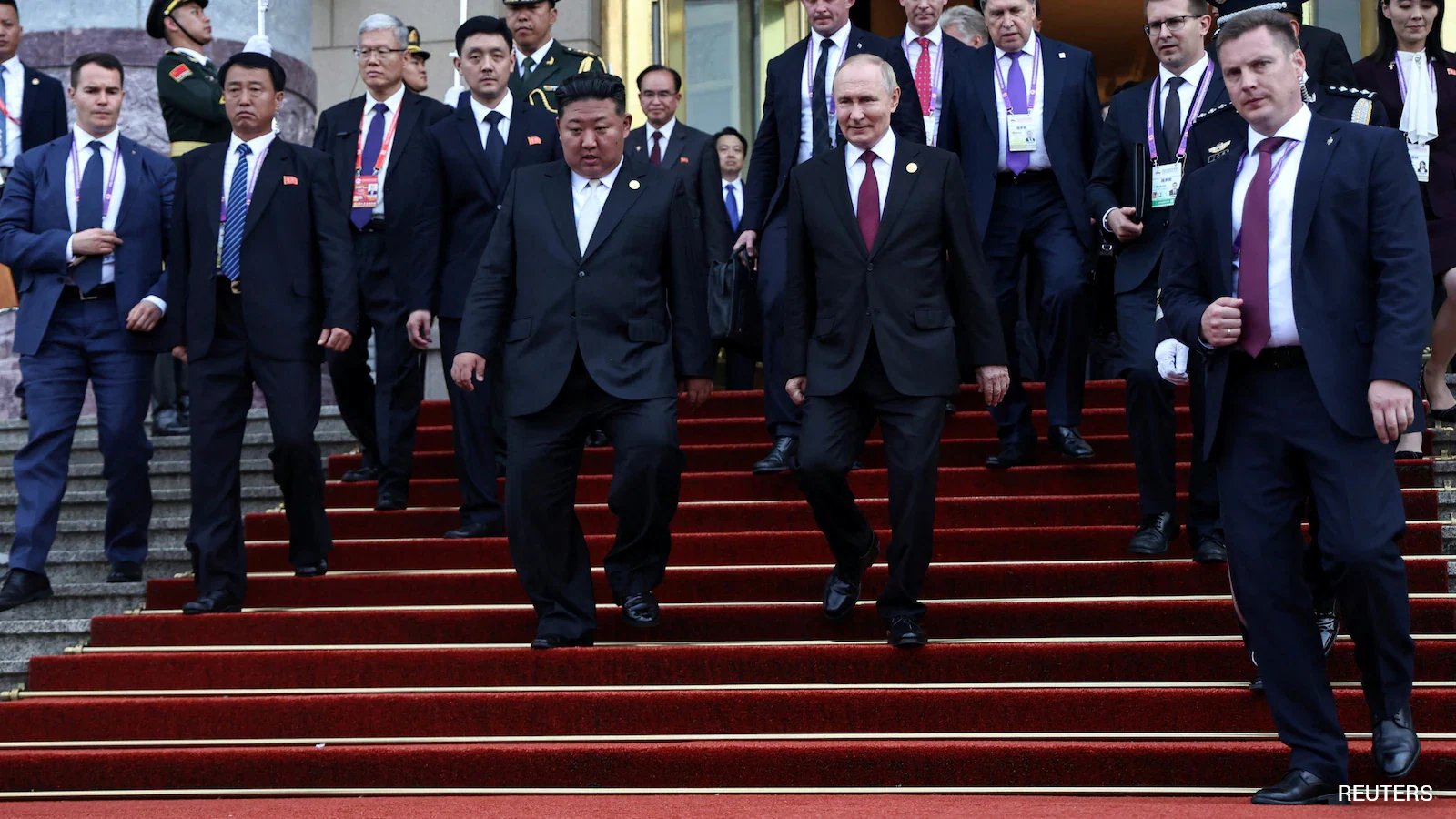
Kim Jong Un formally committed Pyongyang to the Kremlin’s war effort in a Wednesday letter to Vladimir Putin, describing the conflict as a "sacred war of justice" that will end in Russian victory. The North Korean leader, speaking through the official Korean Central News Agency, framed the alliance as a "new chapter" in bilateral relations, explicitly reaffirming "invariable support" for the Russian Federation. This is not a rhetorical flourish; it is a diplomatic guarantee of continued material and human resource flow to Moscow.
The human cost of that guarantee is staggering. South Korea’s National Intelligence Service estimated last year that 2,000 North Korean soldiers had died in the fighting. A more recent assessment pushed that figure to approximately 6,000 killed or wounded. For a country of 26 million, losing 6,000 combatants abroad is a massive demographic and social shock, yet Pyongyang continues to send reinforcements in exchange for economic lifelines and advanced military technology.
The diplomatic fallout is rippling through Seoul. President Volodymyr Zelensky recently revealed that two captured North Korean soldiers had been transferred to South Korean custody, a move Seoul’s government condemned as a violation of confidentiality. The disclosure has poisoned the well between Kyiv and Seoul, particularly as Ukraine presses for lethal armament supplies. Seoul has so far refused to provide such weapons, citing a domestic legal ban on militarily aiding countries at war.
Zelensky has warned that Pyongyang is poised to deploy even more troops to Russia. As the war enters its fourth year, the North-South axis has hardened into a strategic partnership that now directly challenges Western security architecture. The next critical test will be whether Seoul can navigate the tension between its security alliance with the US and its desire to maintain a pragmatic, if strained, dialogue with Kyiv.