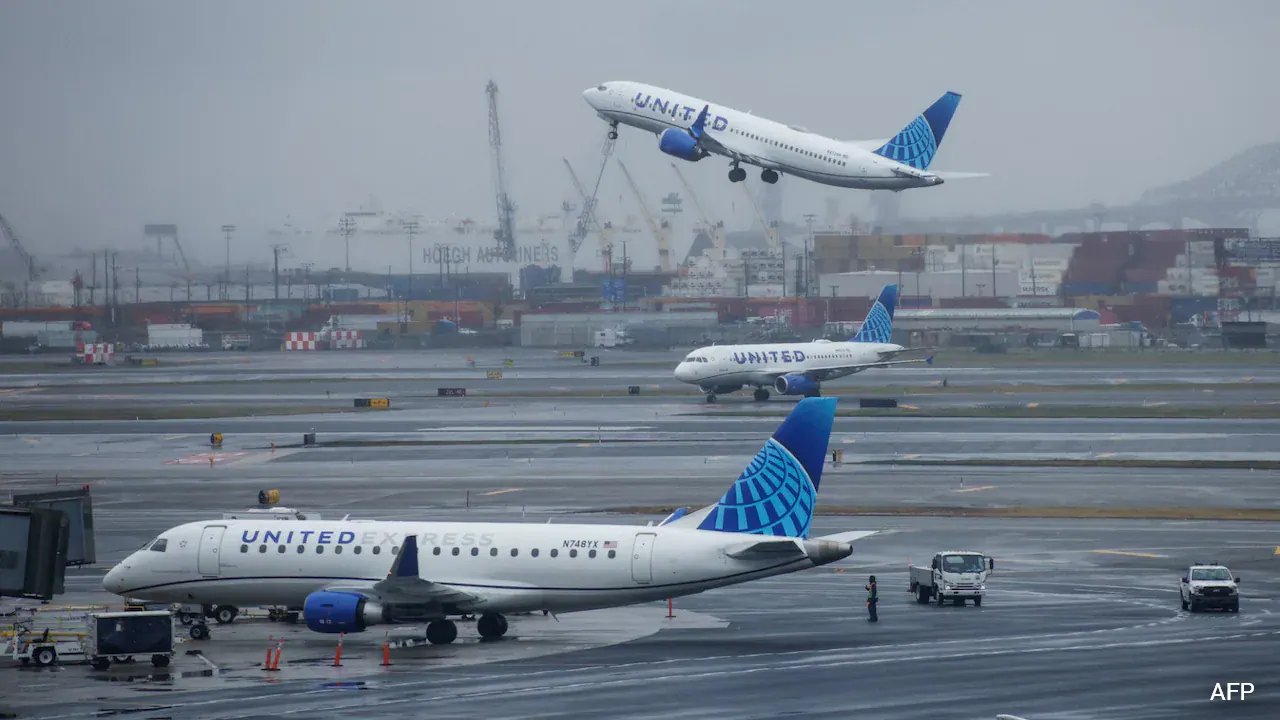
WASHINGTON — The Federal Aviation Administration ordered an immediate nationwide halt to all departing aircraft Friday afternoon after a catastrophic communications breakdown severed contact networks across regional air traffic hubs.
Airline tarmac operations froze from coast to coast. In an emergency operations advisory, the agency stated it imposed the blanket ground stop "due to extraordinary circumstances and for reasons of safety." The shutdown marks only the third time in modern commercial aviation history that federal regulators have abruptly frozen the American skies.
Transportation Secretary Sean Duffy confirmed that the network outage struck the 22 regional air traffic control centers responsible for guiding commercial and cargo jets en route between airports. Federal technicians swarmed to identify the root cause of the blackout.
Yet planes already cruising at altitude remained airborne. Unlike the total airspace closure ordered following the Sept. 11, 2001 terrorist attacks, controllers did not force flying jets to execute emergency landings at the nearest tarmac. Flight crews retained direct radio communication with local tower controllers at airport perimeters, allowing airborne traffic to land safely while terminals held departing aircraft at boarding gates.
Previous nationwide ground orders remain extraordinarily rare. The FAA last imposed a similar countrywide freeze in January 2023, when an internal regulatory database system malfunctioned. Before that failure, regulators had not halted nationwide departures since Sept. 11, 2001.
Aviation safety analyst Steve Arroyo, a former United Airlines captain, warned that Friday's systemic breakdown mirrored a regional communication blackout that choked flights across the American Northeast in September—amplified this time across the continental grid. Arroyo attributed the failure to decades of deferred technical overhauls within federal control rooms.
If you don't have that ability, whether it's because the old wires that they have are just run down or for whatever reason, you've got to stop airplanes on the ground. And not put them in the air where you're going to risk not being able to communicate with them.
Steve Arroyo, Aviation Safety Expert
Congress cleared a $12.5 billion modernization allocation last year to rip out crumbling legacy architecture. Engineering crews have gradually pulled miles of decaying copper wiring to install high-capacity fiber-optic cables and deployed updated radio arrays across targeted airfields. But the upgrades have lagged behind the deteriorating infrastructure.
| Aviation Disruption Metric | Verified Official Parameter |
|---|---|
| Action Ordered | Nationwide ground stop on departing flights |
| Regulatory Authority | Federal Aviation Administration (FAA) |
| Operational Scope Affected | 22 regional en-route air traffic control centers |
| Official Grounding Justification | "Extraordinary circumstances and for reasons of safety" |
| Congressional Funding Cleared | $12.5 billion approved last year |
| Additional Funding Sought | $30 billion requested by the White House |
Last Prior Nationwide Outages | January 2023 (system malfunction), September 11, 2001 |
Duffy underscored that the agency requires an additional $30 billion in capital funding to fully modernize the national airspace grid. The White House has intensified lobbying efforts on Capitol Hill to secure the emergency multi-billion-dollar appropriation, as FAA technical teams race to restore full operational data links across all 22 centers.