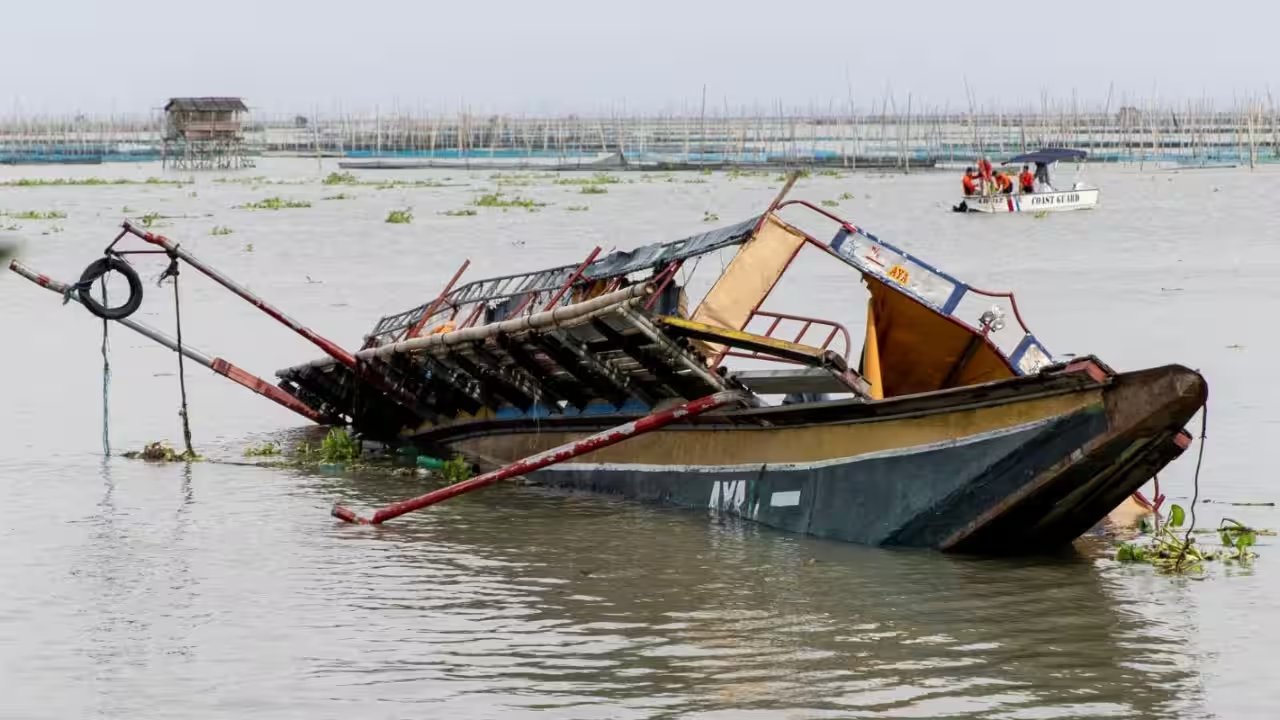
Greek coast guard teams recovered 12 bodies from a migrant boat adrift 15 nautical miles south of Crete on Monday, pulling the dead from Mediterranean waters while a passing commercial cargo vessel rescued 18 survivors.
The rescue ship sailed under a Moroccan flag. Its crew pulled the survivors from the open sea before Greek patrol craft secured the area. Coast guard officials confirmed that the identities of the victims and the exact causes of death remain undetermined.
Yet the fatal crossing marked only the opening hours of a rapid maritime influx south of the Greek mainland. Greek authorities detected three additional overcrowded boats carrying more than 180 migrants along the corridor from North Africa on Monday morning. European Union border agency Frontex tracked the flotilla from the air—first using fixed-wing patrol aircraft to spot a craft ferrying roughly 47 people, then deploying surveillance drones to locate a second boat carrying 40. A drone later tracked a third vessel crammed with approximately 100 migrants drifting 47 nautical miles south of Crete. Coast guard cutters escorted all three vessels toward Cretan ports for emergency processing.
The sea was relentless. The crossings did not stop.
Crete has emerged as a central choke point in Mediterranean migration dynamics. Thousands of people fleeing poverty and armed conflicts across Africa, the Middle East, and Asia increasingly risk the open-sea route from eastern Libya to reach European Union territory, frequently aboard overloaded, unseaworthy inflatables and wooden hulls. That journey rivals the eastern Aegean corridor from Turkey, where fatal wrecks remain frequent—including a double capsizing off Lesbos and Samos last month that left 12 dead, among them an infant.
Frontex operational data confirms that the eastern Mediterranean registered as the busiest entry corridor into the 27-member European Union across the first three quarters of 2026. The agency logged approximately 31,800 crossings along the route during that span—a 15 percent drop from the same period last year, set against an overall one-third drop in irregular crossings across the bloc. Yet even with aggregate numbers trending down, the maritime passage linking eastern Libya to Crete remains the single most active stretch of the eastern Mediterranean route.
Greek port authorities and local emergency teams on Crete are preparing identification proceedings and medical triage for the 18 survivors, while coroner teams begin autopsy work on the 12 recovered victims.