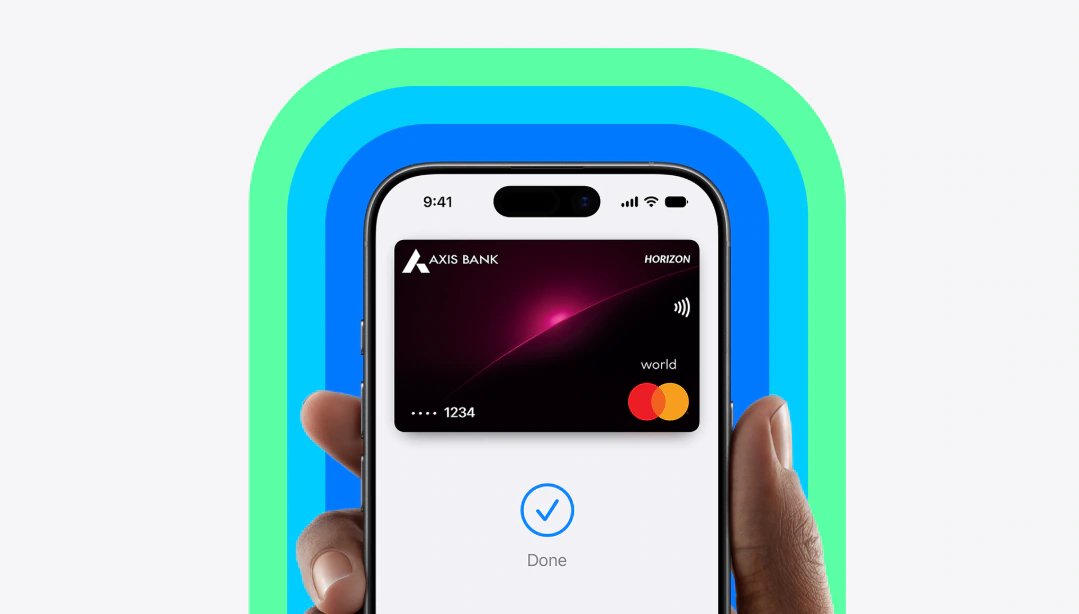
Apple Pay is officially here. But don't reach for your RuPay debit card or open your UPI app just yet. The global giant's long-awaited entry into the Indian market comes with a narrow focus at launch: it currently supports only Axis Bank-issued Visa and Mastercard credit cards.
The exclusion is significant. In a country where Unified Payments Interface (UPI) has virtually swallowed the digital payments market, Apple's initial rollout ignores the very system that dominates daily transactions. A Reuters report confirmed that UPI is not part of the initial offering. Axis Bank is the sole partner at this stage, though Apple is in discussions with HDFC Bank and ICICI Bank. Those deals, however, are not yet finalised.
For the early adopters, the mechanics are straightforward. You add your eligible Axis card to Apple Wallet on your iPhone, iPad, or Apple Watch. When you pay at a participating merchant—like Zomato, Blinkit, or an Apple Store—you double-click the side button, authenticate with Face ID or Touch ID, and hold your phone near the NFC reader. No PIN. No OTP. Just a tap.
Apple emphasizes that your actual card number never leaves the device. Instead, a unique Device Account Number and security code handle the transaction. Rewards from your Axis card remain intact, so you're not losing out on points or cashback. But if your phone is stolen, Apple says Lost Mode automatically disables Apple Pay, adding a layer of security that traditional card payments sometimes lack.
The bigger question is speed. Will Apple quickly bring UPI to India, or will it stick to a card-only model? For now, if your bank isn't Axis, you're on the outside looking in. Keep an eye on Apple's announcements in the coming weeks for updates on other banks and, hopefully, a UPI integration that would make this service truly universal.