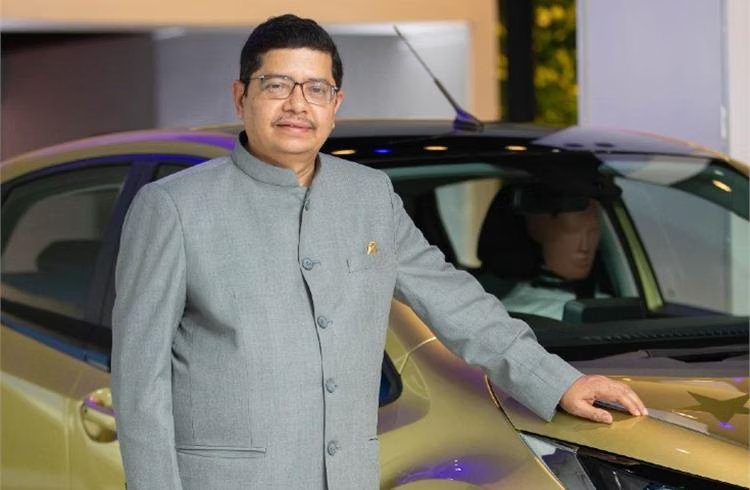
The man who taught India’s largest carmaker to stop copying and start creating is hanging up his tools. Rajendra Petkar, President and Chief of Emerging Mobility & Technology Strategy, leaves Tata Motors at the end of October 2026. For 38 years, he has been the quiet architect behind the brand’s transformation from a license-dependent player in the 1990s to the current EV and safety leader. This isn’t just a personnel change; it’s the closing of a chapter that defined modern Indian automotive engineering.
Petkar joined TELCO (now Tata Motors) in February 1989 as a fresh IIT Bombay graduate. Back then, the industry relied on imported tech and simple mechanical systems. He spent two decades in the Power Systems Engineering division in Pune, managing a team of 700 engineers to navigate the jump from BS-III to BS-IV emissions. That grind built the modular engine families that later powered the company’s commercial vehicle turnaround. It was steady, unglamorous work that laid the foundation for what came next.
The real shift happened when he became CTO in 2018, overseeing a global R&D force of over 5,000 engineers. Under his watch, Tata accelerated its BS-VI compliance timeline to just three years, a feat that kept rivals scrambling. This period also saw the launch of the Nexon EV and the first GNCAP 5-star rated hatchback (Altroz) and SUV (Nexon) from an Indian OEM. These weren’t just marketing wins; they were proof that indigenous design could meet global safety and performance standards without importing the whole platform.
Now, as the industry pivots to hydrogen and advanced battery chemistries, Petkar’s legacy is written in patents. He turned the Pune ERC into a patent factory, covering everything from aerodynamic flaps to software control algorithms. He also played a key role in national policy, advising the Automotive Research Association of India (ARAI) and the National Automotive Board on realistic decarbonization paths. His retirement coincides with a critical transition phase for Tata, where the focus shifts from establishing EV credibility to scaling next-gen mobility solutions.
For buyers, this means the engineering DNA that prioritized safety and reliability over cost-cutting is now institutionalized. The cars rolling out in 2026 and beyond carry the structural integrity and powertrain calibration standards set during Petkar’s tenure. As he steps down, Tata Motors stands not just as a volume leader, but as an IP powerhouse, with the infrastructure to compete globally on technology, not just price.