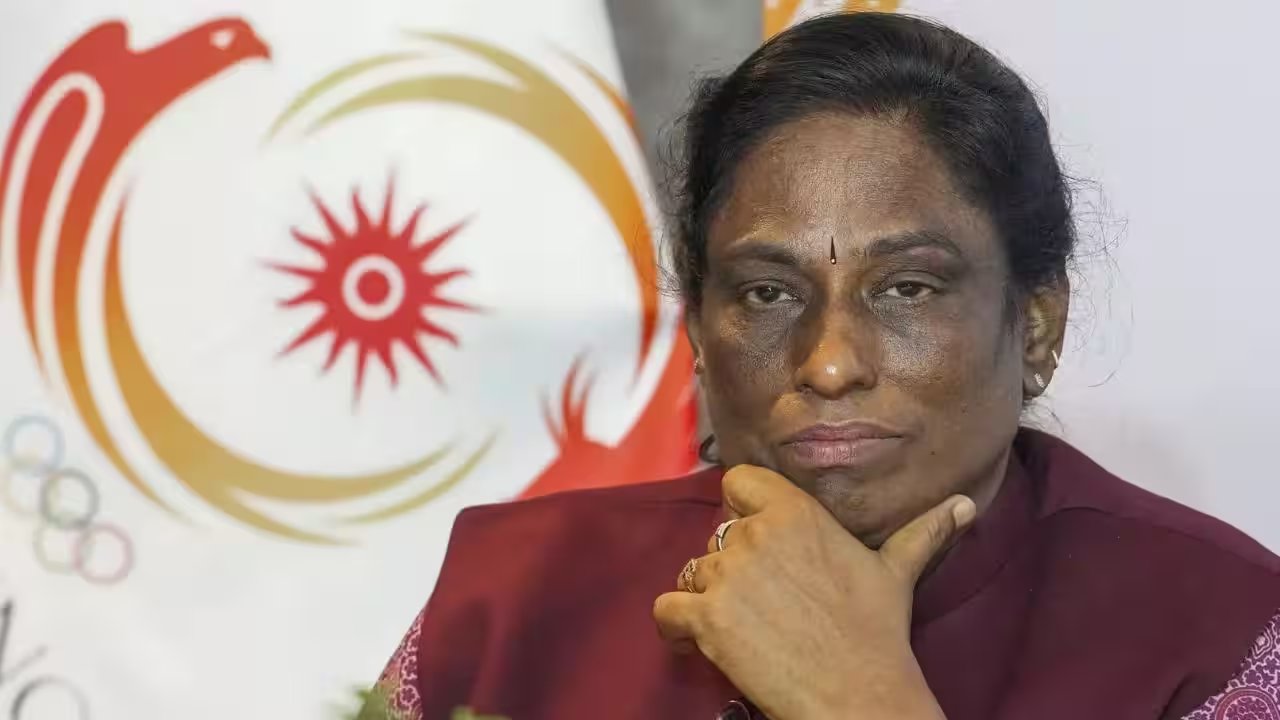
The battle for control of Indian sports governance has landed on the steps of the Olympic headquarters in Lausanne.
PT Usha has called for an independent International Olympic Committee investigation into the Indian Olympic Association's Sportspersons of Outstanding Merit elections. The IOA president submitted a three-page confidential complaint dated November 9 directly to IOC president Kirsty Coventry. It laid out allegations of illegal canvassing, voter tracking, and unauthorized invocations of the sports ministry during a secret ballot.
The rebellion follows a bruising electoral rout. Usha crashed out in fifth place during a six-way skirmish for four women's quota seats on the IOA executive body, securing just 40 votes. Former world long jump medalist Anju Bobby George led the tally with 53 votes, followed by former hockey captain Rani Rampal with 50, archer Dola Banerjee with 45, and shuttler Saina Nehwal with 43. Basketball international Anitha Pauldurai finished last with six.
| Candidate | Discipline | Votes Secured | Status |
|---|---|---|---|
| Anju Bobby George | Athletics | 53 | Elected |
| Rani Rampal | Hockey | 50 | Elected |
| Dola Banerjee | Archery | 45 | Elected |
| Saina Nehwal | Badminton | 43 | Elected |
| PT Usha | Athletics | 40 | Defeated |
| Anitha Pauldurai | Basketball | 6 | Defeated |
Usha insisted her petition is not personal sour grapes. She stated that the formal grievance does not challenge the election result "merely because of its outcome," but seeks to protect the basic autonomy and institutional hygiene of the national body.
The formal petition centers on alleged breaches of the IOA's October 30 model code of conduct. Usha targeted WhatsApp electioneering traced to incumbent IOA executive committee members Yogeshwar Dutt and Dola Banerjee. The messages actively pushed a four-candidate slate by name and ballot index to eligible voting athletes.
Under Clause 3.2 of the election code, sitting executive members are barred from throwing their weight behind any runner.
Incumbent EC members shall refrain from making public declarations and may in no way support a candidate.
Usha also flagged messages involving Sanjay Mishra, secretary of the Badminton Association of India. Mishra allegedly pushed athletes to supply post-ballot confirmations, circulating messages that declared "from ministry" and "ministry is asking if we have confirmation msg."
Usha did not accuse the sports ministry of issuing direct back-channel orders. Yet she asked the IOC to determine whether any state official sought voter identity logs—and if not, precisely why the ministry's authority was invoked to compromise the secret ballot.
Returning officer Sanjay K. Srivastava sat squarely in Usha's crosshairs. She confirmed filing four distinct representations regarding code violations during the balloting window. Srivastava returned "neither an acknowledgement nor a substantive response" to a single one.
Usha rooted her appeal in Fundamental Principle 5 alongside Rules 2 and 27.6 of the Olympic Charter, warning that unmonitored backroom maneuvering poisons India's administrative credibility. She shared copies of the dossier with IOC director of Olympic Solidarity James Macleod and chief of institutional relations Jérôme Poivey.
The letter comes one week after Usha met Coventry in Dakar during the Youth Olympic Games on November 2. Usha held back phone screenshots and specific voter identities to shield athletes from retribution, offering to hand raw digital forensics to IOC investigators through secure channels.
With the full IOA elective general assembly set for December 5, all eyes turn to Lausanne to see if the global body freezes the process before nominations close.