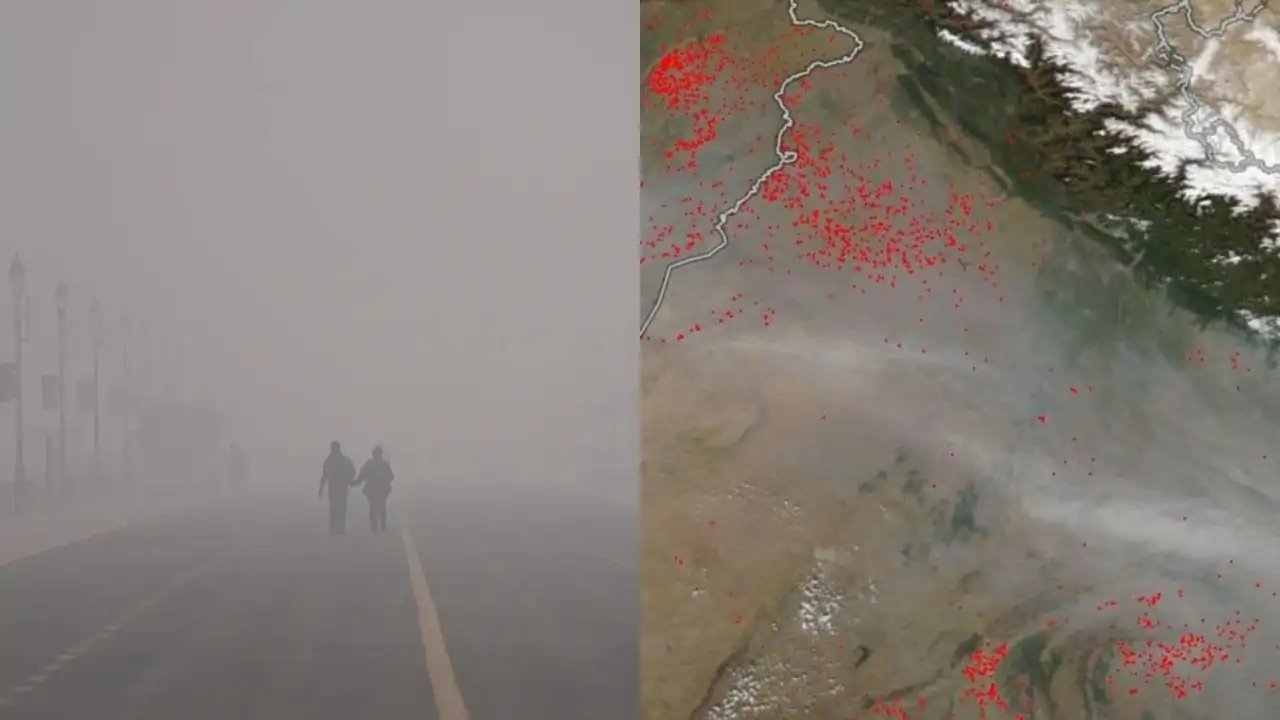
Delhi choked under a thick blanket of smog on Saturday, with the Air Quality Index (AQI) breaching the 400 mark at multiple monitoring stations. IIT Delhi recorded the worst reading at 442, followed closely by Punjabi Bagh at 433. It’s the sixth straight day the capital has struggled with 'very poor' air, a grim streak driven by a perfect storm of local emissions and seasonal haze.
The trigger was clear. The Central Pollution Control Board logged 589 stubble-burning incidents across seven states and Union Territories on November 6 alone. Punjab dominated the list, responsible for 357 of those fires. Madhya Pradesh followed with 139, while Rajasthan reported 58. The data, captured at 6:05 am on November 7, paints a picture of widespread agricultural burning just as meteorological conditions turned unfavorable.
NASA’s Fire Information for Resource Management System (FIRMS) satellite imagery from the same day corroborated the ground reports. The images captured multiple clusters of fire hotspots spread across the region, with a visible haze blanketing parts of northwestern India. This isn't an isolated spike; since September 15, the cumulative count of stubble-burning incidents has climbed to 6,226. Punjab leads the cumulative tally with 3,144 incidents, followed by Madhya Pradesh at 1,220 and Rajasthan at 1,097.
For residents, the numbers translate into burnable lungs and closed windows. Mundka and Jahangirpuri both registered an AQI of 421, while Rohini stood at 418. Even the Indira Gandhi International Airport saw readings hit 340, affecting flight schedules and ground operations. The combination of unfavourable meteorological conditions and the influx of smoke from neighboring states has created a persistent pollution challenge that local measures alone struggle to combat.
The situation remains critical. Authorities continue to monitor the AQI closely, but until the agricultural burning season subsides or meteorological winds shift, the capital faces another week of hazardous air. The next major data update from the CPCB is expected to provide further clarity on whether the trend reverses or deepens.